
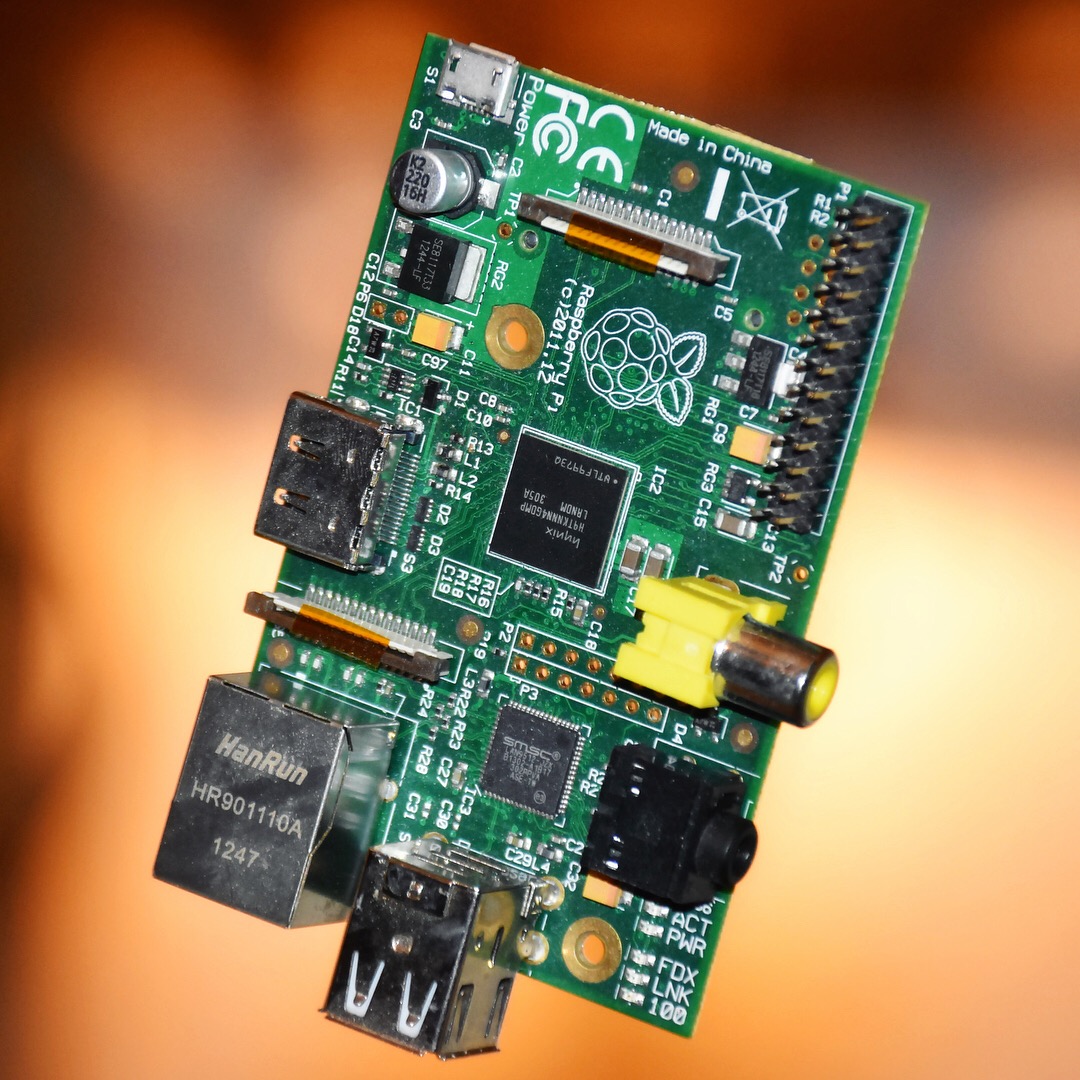
ANAVI Technology has opened a Crowd Supply campaign for an I2C TPM add-on for the Raspberry Pi. The ANAVI I2C TPM 2.0 is built around Infineon's Optiga SLB 9673 TPM 2.0 chip and measures 16.5 x 12.8 mm (0.65 x 0.51 in), according to the campaign page. It talks to the host over I2C, and the campaign lists it as using only header pins 1, 3, 5, 7 and 9. The campaign says this leaves the other GPIO pins free.
CNX Software reported the launch on 19 November 2026 and gave the pricing: $20 for the horizontal version or $21 for the vertical version, plus $8 shipping to the US or $18 to the rest of the world. Deliveries are scheduled to start by March 18, 2027. The project is currently crowdfunding. It is not shipping yet.
What the board is
The pre-launch Crowd Supply page, which we read through a Wayback Machine snapshot, lists these specifications:
- TPM: Infineon Optiga SLB 9673, TPM 2.0
- Interface: I2C
- Standards: TCG TPM Library specification revision 1.59; PC Client Platform TPM Profile (PTP) 1.05
- Random number generation: RNG per NIST SP 800-90A, with an entropy source per NIST SP 800-90B
- Compatibility: all Raspberry Pi single-board computers
- Header usage: pins 1, 3, 5, 7 and 9 only
- Mechanical: 16.5 x 12.8 mm (0.65 x 0.51 in), two mounting holes
- Variants: horizontal and vertical, each with a 5-pin 2.54 mm female header
- Design files: KiCad, licensed CC BY-SA 4.0
CNX describes the board as an alternative to ANAVI's earlier ANAVI TPM 2.0, which uses an Optiga SLB 9672 chip on the SPI bus. The main difference for users is the bus: the new board uses I2C and, per the campaign page, five pins of the header.
Open hardware, with the files already public
CNX reports that the design holds OSHWA open-source hardware certification BG000154. The hardware repository, AnaviTechnology/anavi-i2c-tpm-2.0, is already on GitHub. It holds the KiCad project, including the schematic, the PCB and the libraries, released under CC BY-SA 4.0. The repository calls the board a "Tiny I2C TPM 2.0 for Raspberry Pi based on Infineon Optiga SLB 9673 TPM 2.0". It had two commits when we read it, so it is still early. But a backer who wants to check the board before pledging can already open the schematic and layout.
How it works with Raspberry Pi OS
Most add-on boards need a driver. This one is already covered by the kernel. CNX says the module works out of the box with the tpm-slb9673.dtbo overlay that ships in the Raspberry Pi kernel. We read the overlay source in the rpi-7.2.y branch of the raspberrypi/linux tree. It describes the target as Infineon SLB9673 TPM add-on boards that can serve as secure key storage and as a hardware RNG (hwrng).
The overlay changes the I2C setup in ways that matter if you already have other I2C devices on your Pi:
- It disables the hardware
i2c_armcontroller and enablesi2c-gpio, a software (bit-banged) I2C bus, with SDA on GPIO2 and clock on GPIO3 at 400000 Hz. - The source gives the reason as raspberrypi/linux issue 4884, a known problem with using the hardware controller for this part.
- The TPM node sits at address 0x2e and uses the compatible strings
"infineon,slb9673"and"tcg,tpm-tis-i2c".
In practice, when the overlay is loaded, the controller that normally drives I2C on GPIO2 and GPIO3 is switched off, and the kernel bit-bangs that bus instead. If you already run sensors or displays on that bus, check how they behave on the bit-banged bus at the overlay's 400 kHz setting before you rely on them. Those devices also need addresses that do not clash with the TPM at 0x2e.
What you would use it for
CNX lists the expected uses: disk encryption, secure key storage, cryptographic operations, and a true random number generator. According to CNX, Leon ANAVI has also published a tutorial on setting up an encrypted data partition with the module. That is a common reason to add a TPM to a single-board computer: encryption keys can be held in a separate chip instead of sitting on the same SD card or SSD as the data they protect.
The campaign page describes TPM 2.0 generally as an industry standard for hardware-based security that manages cryptographic keys and enables features such as disk encryption, device authentication, digital signatures and measured boot. What the board itself lists is a TPM built to TCG library revision 1.59 and PTP 1.05, and an RNG that the campaign says follows NIST SP 800-90A and 800-90B.
What It Means for Makers
Who it is for: CNX describes the audience as developers, hobbyists and professionals who want stronger security in Raspberry Pi projects. Our read is that it suits Raspberry Pi boards running as unattended appliances, such as home servers, gateways, kiosks and data loggers, where storage might be removed or stolen.
What it replaces or enables: it offers a five-pin I2C alternative to ANAVI's earlier SPI-based TPM board. Its small footprint and vertical option might make it easier to fit beside HATs, cooling or a tight case, but we have seen no fit-test results. Kernel support is already in the Raspberry Pi kernel through the tpm-slb9673 overlay. The main thing to plan for is that the overlay swaps the hardware I2C controller on GPIO2/GPIO3 for a bit-banged bus.
Price and availability: crowdfunding on Crowd Supply as of 19 November 2026, at $20 (horizontal) or $21 (vertical), plus $8 US or $18 international shipping, according to CNX Software. Deliveries are scheduled to start by March 18, 2027. As with any crowdfunded hardware, that date is the campaign's target, not a guarantee. The KiCad design files are available now under CC BY-SA 4.0 for anyone who would rather build their own.
Sources
- CNX Software: Raspberry Pi SBCs get an open-source hardware I2C TPM 2.0 security module (Crowdfunding)
- Crowd Supply: ANAVI I2C TPM 2.0 campaign page, pre-launch version (via mirror)
- GitHub: AnaviTechnology/anavi-i2c-tpm-2.0 hardware repository
- GitHub: raspberrypi/linux tpm-slb9673-overlay.dts (rpi-7.2.y)
