
Luxonis has spent years selling its OAK depth cameras as finished products: a sealed housing with a fixed stereo pair and a color sensor in a set layout. With OAK 4 FFC, announced and opened for orders on 27 October 2026, the company is selling the part underneath instead. It is a board-level vision computer that takes up to five flat-flex (FFC) camera modules. The builder chooses the sensors and where they go on the robot.
In its Business Wire press release, Luxonis calls it a modular addition to its OAK 4 family; the sUAS News copy of the release, datelined Denver, calls it the first OAK Modular device built on OAK 4. The stated targets are humanoids, drones and "other machines." The sUAS News page is a republished release, not separate reporting, and the two copies differ on a couple of details noted below. So the spec claims below come from the vendor shop page, the press release and the hardware design files Luxonis has posted on GitHub.
The compute: an OAK 4 SoM on a carrier
The board is built around an RVC4-based OAK 4 system-on-module. The Luxonis shop listing (SKU OAK-4-FFC-DEVKIT) gives these figures:
- Compute: 52 TOPS total, split as 48 TOPS INT8 on the AI accelerator and 4 TOPS FP16 on the GPU
- CPU: 6-core ARM
- Memory/storage: 8GB RAM, 128GB storage
- Software: Linux-based Luxonis OS, DepthAI
- Networking/host: 2.5Gbps Ethernet, 5Gbps USB-C
- Expansion buses: CAN, SPI, I2C and UART on expansion connectors
- Power: 6–32V DC, USB-C Power Delivery, or PoE+ with the PoE module
- Sensors on board: 6-axis gyroscope/accelerometer and 3-axis magnetometer
The Business Wire version of the release adds that the CAN interface is CAN FD (the sUAS News copy says only "CAN") and that the board has hardware frame sync. Frame sync is the feature that matters most here. Five cameras are only useful for depth and multi-view fusion if their exposures line up. Per the shop page, the SoM runs the whole pipeline itself, with no separate host computer needed.
A note on the 52 TOPS number: it adds an INT8 accelerator figure to an FP16 GPU figure. It is the vendor's combined headline and should not be compared directly with single-precision benchmarks. Luxonis has not published model-level throughput for this board in the materials we reviewed.
What is actually on the board
The hardware repository is more specific than the marketing copy. The BK3498_OAK-4-FFC directory in luxonis/oak-hardware describes design resources for "the BK3498 OAK 4 FFC carrier board and its BK6970 PoE power board," and says the carrier "connects an OAK 4 SOM to five FFC camera interfaces and provides Ethernet, USB, CAN, storage, and expansion connections." The repository lists the SKU family as OAK-4-FFC-DEVKIT and OAK-4-FFC-BAREBONE, with the module itself as OAK-4-SOM.
According to the repository, the schematic routes five four-lane MIPI CSI camera interfaces through 26-pin bottom-contact FFC connectors: J8 to CSI0, J11 to CSI2, J7 to CSI3, J10 to CSI4 and J9 to CSI5. Camera control, clock, synchronization and strobe signals run alongside the data lanes. Other circuitry listed in the repository:
- PCIe-to-Ethernet bridge with an M12 connector
- USB Type-C
- M8 auxiliary interface
- CAN
- microSD and EEPROM
- IMU/magnetometer options
- Expansion signals
The repository says fitted components depend on the assembly variant, and that simultaneous camera operation and supported sensors depend on the SoM software configuration. The separate BK6970 board provides PoE power conversion and a 12V_PoE rail. The repository contains Altium projects, a 21-page carrier schematic PDF, a 4-page PoE schematic PDF, the OAK 4 SOM datasheet (revision 2.2) and SoM connector libraries. The press release says the reference design is being released as open source, but the repository's own licensing section says coverage of this bundle still has to be confirmed, so check the license before reusing the files. A team building a custom carrier for a specific robot chassis can use the posted routing as a reference instead of starting from nothing.
Cameras: nine modules, three sensors
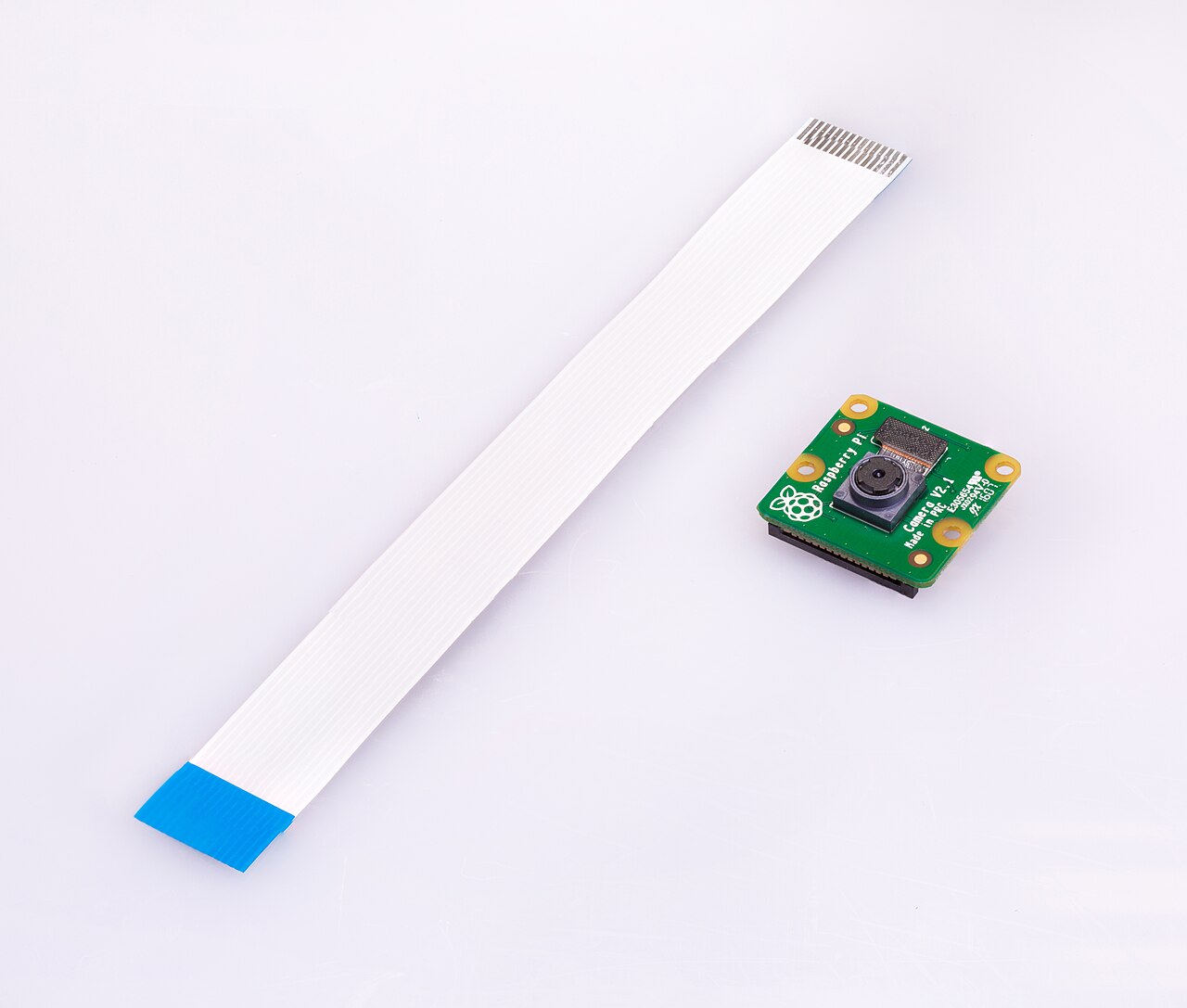
The press release says teams can choose from nine camera modules across three sensors, in standard and wide field-of-view versions:
- 48 MP IMX586 (color)
- 1 MP OV9282 (global shutter)
- 5 MP OG05 (global shutter)
Luxonis says thermal, time-of-flight and more global-shutter modules are "coming soon." No dates or prices were given for those. Camera modules are sold separately; the Business Wire version says they start at $34.99, while the sUAS News copy says $39.99, so confirm the price on the shop page.
Compatibility needs care. The shop page says OAK 4 FFC pairs with OAK-FFC V2 camera modules. The older RVC2-based boards (OAK-FFC 4P, 3P, 1P PoE and 4P PoE) pair with OAK-FFC V1 modules. Anyone with a drawer of V1 modules from an earlier OAK-FFC build should check the listing before assuming they will work on the new board.
The release notes that a custom multi-camera rig otherwise means teams writing their own synchronization and calibration tools. Luxonis says each module stores factory-calibrated intrinsics, users enter camera positions in OAK Viewer, and its Dynamic Calibration software then refines the alignment of cameras with overlapping views using ordinary scene texture. That is the company's description. We have not seen independent measurements of how well it holds up on a vibrating airframe.
DevKit versus Barebone
There are two configurations. The shop page says the DevKit includes cooling, PoE+ (via the PoE module) and panel-mount connectors. The Barebone is for custom integration, with the builder's own cooling and cabling. The release gives the Barebone's weight as 36 g.
What It Means for Makers
OAK 4 FFC is for people whose camera layout doesn't fit an off-the-shelf depth camera. Luxonis's own example is a humanoid head with a forward stereo pair plus side and rear cameras; a drone or mobile robot with several cameras on different faces is another case where a single board could replace several USB cameras plugged into a single-board computer. The board combines several camera ports, a host computer and hardware frame sync, runs DepthAI natively and connects to a robot over Ethernet, USB-C or CAN. Hobbyists with a single camera, or anyone who wants a sealed enclosure, are probably better served by Luxonis's integrated OAK cameras.
The open reference design matters as much as the board. A team that outgrows the Barebone's form factor can use the published schematics and connector libraries as a starting point for its own carrier for the OAK 4 SoM, subject to the licensing caveat above.
Pricing and availability at launch (27 October 2026): orders are open now. The press release lists the DevKit at US $849 and the Barebone at US $729. Both prices include what Luxonis calls a temporary $200 surcharge for memory and storage. Luxonis says DevKit orders begin shipping in November 2026 and Barebone deliveries are scheduled for Q1 2027, so the DevKit has a near-term ship date and the Barebone is further out. One discrepancy: the shop page shows the Barebone as a −$119 toggle off the $849 DevKit price, which works out to $730, not the $729 in the release. Check the final figure in the cart before ordering. The shop lists a 60-day money-back guarantee.
Luxonis has not said when the temporary surcharge will end.
Sources
- OAK 4 FFC – Modular 5-Camera RVC4 Vision Platform, 52 TOPS (Luxonis shop)
- Luxonis OAK 4 FFC Lets Robot Builders Design Their Own Multi-Camera Vision System on One Board (Business Wire, 27 Oct 2026)
- oak-hardware/BK3498_OAK-4-FFC design files (Luxonis on GitHub)
- Luxonis OAK 4 FFC Lets Robot Builders Design Their Own Multi-Camera Vision System on One Board (sUAS News, republished release)
