
Workers at Micron's Taoyuan operations in Taiwan plan to walk out for one day on Thursday, October 22. The dispute is over this year's bonus and how the company shares its profits. On its own, a one-day stoppage at one site will not reset memory prices. It does come at an awkward moment. DRAM supply is already tight enough that Raspberry Pi raised prices on its 2GB Raspberry Pi 4 and Raspberry Pi 5 boards at the start of the month. Below we cover what is known, what is still unclear, and why people who buy single-board computers might care.
What did the union announce?
According to Reuters reporting carried by Nikkei Asia, the Taoyuan union said in a statement on Tuesday, October 20, that it would strike on October 22. It wants a concrete offer on this year's one-off bonus and a transparent, predictable profit-sharing system for the future. The union called the action a warning strike rather than a break in talks, and said it would be ready to sign an agreement if Micron made an acceptable proposal.
The strike date coincides with a mediation session between Micron and a separate union at its Taichung operations. Nikkei describes Taichung as Micron's largest site in Taiwan. Earlier mediation with the Taoyuan union ended without agreement in September, and members authorized the strike in early October. Nikkei notes the Taichung union has yet to hold a vote on whether to strike. At the time of the Reuters report, Micron had not responded to a request for comment.
How strong is the mandate?
Supply-chain firm Sourceability gives the ballot numbers: 1,994 of the 2,258 registered Taoyuan union members, or 88.3%, voted to strike. Sourceability, citing Reuters, adds that 99% of ballots cast were in favor. These figures measure different things. The first is a share of all registered members. The second is a share of the members who actually voted.
Sourceability also reports that Micron's two Taiwan unions together represent more than 80% of the company's workforce in Taiwan. It says the unions are seeking profit-sharing tied to 15% of Micron's operating profit, plus a one-time bonus for fiscal 2026. For scale, Nikkei says Micron employs about 15,000 people in Taiwan and has invested more than NT$1.6 trillion (about US$50 billion) there, according to the company.
Why 15%?
The Korean memory makers are the obvious comparison, and the Taoyuan union itself says Micron should follow its Korean rivals in adopting a clearer profit-sharing formula. Nikkei reports that in May Samsung Electronics agreed to set aside 10.5% of its chip division's operating profit for special bonuses, subject to profitability targets, and that SK Hynix agreed last year to allocate 10% of annual operating profit to its profit-sharing bonus program. The 15% figure Sourceability reports is above both. Tom's Hardware notes that memory makers are generating unprecedented cash flows from AI-driven demand, and the dispute is over how much of that money reaches the people who run the fabs.
What is still unclear?
We do not know how many workers will actually walk out, or how Micron will cover shifts. Micron had not commented in the reports we read. Tom's Hardware, published October 21, said the Taichung union had not authorized a strike. Sourceability, published October 19, said Taichung's second mediation session was scheduled for October 22 and that, should those negotiations fail, Micron could face another strike vote. We have not confirmed any later change to the Taichung session, and we are not reporting one.
What do the Taiwan fabs make?
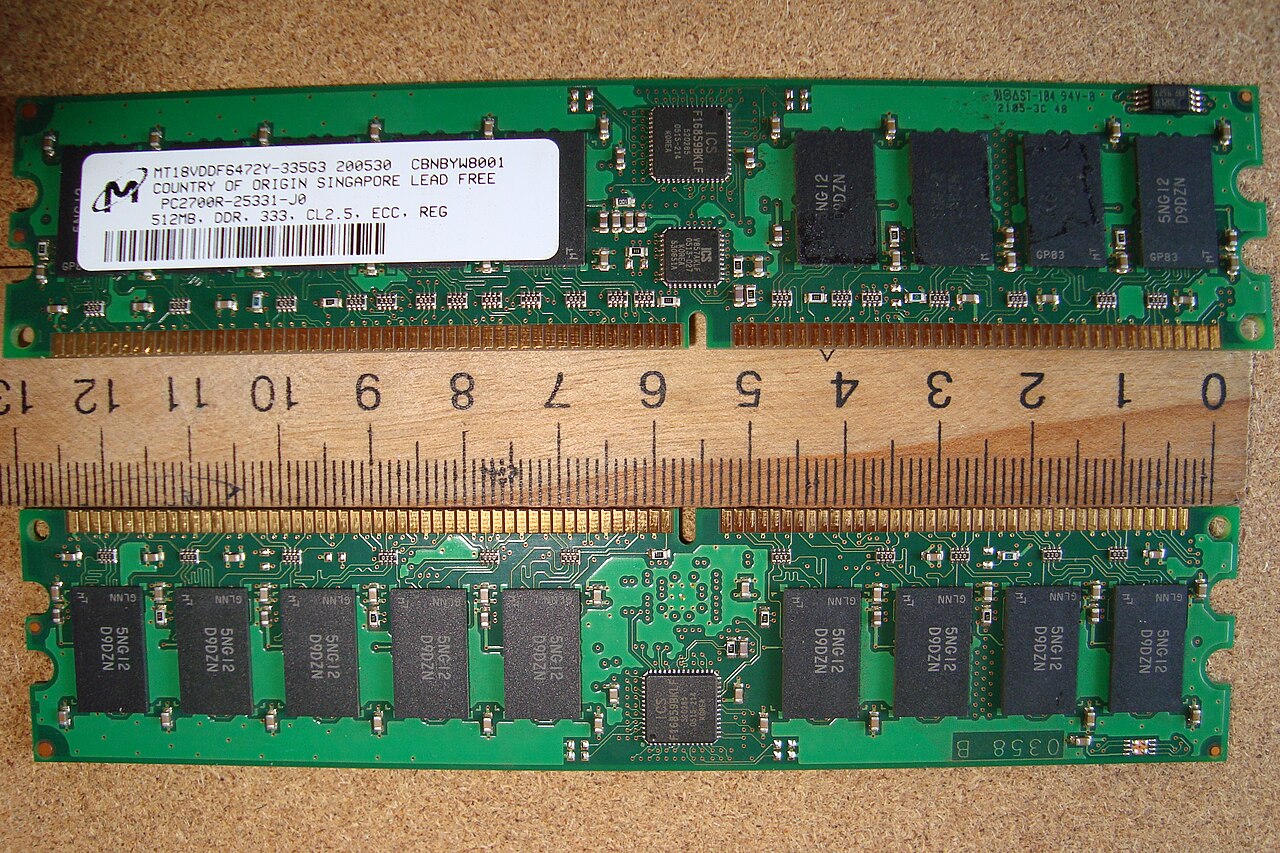
Tom's Hardware says Micron's fabs in Taiwan produce commodity DDR5 and LPDDR as well as HBM, the high-bandwidth memory used in AI accelerators. Sourceability cites TrendForce as saying the Taoyuan facility primarily produces DRAM.
We have not seen any source that ties a specific maker board's memory to Micron's Taoyuan fab, and we are not making that link here. The concern for the hobbyist market is general: Raspberry Pi says memory costs have risen steeply over the past two years and continue to climb, so any added strain on DRAM supply is unwelcome news for anyone buying boards that carry it.
Will one day actually hurt output?
The sources disagree on emphasis. Tom's Hardware says output will likely drop but that the decline will likely be negligible, and that a one-day warning strike does not necessarily mean a complete shutdown if management has time and people to prepare. It also says that, with memory demand at record levels, even a one-day suspension would have a material impact on Micron's output and earnings. Its stated condition is that the real outcome depends on employee participation, which operations are affected, and Micron's contingency plans. TrendForce, as cited by Sourceability, likewise says the consequences hinge on the strike's duration, employee participation and Micron's contingency measures.
Sourceability adds that a stoppage pulling engineers away from equipment maintenance and process monitoring could erode yields before causing an outright shutdown, and that in a market with little slack even a modest yield loss would reach buyers through tighter allocations and longer lead times. No source we read gave a figure for lost wafer starts or bit output. We are not estimating one. The more important signal is about the future. A warning strike is a way to show escalation is possible. If talks stall again, the next action might not be a single day.
What It Means for Makers
For people building with single-board computers, microcontroller modules with external RAM, or SBC-based products, this story is mostly context rather than an immediate supply event. Our reading of the sources:
- Memory prices are already reaching maker hardware. On October 1, 2026, Raspberry Pi's Eben Upton announced that from that day the price of the 2GB variants rises by $12.50, to $67.50 for Raspberry Pi 4 and $77.50 for Raspberry Pi 5 (US dollars). Raspberry Pi says prices for other products, including the 1GB variants of both boards and the 2GB variants of Compute Module 4 and Compute Module 5, remain unchanged. Read the full notice before you re-budget a bill of materials.
- A one-day strike is unlikely to change board pricing on its own. Tom's Hardware expects a negligible output decline from a one-day warning strike, though it also warns of a material impact in a record-demand market. Either way, nothing in our sources points to an immediate board price move. For hobbyists, there is no case for panic-buying.
- Prolonged labor trouble is the risk to watch. Nikkei says prolonged disruption could tighten already strained memory supplies. If the Taoyuan dispute escalates or Taichung workers move toward a strike, a DRAM market that is already tight would have less slack. The 2GB Pi 4 and Pi 5 have already been repriced once this month.
- For small product makers: if you ship a design built on an SBC or module with LPDDR or other DRAM, this is a good time to confirm your supplier's allocation and lead times. Raspberry Pi itself suggests checking that you are not paying for more RAM than you need. We have no supplier figures to offer on this. It is a planning prompt, not a forecast.
Status as of October 21, 2026: the Taoyuan strike has been announced for October 22, and we have not seen a report that it has been called off. Micron had not commented in the reports we read.
Sources
- Micron union in Taiwan to launch one-day strike as bonus dispute escalates (Nikkei Asia / Reuters)
- Micron's Taiwan union will launch a one-day strike this week (Tom's Hardware)
- Micron strike risks rise as AI inference demand shapes memory supply (Sourceability)
- Price increases for 2GB Raspberry Pi 4 and Raspberry Pi 5 (Raspberry Pi)
