
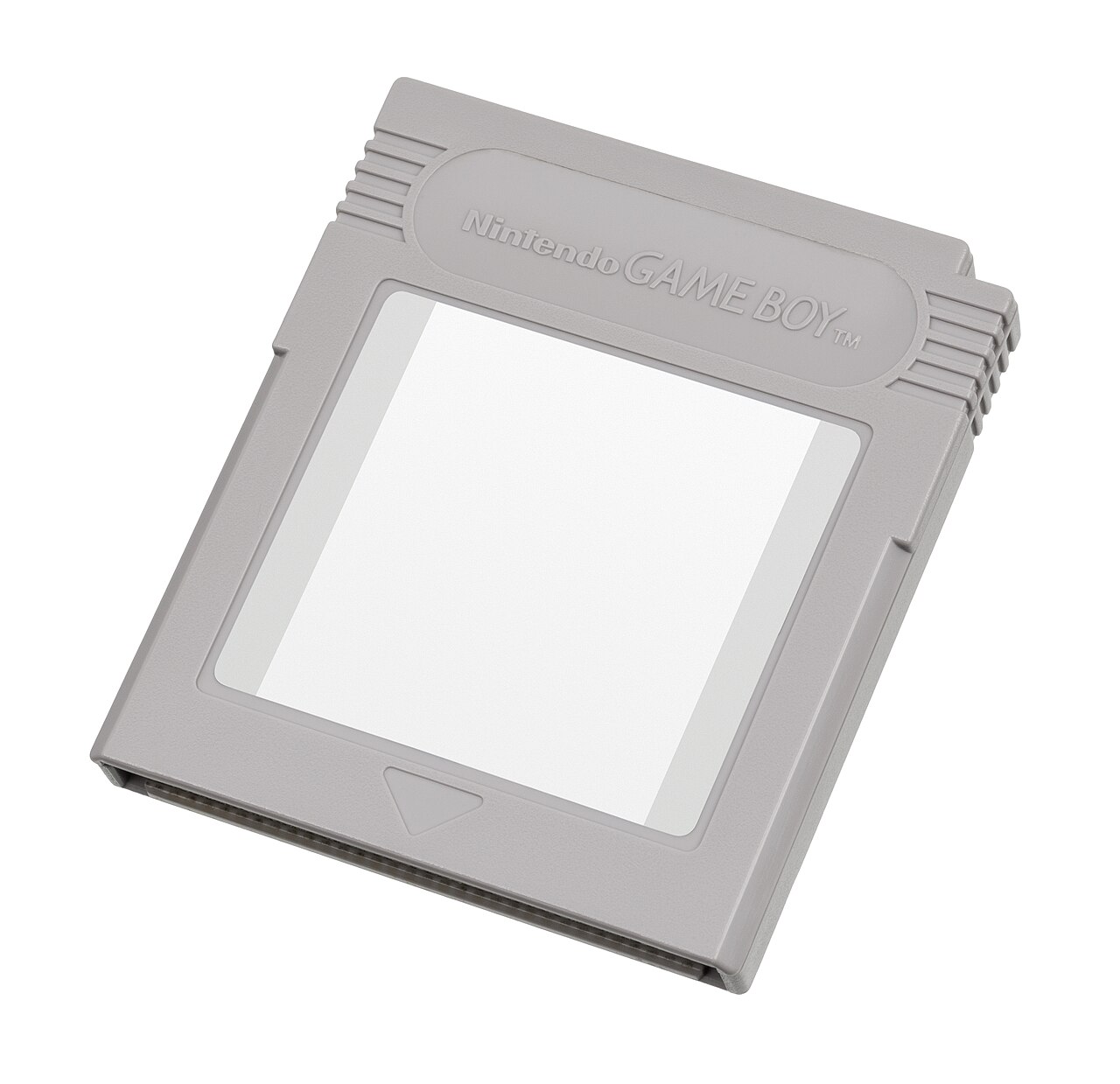
Most ways of getting Game Boy music out of a cartridge involve dumping the ROM and running it in an emulator. Retro Song Bird skips that step. It is a box-shaped speaker with a Game Boy cartridge slot. It reads the music from your own cart and plays it through its own speaker or a line-out jack. It can also act as a USB audio device that sends each of the console's four sound channels separately. The project comes from a maker called Bird Cartel and is currently crowdfunding on Kickstarter. It has not shipped yet.
The campaign launched on 15 November 2026 with a funding goal of US$15,000 and a deadline of 15 December 2026 (14:59, UTC−05:00). The live Kickstarter page returned HTTP 403 to our request, so the figures here come from a Wayback Machine snapshot of the page taken on 17 November 2026. At that point the project was marked live, with US$62,933 pledged by 606 backers. That is just over four times the goal, two days into a 30-day campaign. Totals will have changed since then.
How it gets the music off the cartridge
According to the maker's site, Retro Song Bird does not run the whole game. It has a map of 1,900+ carts that tells it which sections of each ROM to read. Audio comes from what the maker calls a register-accurate emulation of the Game Boy sound engine (the site's feature list says "register-level"), run on the relevant parts of the ROM. It does not record or resample audio from somewhere else. Tom's Hardware, which covered the launch on 18 November 2026, attributes the same "accurate, register-level sound emulation" claim to the developer.
The maker is clear that the device ships without any game ROMs. Everything it plays comes from the cartridges you own, and the site says the product is not affiliated with or endorsed by Nintendo. Because the cart list is a fixed map, a game that is not on it may not play. The 1,900+ figure is the maker's own number for supported titles. It is not a claim that every Game Boy or Game Boy Color cart works.
The maker's site also says the device plays soundtracks from GB Studio homebrew games and describes "GBAlbum" as a way to turn an album into a ROM that plays on real hardware and on Retro Song Bird. The materials we reviewed don't explain how either kind of cart is detected or handled, given that the main method relies on a list of known commercial titles.
The hardware you can touch
The published hardware details are brief. The maker's site and Tom's Hardware list these physical controls and ports:
- Next and previous track buttons, plus volume controls
- 3.5 mm stereo line-out
- USB-C (named by Tom's Hardware)
- A cartridge slot for Game Boy and Game Boy Color carts
None of the sources we checked name the microcontroller, the DAC or amplifier, the speaker driver, the audio sample rate or bit depth, the power input rating, the network radio, or the enclosure size. We are not going to guess at them. The maker mentions an open web API and over-the-air (OTA) updates, which implies a network connection of some kind. However, the published material does not say which radio or standard it uses. The maker's site labels its images "Product renderings. Subject to change." and Tom's Hardware reports that only a handful of hand-assembled prototypes exist, so the final hardware may differ.
Four channels, four USB streams
This is the feature most likely to matter to musicians. The Game Boy's sound hardware has four voices: two square-wave channels, a wave channel and a noise channel. Over USB, Retro Song Bird presents each of the four as its own audio stream, ready for a digital audio workstation. The maker's site and Tom's Hardware both describe this feature. In principle that lets you process the noise channel without touching the leads, or re-balance the mix, though we have not tested it.
Several other features point at chiptune performers:
- LSDj playback. The device can play back saved songs from an LSDj cartridge, according to the maker's site and Tom's Hardware.
- MIDI sync. Two units can be synced over MIDI, with a tempo setting to beat-match. Both the maker's site and Tom's Hardware describe this as a way to DJ a set.
- WAV export. Any soundtrack can be exported as WAV files, according to the maker's site.
- Mixtapes. The maker says mixtapes built from across your collection can be flashed to writable carts.
The sources don't say whether the MIDI connection uses DIN, TRS or USB-MIDI. We'd want to know before planning a live rig around it.
The rest of the feature list
Bird Cartel has added a lot of software features to what is basically a playback device. Taken from retrosongbird.com, with Tom's Hardware covering several of them:
- Backup and restore. The site lists backing up and restoring save files, backing up ROMs, and flashing writable carts.
- Game Boy Camera as a USB webcam. With a Game Boy Camera cartridge inserted, the device works as a USB webcam. The maker's site gives the output as 0.014 megapixels (128×112 pixels), four shades, at about 5 fps.
- Alarm mode. The device wakes you with any cartridge, with a button to snooze and pulling the cart to stop.
- Cheat codes. The maker's site lists Game Genie and GameShark codes, used in a browser.
- Open API. An open web API to read, flash and back up carts and grab Game Boy Camera frames, according to the maker's site.
- OTA updates. Over-the-air updates that the maker says add features and supported carts.
Some of these features depend on firmware, and the campaign is still running. Treat the list as what the maker intends to deliver, not as tested behaviour. We have not had hands-on time with a unit.
What It Means for Makers
Who it is for. There are three clear groups. The first is collectors who want to listen to a shelf of carts without a handheld, an emulator or ROM dumps. The second is chiptune musicians who want each Game Boy channel recorded on its own track and two-unit sync for live sets. The third is tinkerers interested in the open API and the Game Boy Camera webcam mode.
What it replaces or enables. Getting the four channels on separate tracks would otherwise mean emulator work or hardware modification. Here the maker presents it as a built-in USB audio feature, which is the main draw. Save backup is a smaller practical bonus. The webcam mode is a novelty, and the maker's own figure of 0.014 megapixels makes that obvious.
Price and availability. Retro Song Bird is a crowdfunding project and is not shipping. The reward tiers in the Kickstarter page data, in US dollars as of the 17 November 2026 snapshot, include these minimum pledges:
- Early Bird: US$59 (listed with a limit of 25; Tom's Hardware reports it has sold out)
- Retro Song Bird: US$79 (estimated delivery April 2027)
- Launch Bird: US$89 (a limited-edition colour scheme, numbered out of 100; estimated delivery April 2027)
- DJ Bird: US$150 (a two-unit bundle for beat-syncing; estimated delivery April 2027)
- Bespoke Bird: US$500 (a custom-made wood enclosure; estimated delivery May 2027)
The page data also lists hand-assembled prototype tiers at US$100 with an estimated January 2027 delivery, and shipping is limited to certain countries. Tom's Hardware says shipments are expected to begin in April 2027, and notes that the hardware and design still need refinements and that the project faces manufacturing risks including component availability, finding manufacturing partners and injection-molded enclosures. The page data does not show shipping costs, so check the live campaign before you pledge. The campaign closes on 15 December 2026. Kickstarter pledges buy you a place in a project, not a retail purchase. The usual risks apply, including delays, firmware features arriving late, and the chance that a project never delivers.
What we'd like to see before calling it a product. A published hardware spec covering the SoC, audio path, sample rate, radio and power input. The full list of supported carts. Documentation for the API and for how the USB audio device enumerates. Until those are published, the strongest claims, register-level accuracy and 1,900+ supported carts, come only from the maker.
