
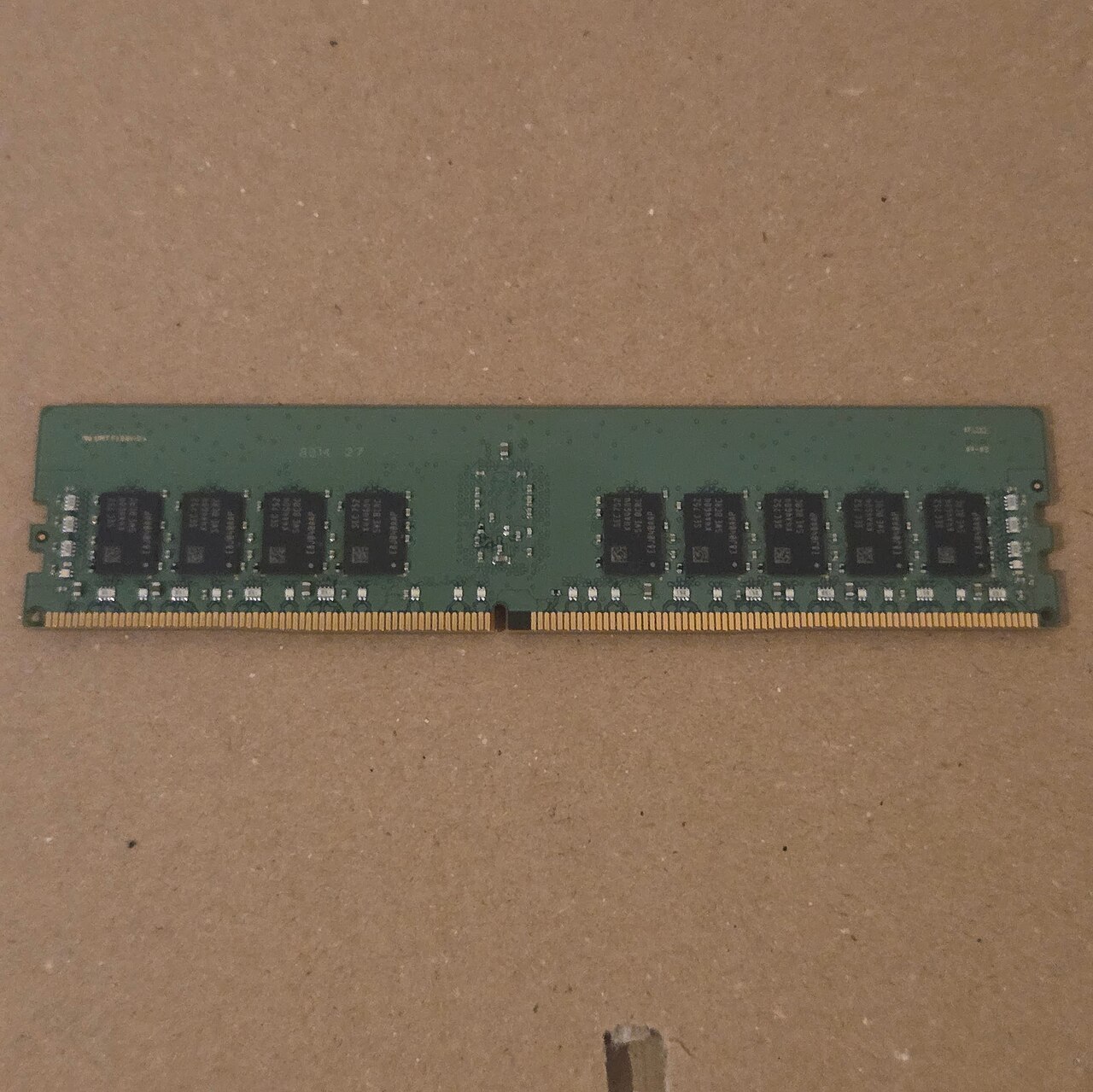
The memory market has stopped being about volume. Counterpoint Research's Global Memory Tracker for Q3 2026, released on 5 November 2026, says DRAM revenue rose 369% year on year to nearly $200 billion in the quarter. Bit shipments grew only about 4% from the previous quarter. The money comes almost entirely from price.
Three days before the report came out, Raspberry Pi raised the price of its 16GB Raspberry Pi 5 by $80, to $385. It blamed a lack of alternative supply for 16GB DRAM. The two announcements are about the same thing: a market where memory is scarce and prices keep rising, and where makers of high-density boards, maker boards included, pay for it.
A note on sourcing: we could not read Counterpoint's own release. The Counterpoint figures below therefore come from The Register's report and from a Yonhap-sourced story carried by NoCutNews, and are attributed to those outlets.
The numbers, as reported
According to The Register, Counterpoint puts Q3 2026 DRAM revenue up 369% year on year. The outlet quotes Counterpoint senior analyst Jeongku Choi: "Bit shipments rose only about 4 percent this quarter, yet DRAM revenue reached nearly $200 billion, close to 5x a year ago." The two figures agree with each other, since a 369% rise works out to about 4.7 times the year-ago revenue. The Register reports that average DRAM selling prices reached $1.90 per gigabit, and that price increases slowed from the steep rises of the first half of the year.
NoCutNews, relaying Yonhap, adds the vendor breakdown and the product-line split:
- Samsung: 38% revenue share, still the largest supplier.
- SK hynix: 29% share, with revenue up more than 40% quarter on quarter. The Register describes this as SK hynix recovering some of the share it lost earlier this year.
- Micron: 21% share. The Register says Micron's DRAM revenue grew more slowly than its rivals'.
- CXMT: 9%, down from 10% the quarter before.
The split by product line matters most for this audience. NoCutNews reports that HBM revenue nearly doubled year on year, while DDR revenue rose 500% and LPDDR about 400%. The high-bandwidth memory that sits next to AI accelerators, the part of the market that gets the headlines, grew the slowest of the three, and its share of total DRAM revenue declined. The commodity DDR and LPDDR families that end up in PCs, phones and single-board computers saw the largest revenue increases, and with bit shipments up only about 4% on the quarter, the increase is mostly price.
NoCutNews also gives Counterpoint's explanation for why AI infrastructure now pulls on ordinary DRAM. The ratio of GPUs to CPUs in AI computing infrastructure is narrowing from 4:1 to 2:1 and trending toward nearly 1:1, and Nvidia's next-generation Vera Rubin rack is analysed as carrying 1.5 TB of DRAM per CPU socket, about three times the previous generation. More CPU sockets per accelerator, each carrying that much conventional memory, helps explain why data-centre demand is lifting conventional DRAM.
Why prices are not coming down soon
The Register quotes Counterpoint research director MS Hwang on supports for current pricing. HBM prices, which lagged commodity DRAM this year, are catching up. Long-term agreements (LTAs) are supporting prices. And supply will stay tight because major new fabs will not start production until 2028. NoCutNews gives the same timeline, saying full operation of new large chip plants is expected in 2028. Counterpoint expects prices to stay high next year.
The Register also connects the memory squeeze to the wider market. It reports that the average price of a laptop or desktop rose by double-digit percentages across Europe this summer, and that smartphone shipments are down by at least a fifth.
What It Means for Makers
The clearest effect on maker hardware so far is Raspberry Pi's 2 November 2026 announcement, written by Eben Upton. From that date:
- Raspberry Pi 5, 16GB: up $80 to $385 (USD, effective 2 November 2026). That implies a previous price of $305.
- Compute Module 5, 16GB variants: up $40. Raspberry Pi refers buyers to the CM5 product brief for updated prices and does not list them in the announcement. In the comments, a Raspberry Pi staff member said the CM5 16GB boards had already had a $40 rise earlier, while the Pi 5 16GB price had been held for longer.
- Raspberry Pi 500+ (16GB): price held, unchanged.
Raspberry Pi gives the reason as "a lack of alternative supply for 16GB DRAM, compounded by other ongoing component shortages." That is consistent with the Counterpoint data: a 16GB single-board computer depends on high-density DRAM, and Counterpoint reports the steepest revenue gains in conventional DDR and LPDDR rather than HBM. Raspberry Pi says it is qualifying alternative parts to gain sourcing flexibility.
Who this hits: anyone whose design or workload needs the 16GB configuration, such as memory-heavy workloads on a Pi 5 or an embedded design built around the 16GB CM5. For production planning, a $40 increase per module adds up quickly across a run, and given Counterpoint's outlook it is prudent to budget at the current price rather than assume a short-term spike. Raspberry Pi itself says it looks forward to rolling back its increases when memory costs fall.
Who it doesn't hit (yet): the announcement names only the 16GB Pi 5 and CM5 variants, so other variants were not part of this round. The Pi 500+ is notable because Raspberry Pi held its price even though it also carries 16GB. The announcement does not say why.
What Raspberry Pi recommends: use lower-density variants or earlier Raspberry Pi models where possible, or optimise software to use less memory. The company also warns that some sellers are charging inflated prices and says its products are available at official prices through its Approved Resellers. With supply this tight, check any reseller's price against the official figure before buying.
What to watch: Counterpoint expects high prices next year, LTAs are supporting prices, and new fab capacity is not due until 2028. On that basis, further price changes on high-density boards would not be a surprise. Before specifying a 16GB part in a design that will ship over the next year or two, check whether the workload actually needs it. At these prices the difference between 8GB and 16GB has a real cost.
The short version
The DRAM industry shipped about 4% more bits in Q3 2026 than in the previous quarter and, according to Counterpoint, took in close to five times its year-ago revenue doing it. Conventional DDR and LPDDR, not HBM, had the biggest revenue gains. Makers of high-density boards are feeling it in prices, and the 16GB Raspberry Pi 5 at $385 is the most visible example so far.
