
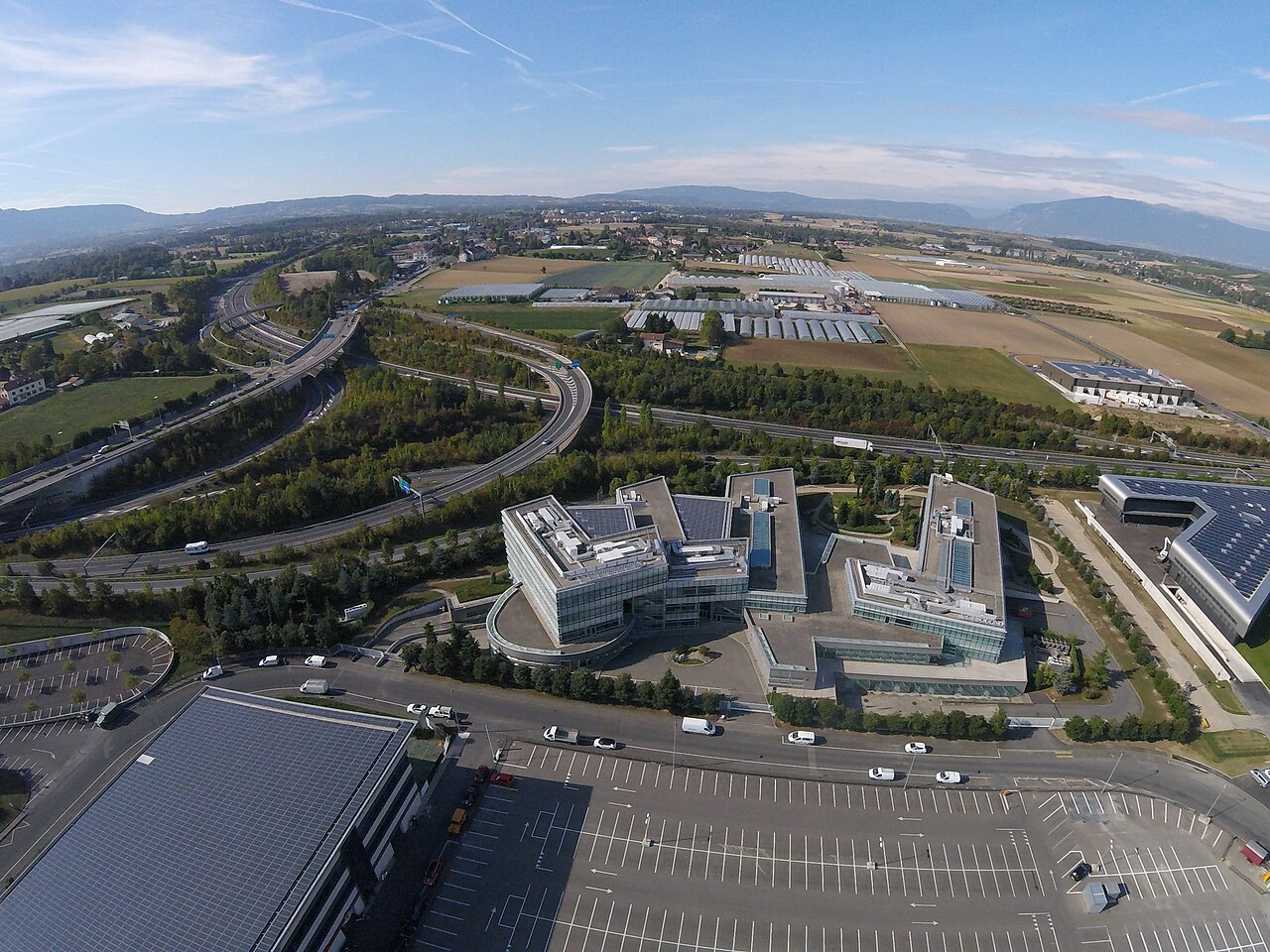
STMicroelectronics, the company behind the STM32 microcontroller family that sits on a large share of the dev boards on maker benches, reported third-quarter 2026 results on October 29. The numbers are strong. The commentary around them should interest anyone who buys ST parts: management says demand is running well ahead of what the company can ship, and ST's CFO confirmed that the company is raising prices on some products.
The Numbers
According to ST's own results release, which was also filed with the US Securities and Exchange Commission as a Form 6-K, the quarter ended September 26, 2026 came out as follows:
- Net revenues: $3.76 billion, up 17.9% year over year and 7.7% sequentially
- Gross margin: 37.3%, compared with 33.2% a year earlier (the year-ago figure appears in the SEC filing's results table and in The Next Web's report)
- Operating income: $367 million under US GAAP; $429 million non-GAAP
- Net income: $291 million, or $0.31 per diluted share; non-GAAP $344 million, or $0.37 per diluted share
ST said revenue landed above the midpoint of its own guidance range, driven by its CECP and Personal Electronics businesses. The Next Web, citing Reuters and Bloomberg, reported that the $429 million non-GAAP operating income beat the $400.5 million analysts expected, according to LSEG data.
The SEC filing carries the same headline figures as the newsroom release. It adds the appendix tables that reconcile GAAP and non-GAAP results, which is the place to check if you want to see exactly what was excluded to get from $367 million to $429 million.
The Outlook: A $4.15 Billion Quarter
For the fourth quarter, ST guided to revenue of $4.15 billion at the midpoint. That would be roughly 10.5% higher than Q3 and roughly 24.7% higher than a year earlier. Gross margin is guided to about 39.0%. ST notes that this figure already absorbs about 40 basis points of unused-capacity charges, meaning some of its fabs are still not fully loaded even with demand this high. If Q4 comes in at the midpoint, full-year 2026 revenue would be about $14.5 billion, up 22.8%.
The Next Web reported that the Q4 forecast came in above analyst expectations.
"Demand Remains Well Above Supply"
The most useful lines for anyone buying parts are in CEO Jean-Marc Chery's comments in the release. He said "demand remains well above supply" and that "inventory in distribution continued to track below our standard target." He also said ST is expanding capacity, and the release names AI datacenters and LEO satellite communication as company-specific growth drivers.
The two statements describe different things. Demand above supply means ST is shipping less than customers want to buy. Distribution inventory below target means the channel buffer, the stock held by the distributors that small buyers and board makers actually order from, is thinner than ST considers normal. When both are true, lead times and allocation become real considerations rather than background noise.
The Next Web's Reuters-sourced report adds the pricing side. Supply is tight, input costs are rising, and ST is raising prices on some products, according to CFO Lorenzo Grandi. Neither the release nor the report, as summarised, says which product lines are affected or by how much.
Where the Growth Is Coming From
The growth highlighted in the coverage is not hobbyist or consumer gadgetry. According to The Next Web:
- ST now expects data-centre revenue of about $1.3 billion for 2026, up from the more-than-$1 billion it forecast in July. The Next Web says this figure came from Chery's remarks to analysts and was not in the earnings statement. ST kept its 2027 goal of well above $2 billion. Chery said silicon photonics chips, which use light to move data between servers, drove most of the demand.
- The RF and optical communications unit grew 46.2% to $504 million in the quarter.
Fab capacity and engineering attention flowing toward AI infrastructure and satellite links is a pattern worth watching if you buy general-purpose parts, since those parts draw on the same manufacturing base. That is an inference, not something ST or the cited reports state.
Leadership Changes
The Next Web reports that Chery will stay on as CEO for another year, subject to a shareholder vote at the 2027 annual meeting. In a separate announcement, ST named Remi El-Ouazzane chief technology officer and Marco Cassis chief strategic officer, both effective January 1, 2027.
What It Means for Makers
The audience here is hobbyists, small-batch board designers, educators buying classroom kits and engineers prototyping on STM32 Nucleo or Discovery boards. For all of them the earnings call matters less than three facts ST and its CFO stated directly: supply is short of demand, distributor stock is below ST's target, and ST is raising prices on some products.
Here is what the sources do not say. ST's release gives no STM32-specific revenue, lead-time or pricing figure, and the price increases are described only as applying to "some products." It would be wrong to say STM32 prices are going up or that a particular part is on allocation. Nothing published supports that. The overall picture still points one way: tighter supply, thinner channel stock and a vendor willing to push prices up.
Practical considerations follow from that, none of which depend on guessing at specific parts:
- Small production runs: if you are planning a Tindie-scale or crowdfunded batch on ST silicon in 2027, check distributor stock and quoted lead times before you lock your bill of materials and price. Below-target channel inventory means less buffer if a large customer absorbs a batch.
- Board pricing: third-party boards built on ST parts could see their prices move if their makers' component costs rise. Any increase would depend on which parts ST reprices, and that has not been disclosed.
- Second sources and pin-compatible footprints: designs that can take more than one package variant or memory size within a family give you more room if one SKU gets scarce. This is ordinary supply-chain practice and not a reaction to any announced shortage.
- Education buyers: schools that order kits once a year may want to price them earlier than usual, given that the vendor itself describes demand as exceeding supply.
There is a longer-term upside. ST says it is expanding capacity, and the Q4 margin guidance still includes unused-capacity charges. Both suggest supply should improve as new capacity comes online. ST gave no timeline in the sources cited here.
Status: these are reported financial results for the quarter ended September 26, 2026, plus forward guidance for Q4 2026. They are not a product announcement, and no new parts, prices or availability dates were given in the sources.
