
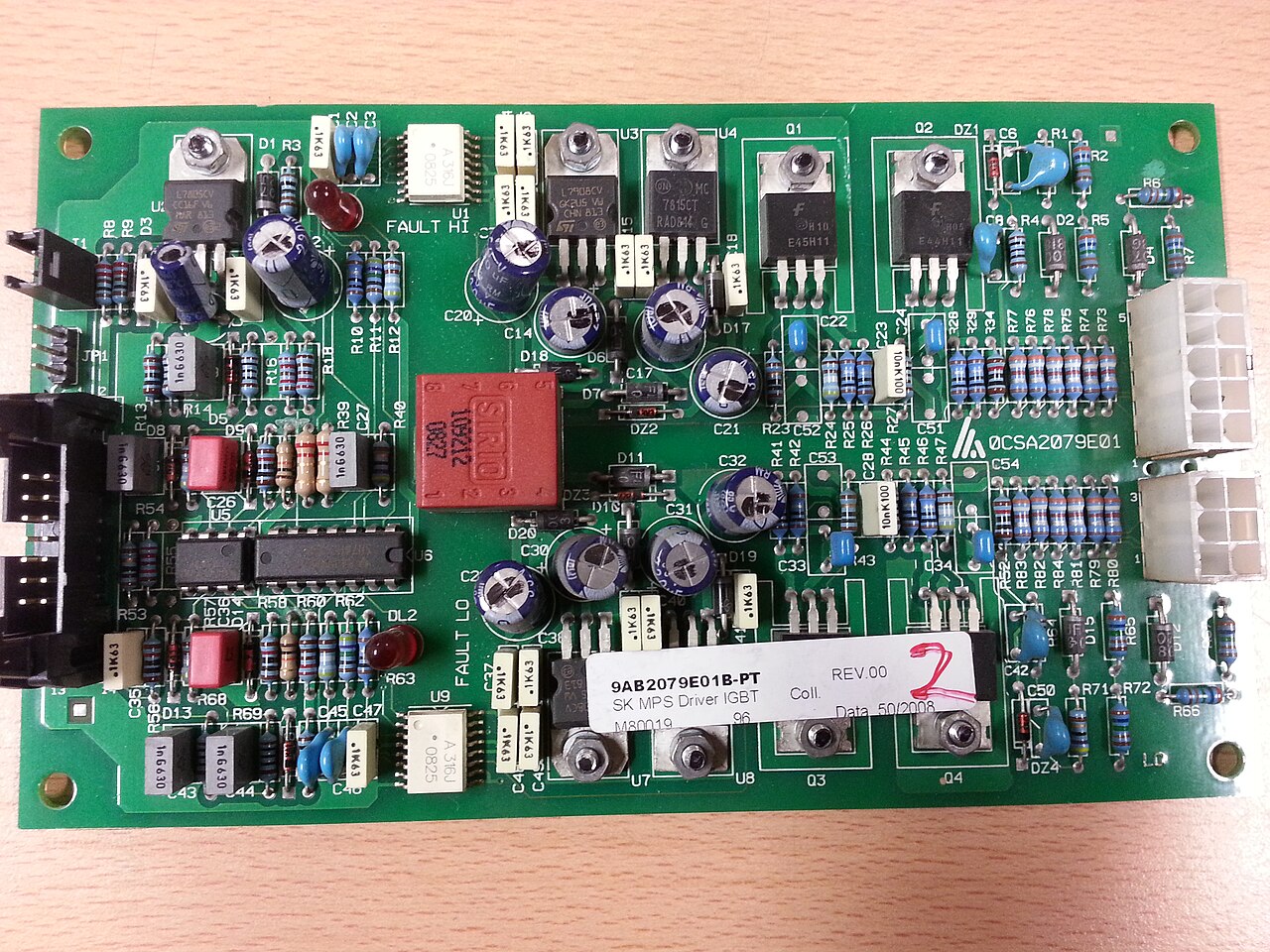
Most coverage of AI's effect on electronics supply has been about memory, GPUs and advanced packaging. The bare printed circuit board, and the laminate it is made from, rarely came up. That is changing. On 29 October 2026, Tom's Hardware published Mark Tyson's summary of a Nikkei Asia report describing a PCB shortage that PC makers say they cannot buy their way out of. It lines up with warnings from European and Chinese supply-chain sources that have been building since mid-2026.
A note on sourcing first. We did not read the Nikkei Asia article itself, so we could not check its figures first-hand. Everything below attributed to Nikkei comes from Tom's Hardware's summary. The industry figures from Würth Elektronik, STARTEAM GLOBAL and Confidee come from Evertiq and I-Connect007 coverage, which we read directly.
What the Nikkei report says
According to Tom's Hardware, the people Nikkei spoke to are mostly unnamed, and their figures are striking:
- PC makers can't secure boards. An unnamed executive at a US PC maker said that even though PC shipments could decline again next year, the company is still struggling to secure enough PCBs.
- Lead times have doubled, and some run to 30 months. One PCB maker said a significant number of products now have lead times that have doubled, and that some PCB orders will take as long as 30 months to fulfil.
- New orders land in late 2028. Another PCB supply firm said a new order placed today would not be fulfilled until late 2028.
- Laminate costs are up at least 12x. A Taiwanese PC maker said copper clad laminate (CCL) costs have risen at least 12 times since July.
- Laminate order books are filling to 2030. One of the world's leading CCL suppliers said its order book is filling up to 2030, even though it plans to triple capacity by 2028.
The report also points to Nvidia. Tom's Hardware notes that Nvidia recently announced partnerships with substrate makers Ibiden, Samsung Electro-Mechanics and Unimicron, and that Unimicron is looking at expanding capacity 2.5x over the next three years. New capacity also needs people, and the report says engineering staff for new facilities are increasingly hard to find, with salaries across the PCB industry up 20% to 30%.
Two points need care. The 12x figure is for copper clad laminate, the base material, not for finished boards. A finished PCB's price also covers copper, drilling, plating, solder mask, finishing, testing and labour, so a 12x rise in CCL does not mean a 12x rise in the price of a board. The 30-month figure is the worst case one supplier described for some orders, not an industry average.
Why AI servers eat so much board
The European analysis explains why the demand is so large. In a joint market analysis covered by Evertiq on 8 September 2026, STARTEAM GLOBAL and Würth Elektronik said AI server PCBs use three to five times more layers than conventional designs, driving a substantial increase in demand for high-quality PCB materials. More layers plausibly means more laminate, prepreg and copper foil for every board.
Didrik Bech, a board member at PCB supplier Confidee, gave Evertiq a sense of scale in an interview published on 28 July 2026. By his own estimates, a typical AI rack holds multilayer PCBs, including 20- to 40-layer boards, alongside simpler boards, adding up to as many as ten thousand PCB assemblies. He said more than 830 data centres have been built worldwide and roughly another thousand are planned. Bech called the first half of 2026 the most disruptive period he has seen since the dot-com crash.
It is not only laminate
The Würth Elektronik and STARTEAM GLOBAL analysis says the shortage goes beyond CCLs to:
- copper foils
- prepregs, particularly the PP1080 and PP2116 styles
- high-performance resins
- tungsten carbide used in drilling and routing tools
For fibreglass fabrics, the analysis expects no significant easing before 2028. It lists the effects as rising prices, longer lead times, reduced price predictability and stricter allocation, and expects demand to stay at elevated levels, or keep growing, at least through the end of 2026.
The same companies raised the alarm earlier. In a 30 July 2026 announcement carried by I-Connect007, STARTEAM GLOBAL and Würth Elektronik warned that demand for PCB base materials was outpacing supply and that, according to the companies, the market was shifting from one of material availability to one driven by allocation. The announcement, which quotes Manuel Mairhofer of Würth Elektronik's management board and STARTEAM GLOBAL CEO Daniel Jacob, said companies without long-term supplier relationships, reliable demand forecasts or qualified alternative materials face increased costs and potential supply disruptions.
A second data point on the 2028 date
The late-2028 date in the Nikkei summary has an earlier, separate match. In the July interview, Bech told Evertiq that one of China's largest AI-focused PCB manufacturers had recently told customers that orders not placed by 10 July can no longer be delivered before 2028. That is a different source and a different supplier than the ones Nikkei quoted, and it predates the Nikkei report by more than three months. Two separate accounts pointing to 2028 delivery dates make the claim more believable than either one alone. Even so, both describe what particular suppliers told particular customers, not market-wide figures.
What It Means for Makers
None of the sources talk about hobby or prototype PCB services. They deal with PC makers, AI server boards and the base-material market. So what follows is inference, and should be read that way.
Who should pay attention: anyone ordering boards in volume. That includes small hardware companies moving from prototype to a production run, crowdfunded projects with a delivery date already promised to backers, educators buying classroom kits, and makers selling boards on Tindie-style storefronts. The I-Connect007 announcement names the companies most exposed: those without long-term supplier relationships, reliable demand forecasts or qualified alternative materials. That describes many small buyers.
What changes: the shortage reported is in shared inputs: laminate, prepreg, copper foil, fibreglass fabric and drill tooling. Simple two- and four-layer FR-4 boards are not AI server boards, but they may draw on some of the same material supply chains. The sources say the visible effects so far are higher prices, longer lead times and allocation. For a small order, allocation could plausibly mean waiting behind bigger customers.
Price and availability, as the sources state them: no source gives a price for a finished board in any currency, and no source names a maker-oriented fab or a price change at one. The figures available are:
- CCL costs up at least 12x since July (a Taiwanese PC maker, via Tom's Hardware summarizing Nikkei Asia, 29 October 2026)
- lead times doubled on a significant number of products, with some orders taking up to 30 months (a PCB maker, same report)
- new orders not fulfilled until late 2028 (a PCB supply firm, same report)
- no significant easing for fibreglass fabric before 2028, and elevated demand at least through the end of 2026 (Würth Elektronik and STARTEAM GLOBAL, via Evertiq, 8 September 2026)
For anyone planning a production run in 2027, the practical step is to get current quotes and lead times from your fab now, and not to rely on figures from earlier this year. If a design can use more than one laminate, getting it qualified on an alternative material is the kind of hedge the Würth Elektronik and STARTEAM GLOBAL warning points to, since it names qualification of alternative materials as part of the answer.
On supply, the CCL supplier plans to triple capacity by 2028 and Unimicron is looking at expanding capacity 2.5x over three years. But that CCL supplier also says its order book is filling to 2030. Taken together, the sources suggest new capacity is mostly being booked before it comes online.
Sources
- Tom's Hardware: AI demand triggers massive PCB shortage for PC makers (29 October 2026, summarizing Nikkei Asia)
- Evertiq: PCB material shortages intensify as AI infrastructure absorbs laminate capacity (8 September 2026)
- I-Connect007: AI Boom Drives Global PCB Material Shortages, Warn Würth Elektronik and STARTEAM GLOBAL (30 July 2026)
- Evertiq: AI data centres are consuming PCBs, Chinese lead times stretch to 2028 (28 July 2026)
