
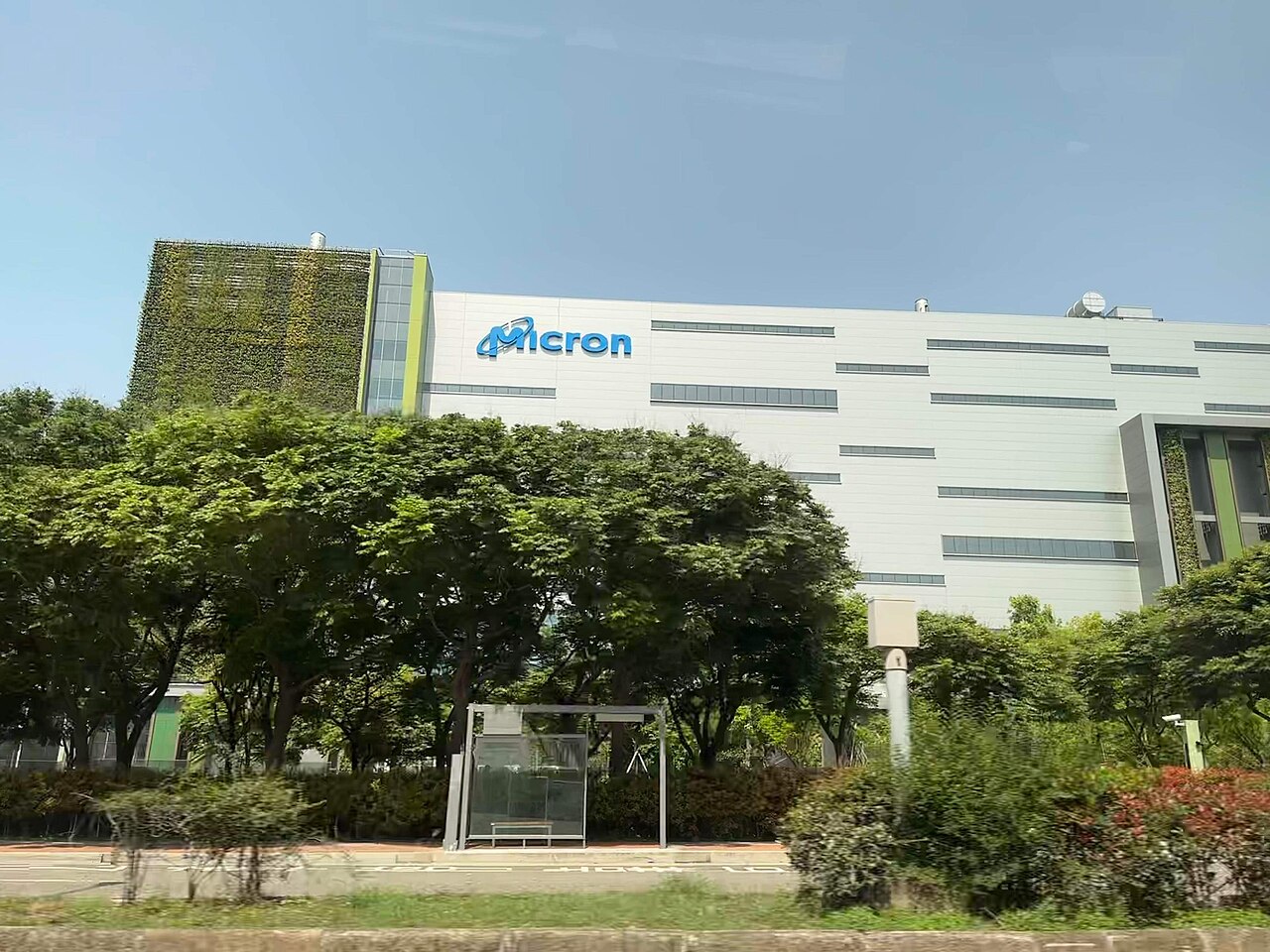
Micron is putting a lot of cash in front of its Taiwan production workers, but one of its two unions there has not taken the deal. Tom's Hardware, citing Digitimes, reported on October 30 that Micron Taiwan is paying production-line staff three bonuses in October and that a new quarterly profit bonus is due to start in January 2027. Some Taoyuan union officials have already held a one-day strike, and nearly 70% of the Taoyuan site's members turned down management's latest offer. The next meeting between the two sides is tentatively set for November 6.
This follows our earlier coverage of the strike itself. Below are the bonus figures as reported, how they compare with Micron's September offer, and what is still unresolved.
What is being paid out?
According to Tom's Hardware, the October payout combines three separate items:
- Annual performance bonus: estimated at 7.5 to 12.5 months of salary for the majority of workers.
- Mass-production bonus: 20% of annual salary.
- One-time appreciation bonus: NT$1,000,000 (about US$31,000), prorated for employees who have not reached a full year of service.
The headline says the three bonuses go to more than 4,300 production-line staff. The report also says that about 700 employees get five years' worth of salary in bonuses in a single payout, and that Tom's Hardware, citing Digitimes, puts this at about 17% of the production-line workforce. (For reference, 700 out of 4,300 works out to roughly 16%, so the report's own rounding is loose.) The report does not spell out what qualifies those 700 workers for the larger amount, so we are not guessing at the criteria.
Starting in January 2027, Tom's Hardware says, workers can expect a quarterly profit bonus, paid 50% in cash and 50% in stock. The first one is to be paid entirely in cash.
How does this compare with the September offer?
Micron first put numbers on the table on September 11. AFP, carried by The Standard, quoted a company statement that "Taiwan direct labour team members will receive total rewards equivalent to 35 to 68 months of pay, with minimum cash compensation of NT$1.7 million" for fiscal 2026. The Standard's copy converted that minimum to about US$53,700. Focus Taiwan, the English service of Taiwan's Central News Agency (CNA), gave it as US$53,459. Micron said it has about 15,000 team members in Taiwan and more than NT$1.6 trillion invested there.
Focus Taiwan also reported that entry-level engineers were expected to average NT$2.9 million in total compensation, including stock rewards, and that average total compensation was expected to reach NT$3.4 million.
We have not seen a Micron statement dated after September 11. So we cannot confirm whether the October bonuses are how the September package is being paid, a revised version of it, or something added on top. The figures here come from Tom's Hardware's reading of Digitimes, not from a new Micron release.
Why hasn't the Taoyuan union accepted?
The dispute is about how bonuses are set, not only how big they are. Lin Che-jui, the union head, told reporters on September 15, as reported by Focus Taiwan, that the union wants a long-term mechanism under which employees share 15 percent of operating profits. He also said the reward package had been proposed unilaterally, without agreement from the union. That is the core problem: a one-time payment, however large, does not lock in a formula for future years.
On September 22, Taiwan News reported that mediation had ended without agreement the day before and that the union planned a strike vote in early October. Workers were asking for a permanent plan that puts 15% of operating profit into bonuses. According to union leaders and an internal memo cited by Taiwan News, Micron representatives said the company had a bonus plan but could not disclose it until board approval in early October. Lin said the union was told there was no room to adjust this year's plan and that changes might have to wait until 2027.
Tom's Hardware now reports that some union officials have launched a one-day strike, calling for clearer profit-sharing arrangements and bonus terms, and that nearly 70% of Taoyuan members turned down management's latest offer. The quarterly profit bonus starting in 2027 is the closest thing to a recurring mechanism in the reported terms. The sources we read do not say whether it ties payouts to a fixed share of operating profit, which is what the union has asked for.
What about Taichung?
Tom's Hardware reports that Micron's Taichung union has agreed to a 10% employer contribution toward worker pensions and a tripling of the day-shift allowance. Taiwan News had reported that a third mediation round with the Taichung union was scheduled for October 22.
That leaves Micron with agreed terms at one site and an open dispute at the other, with November 6 as the next tentative meeting date for Taoyuan.
How does Micron compare with Samsung and SK hynix?
Tom's Hardware compares the payout with Micron's two big memory rivals. Samsung workers voted in May 2026 to accept a bonus averaging $340,000. SK hynix workers are set to receive $477,000 this year, which could grow to almost $900,000 in 2027. These are averages and projections reported by Tom's Hardware, not like-for-like figures. Pay structures, worker groups and tax treatment differ between the companies, so treat the comparison as a rough guide to the labor market, not a ranking.
AFP noted that the unions' bonus demands came as chip companies' earnings soared on AI demand. Memory makers are posting record sales and profits from AI data-center demand, and the people running the fabs want a share of it. Tom's Hardware adds that bonuses tied to performance and profit could fall sharply if AI demand fades and the demand cycle returns to normal.
What It Means for Makers
This story affects anyone who buys DRAM or flash, including people buying single-board computers, compute modules, SSDs or memory chips for their own designs. Micron is one of the three major memory makers. Focus Taiwan, citing international news reports, says Taiwan accounts for about 60 percent of Micron's total production capacity, and The Standard says Micron makes around 50-60 percent of its chips there. Focus Taiwan also notes that industry sources said a strike at Micron Taiwan could further constrain supplies, and that tight memory supply has been driving up memory chip prices. A labor dispute at a memory fab is therefore worth watching even if it never reaches a shopping cart.
Here is what the sources do and do not show:
- No reported output impact. None of the sources we read reports lost wafer output, shipment delays or allocation changes from the one-day strike. Nothing here supports a claim that this dispute has moved board or module prices on its own.
- Labor costs look set to rise. A recurring quarterly profit bonus from January 2027, on top of one-time payouts, points to higher labor costs for Micron Taiwan. How much, and whether that reaches component prices, depends on profits and demand, which these sources do not quantify.
- Taoyuan is the open question. Taichung's union has agreed terms. At Taoyuan, some union officials have already struck for a day and nearly 70% of members turned down the latest offer. The tentative November 6 meeting is the next chance to settle it.
Status, as of the October 30 report: the three bonuses are being paid in October. The quarterly profit bonus is expected to start in January 2027. The Taoyuan dispute is unresolved, with a meeting tentatively set for November 6. Bonus amounts are as Tom's Hardware reported them in October 2026, and the NT$1.7 million minimum is from Micron's September 11 statement. We will update when Micron or either union says something new.
Sources
- 5 years' worth of salary in bonuses given to 700 eligible Micron workers as company continues to battle union - Tom's Hardware
- Micron Taiwan union rejects one-time reward package - Focus Taiwan (CNA)
- Micron says Taiwan workers to get up to 68 months' pay after strike threat - The Standard (AFP)
- Micron Taiwan's Taoyuan union plans strike vote - Taiwan News
