
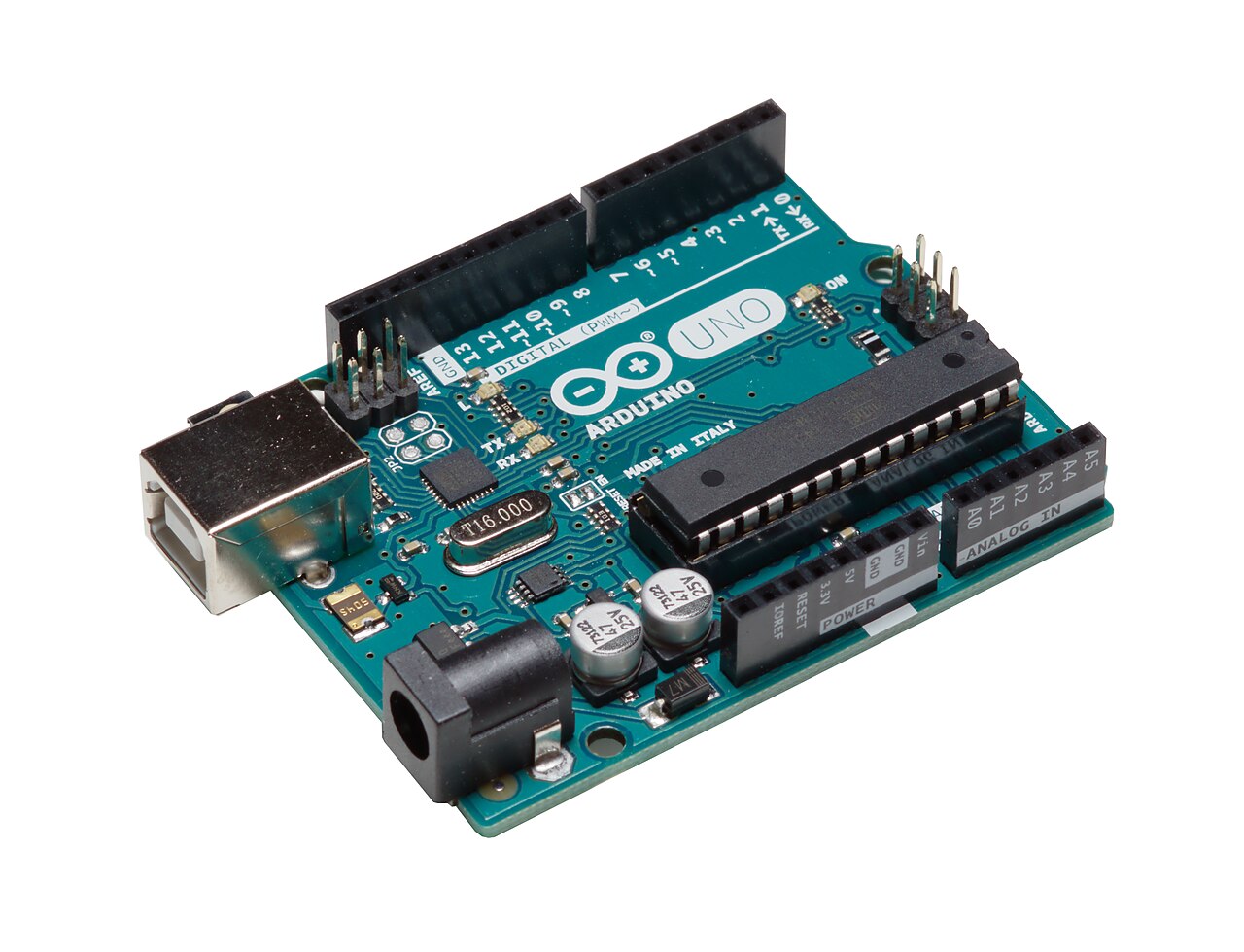
On November 18, 2026, FIRST, which describes itself as the world's leading youth robotics community, announced who will build its next generation of K-8 programs. The new lineup replaces FIRST LEGO League. Instead, FIRST is working with Qualcomm Technologies, Inc. as lead technology partner (the partner bringing Arduino), Walt Disney Imagineering on game and challenge design, and REV Robotics on the physical robotics platform.
The press release says the programs will leverage Arduino technologies but does not name a board. FIRST's K-8 program FAQ does: it says teams in the grades 3-8 program will use SPIKE Prime or "a new hardware platform, built on Arduino's UNO Q, and a mechanical build system developed through a partnership with Qualcomm Technologies, Inc., Arduino, and REV Robotics for FIRST." The Circuit Rocks blog reached the same conclusion on November 24. FIRST says more hardware details will come ahead of the 2027-2028 season.
Who is doing what
FIRST split the work into three parts. Its K-8 program page describes the arrangement this way: "Qualcomm Technologies, Inc. is powering the experience with Arduino. Walt Disney Imagineering is helping shape the game, challenges, and annual themes. REV Robotics is developing the core physical robotics platform for grades 3-8."
- Qualcomm Technologies is the lead technology partner. The press release says it combines "Arduino's development ecosystem and its expertise in intelligent computing, connectivity and edge AI." The release also quotes Fabio Violante, Vice President and General Manager of Arduino.
- Walt Disney Imagineering collaborates on game and challenge development and on the annual themes.
- REV Robotics develops the core physical robotics platform students use to build, test and iterate. On the program page, its platform is scoped to grades 3-8.
The K-2 hardware is still unannounced. FIRST says a K-2 robotics platform announcement is "coming soon." Per the FAQ, K-2 teams will use either SPIKE Essential or new hardware introduced starting in the 2027-2028 season.
Two age bands
FIRST's program page lists two planned experiences:
- Ages 5-7 (grades K-2)
- Ages 8-14 (grades 3-8)
The page says the programs will launch "with new program names, experiences, and supporting technologies." None of the program names has been published. The press release says additional details will be announced ahead of the 2027-2028 season, including program names, the technology platform, the game experience, educator resources and participation pathways. For 2027-2028, the FAQ says teams on the new hardware will play the same autonomous game as SPIKE users, on a single 4x8 field.
The reported controller: Arduino UNO Q
FIRST names the UNO Q but has not published specifications for the program kit. Circuit Rocks describes the board as follows. These figures come from that outlet's article, not from an Arduino datasheet we reviewed:
- Application processor: Qualcomm Dragonwing QRB2210, four Cortex-A53 cores at up to 2.0 GHz, running Debian Linux
- Memory and storage (base board): 2 GB LPDDR4 and 16 GB eMMC
- Real-time microcontroller: STM32U585 (Cortex-M33) at 160 MHz
- Interconnect: an internal bridge between the Linux side and the microcontroller
The two-processor design matters for an educational robotics platform. A Linux-capable application processor can run higher-level software, which fits the "edge AI" language in the press release. Separately, a Cortex-M33 microcontroller handles timing-sensitive jobs such as motor control and sensor polling that a general-purpose OS schedules poorly. Neither the press release nor the program page says how students will program either side, which languages or environments will be supported, or how the REV build system connects to the controller. Those details belong to the hardware information FIRST says is still to come.
When it launches: two dates
The launch date depends on which FIRST document you read.
- The PR Newswire release says "Launching in spring 2027."
- FIRST's K-8 program page (FAQ marked "Updated November 18") says the programs are "gearing up for a groundbreaking launch for the 2027-2028 season."
These may not conflict. A spring 2027 reveal followed by a 2027-2028 competition season would match the usual pattern of releasing materials before teams start building, though neither source spells that out. Schools budgeting for next year should plan around the 2027-2028 season as the first season on the new platform. Circuit Rocks gives spring 2027 as the launch.
The LEGO transition
The change is gradual, which will matter to classrooms that already own LEGO kits. According to FIRST's program page, FIRST plans to maintain compatibility with LEGO Education SPIKE sets, both Prime and Essential, through the 2028-2029 season, and FIRST LEGO League concludes in 2027. The next-generation programs from 2027-2028 forward are "not sponsored, endorsed, or otherwise affiliated with LEGO Education or the LEGO Group."
Teams can therefore keep competing with existing SPIKE hardware while the Arduino- and REV-based platform rolls out. FIRST has not said what happens to SPIKE support after 2028-2029.
Scale
The press release says FIRST reached more than 850,000 participants during the 2025-2026 season and has reached more than 4 million since 1989. Not all of them are in the K-8 tiers.
What It Means for Makers
Who it is for: K-8 students, coaches and teachers in FIRST's elementary and middle-school programs, split into a K-2 experience (ages 5-7) and a grades 3-8 experience (ages 8-14). Makers who volunteer as coaches or mentors may be working with Arduino and REV hardware rather than LEGO hubs.
What it replaces: FIRST LEGO League. The next-generation programs are not affiliated with LEGO Education from 2027-2028, and SPIKE Prime and SPIKE Essential compatibility is planned through 2028-2029.
What it enables: if Circuit Rocks' description of the UNO Q is accurate, students will start on a board that pairs a quad-core Linux processor with a real-time Cortex-M33. That is a much higher ceiling than a closed educational hub, and it is the same open ecosystem hobbyists already use.
Price and availability: FIRST has not published prices. Its FAQ says a brand name and pricing for the new hardware, build system and annual sets will be shared ahead of the 2027-2028 season, and that costs are expected to be generally aligned with current program pricing for this age range. Status is announced, not shipping or open for pre-order. The press release gives "spring 2027" and the FIRST program page targets the 2027-2028 season. The K-2 robotics platform has not been announced.
We will update this story when FIRST or Arduino publishes the kit specifications directly.
