
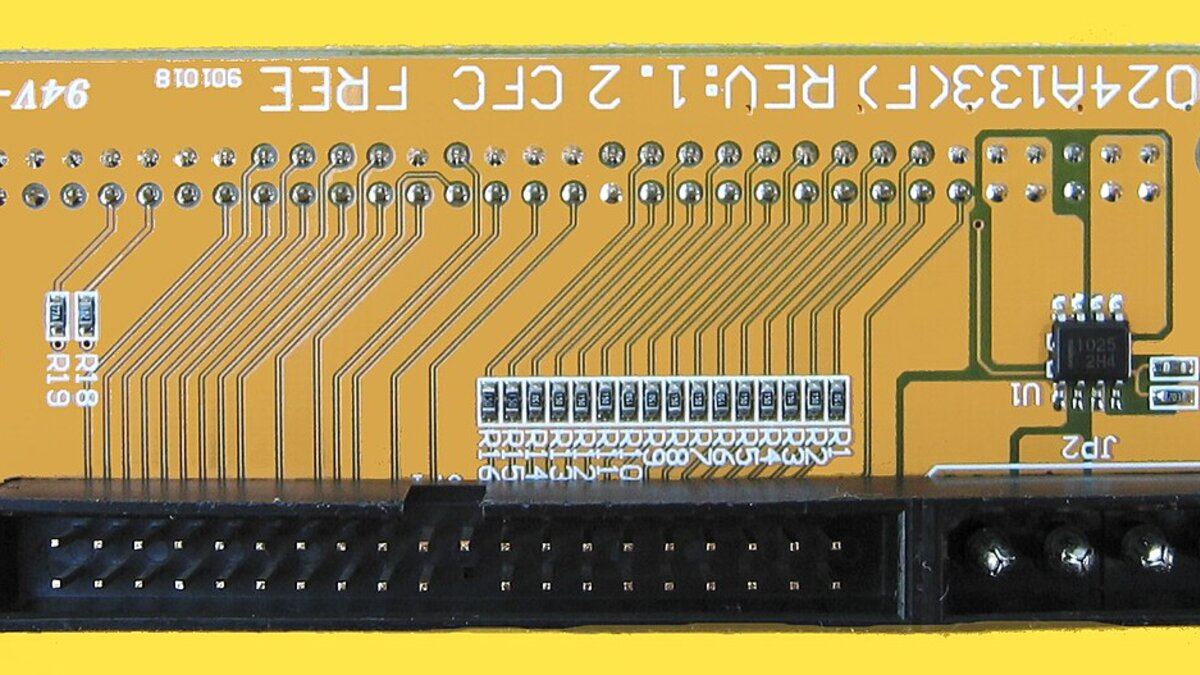
The circuit board industry's main trade body has put a formal warning on record. On 18 November 2026 the Global Electronics Association issued an Industry Alert with a report titled PCB Squeeze: A Wake-Up Call for Global Electronics. It says growing shortages across the printed circuit board supply chain "threaten the next wave of AI and electronics." The association expects the shortage to last through at least the first half of 2027, says meaningful relief is unlikely before mid-2028, and says the exposure "may very well rival the 2021 chip shortage."
The association says AI is absorbing scarce capacity, and the constraint sits upstream in laminate, glass fabric and copper foil. Ordinary boards, including the two-layer breakout board on your bench, draw on the same materials. Here is what the alert says, what the trade press has added, and where makers and small buyers fit in.
The headline numbers
The clearest figure in the alert is the gap between orders and output. According to the association, PCB bookings rose 56.1% in the year to September, while shipments rose only 13.3%. The Register, reporting on the alert on 20 November, describes these as North American figures for the first nine months of 2026. Either way, bookings are growing roughly four times as fast as shipments.
The association puts lead times for high-layer-count boards at 16 to 20 weeks or more. Evertiq's 19 November write-up stresses the association's point that the main risk is availability, not price. In other words, a buyer can be ready to pay and still not get boards.
Why AI servers eat so much capacity
The association notes that a typical PC board has about 12 layers, while AI-server boards are moving to 40-60+ layers. Each layer adds laminate, prepreg and copper, plus press cycles, drilling and inspection time. One AI server board can therefore use the material and factory time of several conventional boards.
The Register quotes Gartner analyst Cori Masters, who confirms that upstream materials are constrained and that high-layer AI boards reduce the capacity left for traditional PCBs. That second point is the one that matters for anyone who doesn't build servers. Read against the association's point that new capacity depends on constrained materials, this suggests the squeeze can spread through shared materials and shared factory lines.
Evertiq adds a longer-range forecast from Yole: boards with 18 or more layers are projected to grow 15.7% a year through 2031, against 2.3% for 4-6 layer boards. Yole also estimates that AI-grade boards and materials make up about 30% of the PCB market today and will pass half by 2031. If that holds, growth will be concentrated in high-layer work.
The materials picture
The press release describes the problem in general terms. The specific materials figures below come from The Register's reporting, not from the association's release:
- FR-4 laminate: lead times of 6-8 weeks, against 2-3 weeks a year ago.
- Advanced low-loss laminates: 14-18 weeks.
- Laminate pricing: costs raised 30% in September.
- E-glass cloth: some grades up 300%.
- Copper: up 37% over the past year.
FR-4 is a common base material for ordinary boards, so the longer FR-4 lead times are probably the most relevant figure in the story for makers.
Geography and investment
The association says Asia makes over 90% of the world's boards. It reports at least $10 billion committed to new PCB plants in Southeast Asia over three years, and at least as much in China over the same period. Europe's share of PCB production fell from 13.8% in 2000 to 2.2% in 2023, according to the release.
The association also says hyperscalers, the largest buyers, are locking up what supply there is, and that automotive, industrial, medical and defense customers are falling to the back of the queue. Evertiq recalls a July interview in which a PCB supplier said a major Chinese AI-focused PCB maker had told customers that orders not placed by 10 July could not be delivered before 2028. That is one supplier's second-hand account reported by Evertiq, not an association figure, but it fits the alert's timeline.
What the association wants done
The report has recommendations for both industry and government. For buyers and manufacturers, it asks for:
- shared, realistic demand forecasts;
- an end to double-booking;
- qualification of alternate laminate, prepreg and copper foil sources, so designs aren't tied to one material supplier.
For governments, it asks them to extend semiconductor incentives to PCB and substrate fabs, speed up permitting, fund alternative materials, and set up priority allocation mechanisms.
What It Means for Makers
Who it affects: In the short term, mainly companies that need high-layer, low-loss boards: server, networking and accelerator builders. The alert's 16-20+ week lead times apply to high-layer boards, not to the 2- and 4-layer FR-4 boards most hobbyists, educators and small hardware startups order.
Why it still reaches small buyers: The constraint is in shared materials and shared capacity. The Register's FR-4 lead-time figure (6-8 weeks, up from 2-3) and the 30% laminate cost increase hit the material under ordinary boards. Gartner's comment that AI boards reduce capacity for traditional PCBs describes exactly how this reaches small buyers. None of the three sources gives figures for hobby-scale prototype services, so we can't say whether, when, or by how much quick-turn prices or turnaround will change. Treat any specific number you see on that as speculation until a fab publishes it.
Where the risk is highest: Small companies moving from prototype to production runs, and anyone whose design needs a specific laminate. The association's advice to qualify alternate laminate, prepreg and foil applies to a small product team as much as to an OEM. A design that only works on one material is the most exposed.
Timeline: The association expects the shortage through at least H1 2027, with relief unlikely before mid-2028. For a product planned for 2027, budget for longer material lead times and order earlier than you used to. The association also advises against double-booking.
Price and availability: The association hasn't set out board-level price changes, and its stated concern is availability rather than cost. The input-cost figures above (laminate +30% in September, some E-glass cloth +300%, copper +37% over a year) come from The Register.
Sources
- Global Electronics Association: Growing Shortages Across the PCB Supply Chain Threaten the Next Wave of AI and Electronics (press release, 18 November 2026)
- The Register: AI boom threatens circuit board crunch to rival pandemic-era chip shortage (20 November 2026)
- Evertiq: PCB shortage could rival 2021 chip crisis, industry association warns (19 November 2026)
