
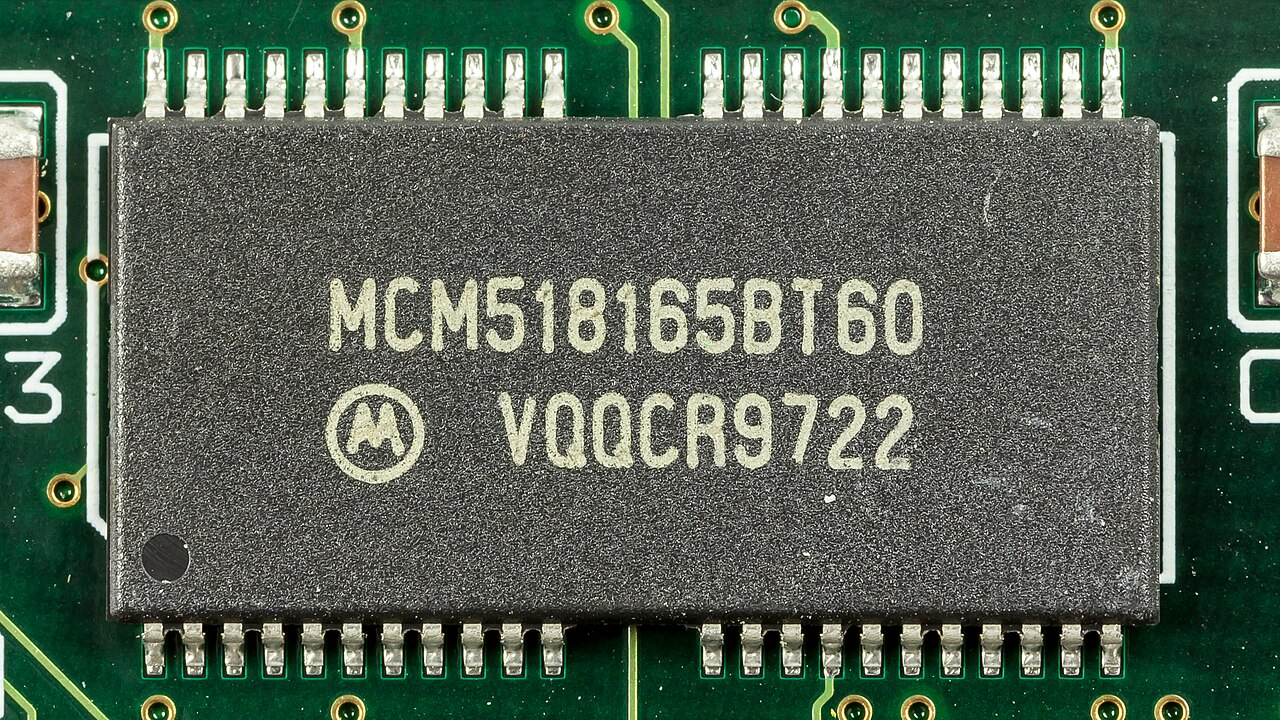
Buying DRAM in 2026 is no longer a purchase order sent to a distributor. On November 26, 2026, Tom's Hardware summarized a Wall Street Journal report describing electronics manufacturers, especially smaller ones, that have set up dedicated "procurement war rooms" to find memory and lock it in. Staff search marketplaces such as eBay, some companies have contacted hundreds of brokers, and buyers are taking batches as small as five to 12 units.
The article says PC builders and enthusiasts were hardest hit by a 500% climb in memory prices. It calls the situation the worst shortage in history. For anyone who builds hardware with a DRAM package on the board, the report shows why bill-of-materials costs keep rising and why component sourcing now looks more like scavenging.
Buying Memory a Handful at a Time
The main detail in the Tom's Hardware summary is the batch size. Five to 12 units is a tiny quantity by production standards, yet according to the report some companies now snap up lots that small just to have some supply. A manufacturer building thousands of units would need many of these small lots, possibly from different sources, to cover one production run.
This brings a risk the article points out: gray-market supply. When memory moves through brokers and online marketplaces instead of authorized channels, used chips can end up mixed into batches sold as new. Provenance is harder to check on parts bought this way, and a board that fails in the field because of a recycled chip would likely cost more than any premium paid for a verified part.
The WSJ reporting, as summarized by Tom's Hardware, gives an example from Apacer, the Taiwanese memory module and storage company. Apacer took out loans so it would have cash on hand whenever chips became available. Apacer President Gibson Chen is quoted: "If chips show up, we take it." He adds: "This is crazy, but there is no other way."
Two Tiers of Buyers
The report describes a split market. Large companies (Tom's Hardware names Amazon, Apple and Microsoft) secure memory through long-term agreements (LTAs) that commit supply ahead of time. Smaller manufacturers without that scale or negotiating power end up in the war rooms, searching the spot market.
The article says companies are responding in two ways. Some raise prices. Others cut the specifications of their products and take a smaller price increase. Both affect buyers: one shows up on the price tag, the other in the spec sheet.
Industry executives quoted in the piece do not expect quick relief. According to Tom's Hardware, SK hynix says 2027 will be the "worst year," and TeamGroup's CEO says "even money can't buy goods." New fabs from the three largest DRAM makers are not expected before 2028. The article names CXMT as the only new mainstream DDR5 entrant and notes that the company faces theft allegations.
The Apacer Warning, in Context
The war-room report follows a warning Apacer made earlier in the year. PC Gamer, citing DigiTimes, reported that Apacer CEO C.K. Chang said memory shortages would stay severe through 2026 and that securing supply had become a bigger operational risk than paying high prices. Chang said he expects memory makers to release about 30% of their 2026 supply volume in 2027.
That figure needs careful reading. Gadget Pilipinas covered the same warning in August 2026 under a headline describing a possible 70% drop in memory supply in 2027. The 70% figure is an interpretation of Chang's statement about receiving 30% of 2026 volume. It is not necessarily an announced cut in industry production. What Chang described is a forecast of how much supply would be released to companies like Apacer, which is an allocation question. The actual number of wafers coming out of fabs is a separate question. Neither source says total industry output will fall by that much.
PC Gamer's coverage points to where it is going. Citing DigiTimes, it reports that about 60% of DRAM capacity is now aimed at server and data-centre uses, and that DDR5 RDIMM prices, the registered server modules, rose the most. PC Gamer also reports that Apacer held about $383 million of inventory at the end of the first half of 2026, a stockpile that fits the strategy Apacer's president described to the WSJ. In the same coverage, Phison's CEO is quoted predicting that many consumer electronics makers "will go bankrupt or exit product lines."
Taken together, the timeline runs like this. In July and August 2026, coverage of Apacer's warning pointed to tightening supply for consumer-electronics customers. By late November, according to the WSJ via Tom's Hardware, smaller manufacturers were already buying memory in single-digit and low-double-digit lots from brokers and marketplaces, before 2027 had even started.
What It Means for Makers
None of the sources here give pricing for specific development boards or single-board computers, so we will not quote board prices. The pattern still matters for the maker market. Any board that carries DRAM, from high-memory single-board computers to compute modules and Linux-capable SoMs, buys its memory in the same market these reports describe. Board vendors are smaller than Amazon, Apple or Microsoft, so many will not have LTAs that cover them fully. The two responses Tom's Hardware lists, higher prices or reduced specs, are the outcomes to expect for memory-heavy SKUs.
In practical terms:
- Higher-RAM variants are the most exposed. The board in a family with the most memory carries the most DRAM per unit, so a large rise in memory prices affects it most. If a project needs a specific RAM configuration, check current pricing and stock before committing a design or a classroom order to it.
- Watch for spec changes. The report says some manufacturers cut specs to cope. If a product's memory configuration or availability changes between production runs, compare the datasheet revision you designed against with the one you are buying from.
- Be wary of loose memory ICs from unofficial sources. If you hand-build boards and buy DRAM packages directly, the gray-market warning applies to you as well. Buying through authorized distribution costs more and may mean waiting, but it avoids the risk of used chips mixed into "new" batches that the article describes.
- Plan for 2027, not just the holidays. SK hynix calls 2027 the "worst year," Apacer's CEO expects allocations of about 30% of 2026 volume, and new big-three fabs are not expected before 2028. Nothing in these sources points to near-term price relief.
For educators and small hardware startups the lesson is mainly about timing. When a part you depend on is something a company like Apacer is borrowing money to secure, buying earlier and in larger quantities than usual may be the only real hedge, provided it comes from a source you trust.
Sources
- Electronics manufacturers set up memory 'war rooms' to find, lock in DRAM supplies amid worst shortage in history (Tom's Hardware, Nov 26, 2026)
- Consumer electronics companies were already worried about securing memory next year (PC Gamer)
- Apacer Warns Memory Supply Could Drop by 70% in 2027 as Demand Continues to Rise (Gadget Pilipinas, Aug 2026)
