
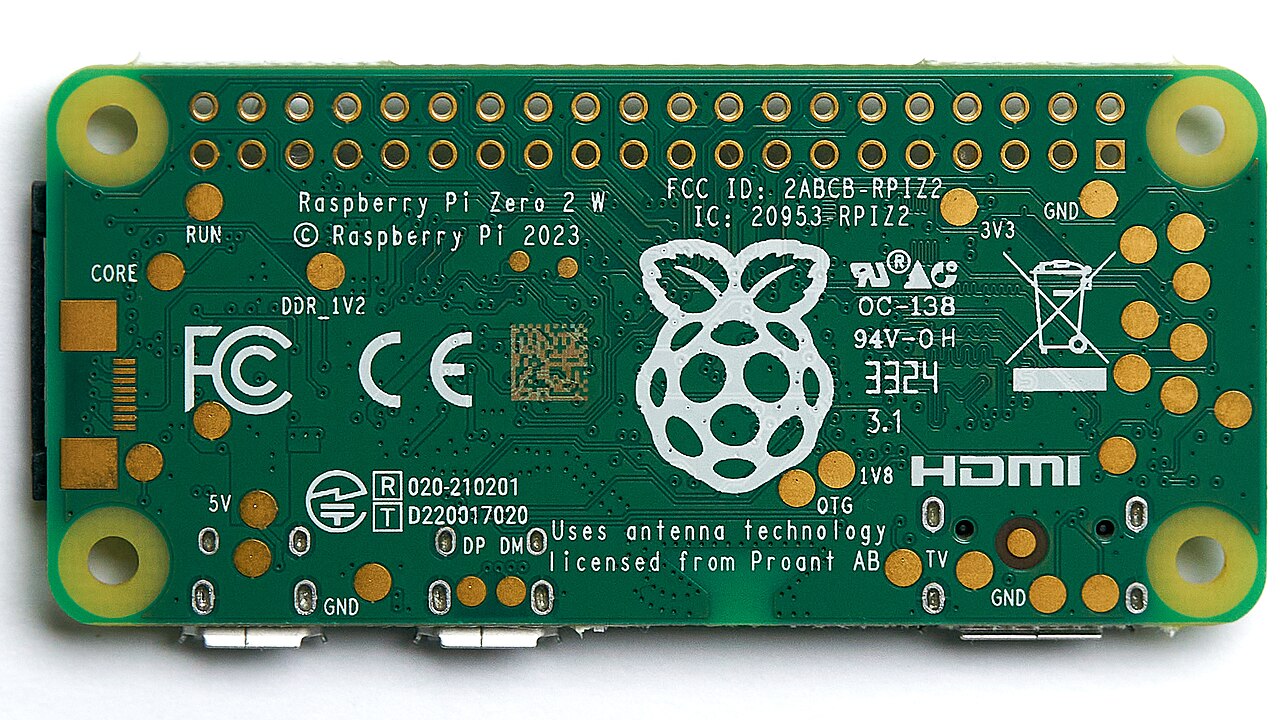
Un Kyu Lee's Micro Journal line of single-purpose writing devices has a new member, and its launch shows something else as well: how a small hardware seller handles a single-board computer it can no longer buy. The Micro Journal Rev.2.1.mini, nicknamed "Baby Shark", went on sale on Tindie with a hard cap of 20 builds that include a Raspberry Pi Zero 2 W. According to the product page, that cap reflects the seller's remaining stock of the board. On 6 November the listing showed the price as $369.00 and the status as out of stock, "Sold out since Nov 04, 2026."
The Tindie page is direct about the reason: "The Raspberry Pi Zero 2 W is currently very difficult to find in stock worldwide." Once the first batch is gone, the listing says, the seller will continue to offer the build without the Pi Zero 2 W, and buyers will need to source and install their own board.
What the Rev.2.1.mini is
The Micro Journal project describes itself as an open-source DIY project that reimagines the typewriter as a modern, distraction-free writing device: a keyboard, a screen and very little else. Several Micro Journal revisions are ESP32-based. The Rev.2.1.mini uses a Linux computer instead. The Rev.2.1.mini README calls it "a portable writing deck built around a wide, clear display and a Raspberry Pi Zero 2 W, paired with a satisfying mechanical keyboard." Liliputing covered it in its 4 November 2026 news roundup, describing it as having "a mechanical keyboard, ultrawide display, Raspberry Pi Zero 2 W for brains, and Linux OS."
These are the specifications from the maker's Tindie listing:
- Compute: Raspberry Pi Zero 2 W running Linux
- Keyboard: 48 mechanical keys in a 4x12 ortholinear grid, with swappable switches; key remapping through QMK Vial
- Keyboard controller: the kit includes a Pi Pico (RP2040) and a 48-key keyboard PCB
- Display: 8 inch, 1280x400
- Controls: two knobs (listed in the kit contents as 2x EC11 encoders)
- Power: standard 18650 batteries or USB power; batteries not included
- Charging note: no USB-PD support; the listing says to use a non-PD USB-A charger
- Boot time: around 30 seconds, which the listing contrasts with the immediate power-on of ESP32-based Micro Journal builds
The 1280x400 panel is what gives the device its wide shape. The 4x12 layout is a straight grid of 48 keys, all the same 1u size according to the listing, so the keyboard is compact and depends on layers and remapping. The listing says every key and layer can be remapped with QMK Vial.
Why the 30-second boot matters
The Tindie listing is unusually open about a tradeoff that owners of ESP32-based Micro Journals will notice right away. Those models power on immediately. This one runs Linux on a Pi Zero 2 W and takes around 30 seconds to boot. For a device meant to remove friction between you and a blank page, that is a real cost, and the listing states it up front, advising buyers who "do not mind trading a little immediacy for more capability."
In return the project gets a full Linux environment, with more capable editors than the ESP32-based Micro Journals, according to the listing. The README links a separate Linux image repository, micro-journal-linux. The Rev.2.1.mini folder of the repository also links STL design files, the QMK Vial keyboard firmware source, a quick start guide and a build guide. The project is described as open source, and the Tindie listing is one way to get it built.
Three ways to buy, one constraint
The Tindie page lists three versions:
- DIY Kit: no switches or keycaps
- Assembled without switches and keycaps
- Fully assembled
The listing gives the DIY kit contents as 3D-printed parts, the 8 inch 1280x400 LCD, the Pi Zero 2W, a Pi Pico (RP2040), the 48-key keyboard PCB, two EC11 encoders, a microSD card, a mini HDMI cable, a USB hub, screws and heat inserts, along with other small parts. Batteries are not included. The $369.00 price was the figure shown on the listing when we checked; the page did not make clear which of the three versions that figure applied to, so treat it as a reference point rather than a per-version price.
The availability notice is the part worth reading carefully. The first batch, capped at 20 builds, includes the Pi Zero 2 W and uses up the seller's remaining stock of the board. After that, the seller says, the build will continue to be offered without one. The listing does not give a price or date for those Pi-less builds.
A product reorganised around a missing part
Single-board computers going out of stock is nothing new for makers. What is less common is a small seller saying publicly that supply is shaping the product. The seller writes that he hopes the shortage is temporary and that, until availability improves, offering the build without the board is the best way he has to keep the project going. The Tindie page sets a cap, explains it, and describes the next configuration: the build without the main computer, which the buyer must source and install.
The Liliputing roundup that covered the Rev.2.1.mini also reported that Microsoft is tuning Windows 11 for PCs with 8GB of memory, citing the RAM shortage driving up memory prices. That is a separate story about a different part of the supply chain, and none of the sources here links it to Pi Zero 2 W availability. Still, appearing in the same roundup, it fits a broader picture of builders and vendors designing around parts they cannot count on.
For an open-source project, a "bring your own board" model is workable in principle: the design files, firmware and Linux image are linked from the project's repository. Anyone who already has a Pi Zero 2 W, or who finds one, can still end up with a complete device.
What It Means for Makers
Who it is for: writers and tinkerers who want a dedicated drafting machine with a real mechanical keyboard and an unusually wide screen, and who are comfortable with a compact 4x12 ortholinear layout. Owners of ESP32-based Micro Journals considering this model should weigh Linux flexibility against the roughly 30-second boot, which the maker states plainly.
What it replaces or enables: it sits between a microcontroller writing gadget that powers on immediately and a general-purpose laptop. Because the design files, QMK Vial firmware source and Linux image are all linked from the project's GitHub repository, makers can print their own enclosure, change the keymap, or adapt the build.
Power: the maker's listing specifies standard 18650 batteries or USB power, batteries not included, and no USB-PD. It recommends a non-PD USB-A charger. Follow the maker's quick start and build guides for anything involving the power system. This article does not cover it.
Price and availability: on 6 November 2026 the Tindie listing showed $369.00 and the status "Sold out since Nov 04, 2026." The first batch was limited to a maximum of 20 builds that include the Raspberry Pi Zero 2 W. According to the listing, later builds will be offered without the Pi Zero 2 W, and buyers will source the board themselves. Three versions are listed: DIY Kit (no switches or keycaps), assembled without switches and keycaps, and fully assembled. No price or ship date for the Pi-less builds was posted.
