
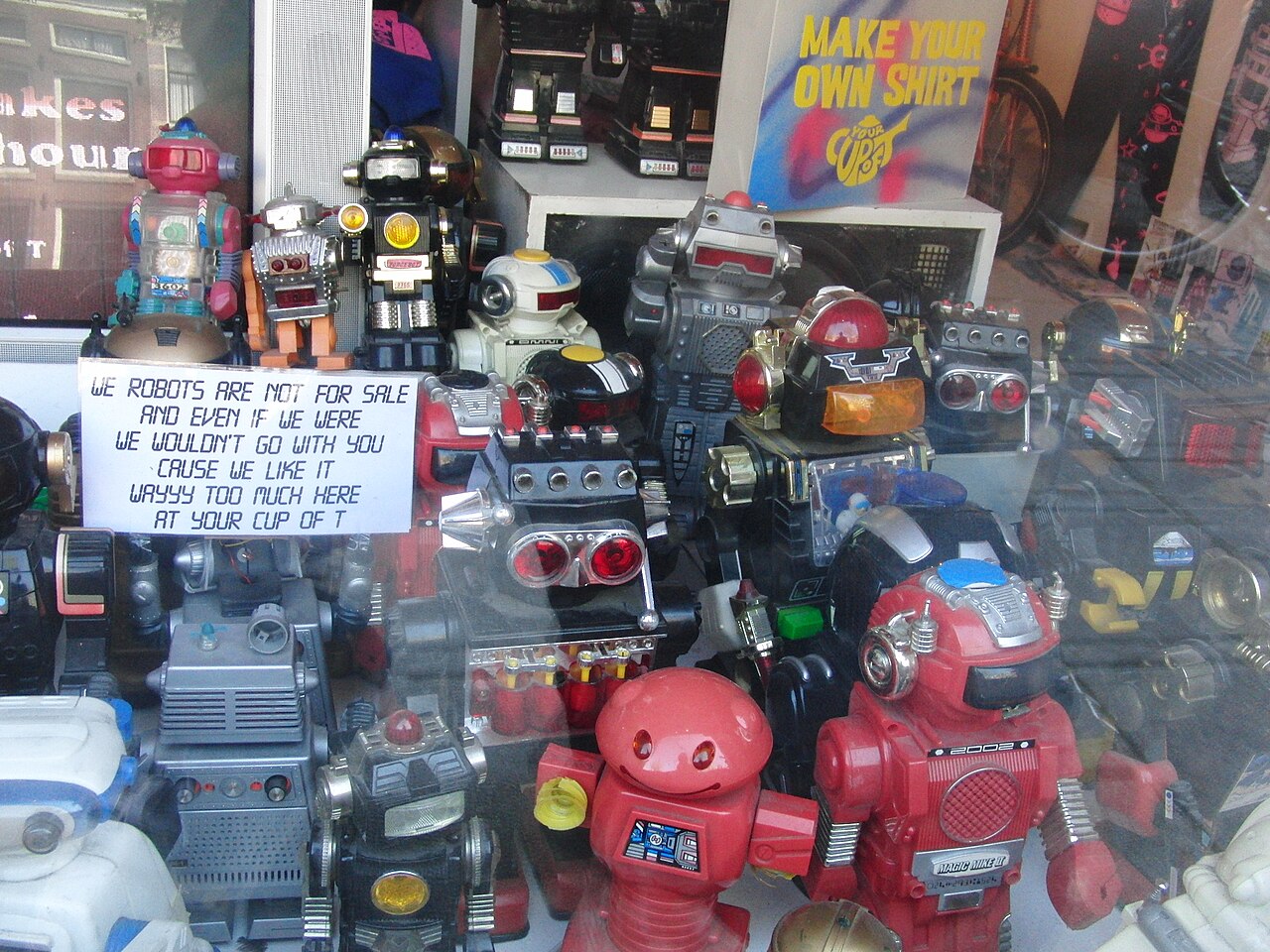
New York has put a five-year stop on the conversational AI toy. On November 24, 2026, Governor Kathy Hochul signed S.9408A/A.11144B, a moratorium on the "manufacturing, distribution and sale" in New York of toys with embedded or integrated AI chatbots. In the Governor's Office announcement, "Governor Kathy Hochul today signed a bill establishing a five-year pause on AI chatbot toys." The examples given are talking stuffed animals, dolls and robots that use the internet to hold conversations with kids.
The law does not take effect right away. The governor said it does not go into effect for 90 days. Counting straight from November 24, that lands in late February 2027. The state's sources give no calendar date, and you should confirm the exact effective date against the enacted text. Until then the toys stay on sale. FOX 5 New York reported that Hochul warned the 90-day gap means these toys can legally remain on shelves through Christmas, and she urged parents to weigh the risks before buying them as holiday gifts.
For a readership that builds voice assistants on microcontroller boards and single-board computers, and sometimes sells them, the question is how far the definition reaches. The answer from the available sources is: not fully clear yet.
What the law actually prohibits
The Governor's Office describes the bill's scope in three verbs: manufacturing, distribution and sale. All three are limited to New York. The covered product is a toy with an "embedded or integrated" AI chatbot. The examples (stuffed animals, dolls, robots) are framed around the toy holding a conversation with a child, and the press release specifies conversations that happen over the internet.
Tom's Hardware described the target from the hardware side: toys such as stuffed animals, dolls and robots that use a microphone and speaker to let kids talk to a chatbot. That is the common architecture of the category. An audio front end in the toy feeds a speech pipeline, and a language model, usually remote, generates the replies. The governor's language stresses internet connectivity. Tom's Hardware stresses the mic-and-speaker interface. Neither source quotes the statute's definitions, so this article does not try to say exactly where the legal line falls. Two cases are left open: a toy running a fully local model with no network connection, and a device that is not marketed as a toy at all.
The release says the bill builds on New York's existing AI Companion safeguards. In his speech the governor said violators face civil penalties of up to $15,000 a day, enforced by the attorney general. WSHU, reporting for the New York Public News Network, wrote that toy manufacturers, sellers or operators of AI companions face $15,000 per day per violation. Tom's Hardware reported the same figure and listed manufacturers, sellers and operators. The word "operators" matters because the chatbot behind these toys often runs as a hosted service, not inside the toy. That suggests the company running the service could be within reach of enforcement as well as the company that made the plush shell, though the sources do not spell this out.
Why New York moved now
The signing took place at a toy and book store in Harlem, with State Senator Andrew Gounardes and the advocacy group Mothers Against Media Addiction. The Governor's Office framed the event as arriving as consumers begin their holiday shopping season. According to WSHU, Gounardes cited a report from Common Sense Media's Youth AI Safety Institute, which found the toys can undermine children's relationships with family and friends.
Hochul also said she would lay out further AI safety proposals in her State of the State address in January. So this moratorium may be one of several rules, not the last one.
New York is not alone
State-level restrictions are starting to stack up. Tom's Hardware reported that California has already announced a four-year moratorium on the sale and manufacture of AI toys for children under 16. WSHU described this as California having "recently" taken similar action. Both outlets say Pennsylvania is considering its own moratorium.
The California measure as described differs from New York's in at least two ways: it is shorter (four years against five), and it is explicitly tied to an age threshold, children under 16. The New York sources describe toys that talk with "kids" but do not report an age cutoff. A product sold nationally could therefore face rules that differ in duration, age scope and enforcement from state to state.
What It Means for Makers
Who this is for. The law hits hardest at companies selling finished talking toys into New York. That includes hosted-LLM plush toys, conversational dolls and companion robots. If you are a small hardware business, an educational kit vendor or a crowdfunding creator whose product is a voice-enabled robot or plush aimed at children, read the bill text with a lawyer before the effective date. The typical example is an ESP32- or Raspberry Pi-based build with a microphone, a speaker and a cloud chatbot behind it. The sources describe a ban on commercial manufacture, distribution and sale. For a shop on Tindie, Etsy or a crowdfunding platform that ships to New York addresses, "distribution and sale in New York" is the phrase to check.
What is unresolved. None of the four sources says how the law treats personal or hobby builds. One example is a parent who wires a chatbot into a robot on the workbench for their own child. Another is a classroom where students build talking projects. The reporting does not address open-source firmware, published build guides, or kits that ship without the AI service and leave the integration to the buyer. "Embedded or integrated" could be read narrowly or broadly, and the sources do not quote the statutory definition of a toy. Until the Attorney General's office or the text itself clarifies these points, treat them as open questions, not as safe harbors.
What it replaces or enables. For five years, the law takes the commercial internet-connected talking toy off the New York market. The sources say nothing about general-purpose development boards, voice modules or smart speakers that are not toys. They also say nothing about AI products for adults. Educators who use conversational robots in teaching should note that the reporting does not mention school or educational exemptions either way.
Price and availability. This is a law, not a product, so there is no hardware price to report. The cost that matters is the penalty: $15,000 per day per violation, according to WSHU and Tom's Hardware (the governor said "up to $15,000 a day"). Status: signed November 24, 2026. Not yet in effect; it takes effect 90 days after signing and runs for five years, per the Governor's Office. Until then, covered toys remain legal to sell in New York.
The open questions to watch
- Definitions. How does the enacted text define "toy" and "AI chatbot"? Does a toy running a fully on-device model with no network connection count?
- Kits versus finished goods. Is a kit "integrated" if the buyer connects the chatbot service themselves?
- Out-of-state sellers. How will the Attorney General approach small online vendors shipping into New York?
- Follow-on rules. What else will Hochul's State of the State AI proposals cover, and will Pennsylvania's measure follow New York's or California's model?
For now, makers have a fixed window of roughly 90 days from November 24. That is the time to audit any product that pairs a microphone, a speaker and a chatbot inside something a child would call a toy.
Sources
- Governor Hochul Signs Five-Year Ban on AI Chatbot Toys: press release and rush transcript (NY Governor's Office)
- New York bans AI chatbot toys (WSHU / New York Public News Network)
- New York Governor Kathy Hochul signs ban on AI chatbot toys backed by $15,000 daily fines (Tom's Hardware)
- Hochul signs 5-year ban on AI chatbot toys in New York (FOX 5 New York)
