
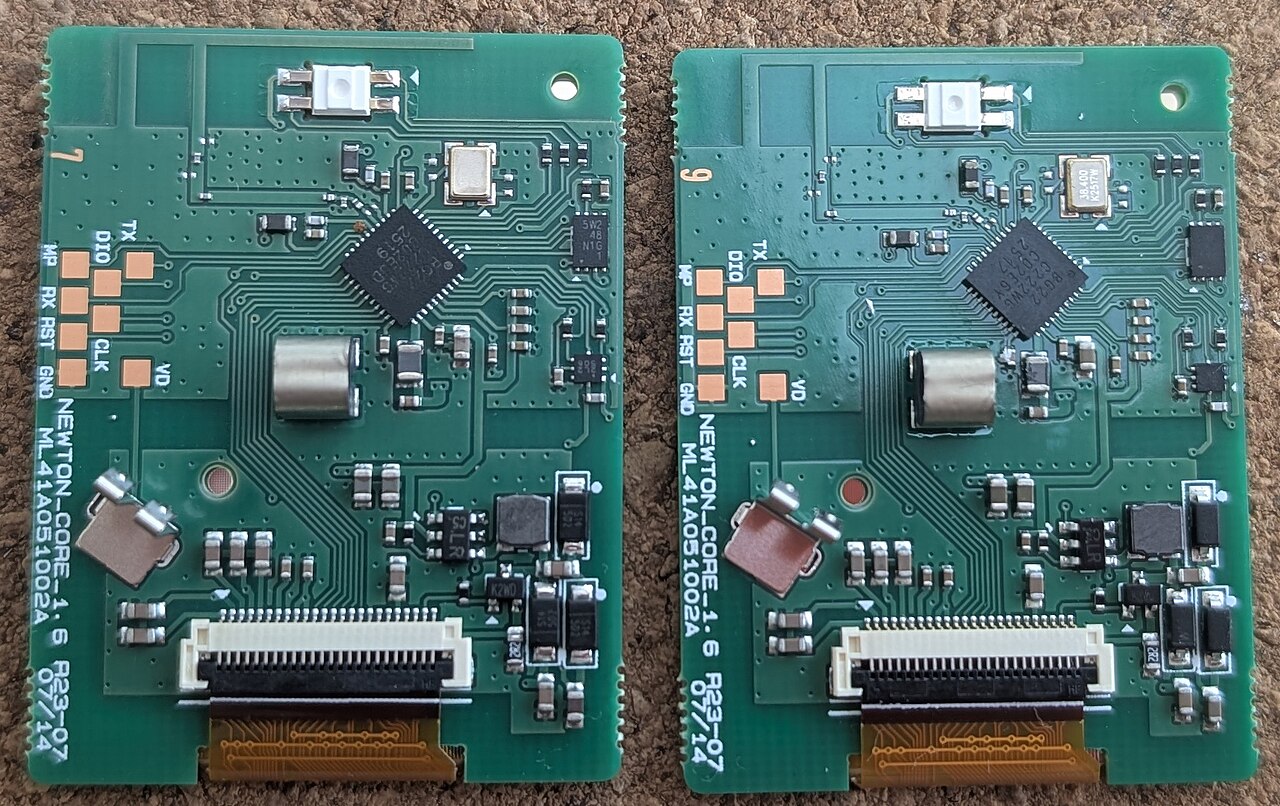
Nordic's nRF54L generation normally comes with a fixed software stack: Zephyr RTOS under the nRF Connect SDK. An independent developer who publishes on GitHub as lolren is offering a different path. The nrf54-arduino-core project is an Arduino core that drives the silicon at the register level. Its README describes it as "Bare-metal Cortex-M33 + RISC-V development with the Arduino API. No Zephyr runtime or external nRF Connect SDK installation."
The latest tagged release, 1.0.22, is dated 18 October 2026. It follows 1.0.21 on 15 October, which was the release that added native PlatformIO integration and the ADC fix described below.
What the core actually is
Most Arduino cores for modern Nordic parts wrap a vendor SDK or an RTOS and expose the Arduino API on top. This one leaves out that layer. According to the README, the core targets the nRF54L's 128 MHz Cortex-M33 application core directly and also gives access to the chip's VPR RISC-V coprocessor. It is MIT-licensed. When the GitHub API was queried, the repository had 49 stars, and the repository page showed 1,395 commits. That is a small project by star count, but the commit history is substantial.
The README lists six board targets. Two of them are Seeed Studio boards: the XIAO nRF54L15 and the XIAO nRF54LM20A. One detail matters if you are editing build configs: the XIAO nRF54LM20A uses the board ID xiao_nrf54lm20b. The README calls the lm20b ID historical, and the 1.0.21 release notes say the identifier is kept unchanged for compatibility.
For board-level power, the README lists nPM1300 hibernate support and power-down of the external flash on the LM20A. On Bluetooth LE, it says the core supports LE Secure Connections, bonding, and privacy with resolvable private addresses (RPA). These features separate a usable BLE stack from a beacon demo.
The hardware underneath
The silicon specs are worth stating precisely, because the core's appeal depends on them. Nordic's nRF54L15 product page describes the part as a SoC for Bluetooth LE, Matter, Thread and Zigbee with 1.5 MB of NVM and 256 KB of RAM. Nordic says it is pin-to-pin compatible with the nRF54L10 and nRF54L05. It also supports:
- 2.4 GHz proprietary modes up to 4 Mbps
- Channel Sounding
- Bluetooth Mesh
- Amazon Sidewalk
- Aliro
- Wi-Fi when paired with an nRF70-series companion IC
Nordic's own figures:
- Compute: 503 CoreMark; 193 CoreMark/mA at 3 V
- Radio current (3 V): 3.4 mA RX, 4.8 mA TX at 0 dBm
- Sleep current: 0.7 to 2.9 µA
- Max TX power: +8 dBm (CSP package) / +7 dBm (QFN package)
- Sensitivity: −96 dBm (1M BLE), −101 dBm (802.15.4)
Seeed's wiki for the XIAO nRF54L15 and Sense gives the board-level view:
- 128 MHz Arm Cortex-M33 plus a 128 MHz RISC-V coprocessor, which Seeed calls the FLPR
- 1.5 MB NVM and 256 KB RAM
- Bluetooth LE 6.0 including Channel Sounding, plus NFC, Thread, Zigbee, Matter, Amazon Sidewalk and proprietary 2.4 GHz protocols
- +8 dBm TX power and −96 dBm RX sensitivity
- 14-bit ADC
- USB-C power, with a stated supply range of 3.7 to 5 V, and battery support through an internal PMIC
- Operating range of −40 to 105 °C
The Sense variant adds an LSM6DS3TR-C 6-DoF IMU and an MSM261DGT006 microphone. Seeed's wiki page that we read covers the nRF54L15 boards only, so we are not listing Seeed's specs for the XIAO nRF54LM20A here.
1.0.21: PlatformIO and an ADC fix
According to the release notes, 1.0.21 (15 October) was the first release with native PlatformIO integration, which had previously been available only on the main branch. The README says PlatformIO support covers all six board targets and includes:
- GDB debugging
- Unity test support
- Output as ELF, HEX, BIN and UF2
PlatformIO support is included from 1.0.21 onward and needs PlatformIO Core 6.1.18 or later. The project's tutorial pins v1.0.22.
The same release fixed SAADC oversampling on the nRF54LM20A. The notes explain the cause, which was a register-layout difference between the two parts:
- The LM20 uses one global BURST register.
- The L15 retains its per-channel
CH[n].CONFIG.BURSTsetting.
Code that works correctly on one chip can therefore set oversampling wrongly on the other. Bugs like this are a risk of a register-level design: with no vendor HAL to absorb differences between family members, the core's maintainer has to track each one. If you used oversampled ADC reads on the LM20A with an earlier release, check whether this fix affects your readings. The release notes say the hardware checks establish conversion completion, not analog accuracy or noise performance, and that L15 hardware validation remains pending.
1.0.22: a host-side macOS fix
Release 1.0.22 (18 October) has a narrow scope. It addresses a macOS upload regression reported with Arduino IDE 1.8.19 (issue #119). The change adds a fallback that uses the macOS IOService registry to map the selected serial port to its USB probe UID, and it does this without requiring pyserial. The release notes say the change affects host-side upload selection only. Firmware, peripheral and radio behavior are unchanged. The notes also say no macOS hardware was available for validation, so issue #119 remained open for the reporter to retest. If you are not uploading from a Mac, you have no functional reason to update from 1.0.21, apart from staying in line with the tutorial's pinned version.
Uploads go through a CMSIS-DAP probe. The PlatformIO example in the README uses pyocd.
The experimental fine print
The README is clear about which features are unfinished. Zigbee, Thread, Matter and Channel Sounding are described as "included for evaluation, but is not finished or production-ready." The README also says the Matter work is not an upstream wire-compatible or certifiable Matter device stack.
That distinction matters. Nordic's silicon supports all four protocols, and Seeed's wiki lists them for the XIAO board. In this core, though, you can treat Bluetooth LE as the supported radio path. The 802.15.4 protocols and Channel Sounding are currently for experimentation only. If a project needs a Matter device that works with commercial ecosystems, or needs certification, this core does not provide that today.
What It Means for Makers
The core is aimed at people who want Arduino-style development on nRF54L hardware without installing and learning the nRF Connect SDK and Zephyr. That includes hobbyists already using the XIAO form factor, educators who want students working with setup() and loop() instead of devicetree overlays, and embedded engineers who want direct register access with less abstraction between their code and the hardware. Native PlatformIO support with GDB and Unity tests makes the project usable beyond quick sketches.
What it replaces, for BLE-centric projects, is the Zephyr toolchain. What it does not replace is Nordic's certified protocol stacks: anyone who needs production Thread, Zigbee or Matter, or Channel Sounding, should treat the core's implementations as evaluation code, as its author does.
Price and availability: the core is free and MIT-licensed, available now on GitHub. Version 1.0.22 has been published since 18 October 2026. The sources consulted for this article do not state prices for the Seeed XIAO nRF54L15 or XIAO nRF54LM20A boards, so check the vendor's current listing. The project appears to be maintained by a single independent developer, not by Nordic or Seeed. Plan support expectations accordingly, and file issues on the repository, as the macOS user behind issue #119 did.
