
Getting to the web interface of a microcontroller in the field usually means one of three things: forwarding a port on someone else's router, keeping a VPN running, or rewriting the device to report to a cloud dashboard that replaces the interface you already built. Pinscope takes another route. A firmware component opens one outbound connection from the device to Pinscope's hosted service, and the HTTP server already running on the device becomes reachable at an HTTPS address. The same connection also carries logs, health metrics, decoded crash reports and over-the-air updates.
CNX Software covered the service on 25 November 2026. The headline number on the maker's site is the RAM cost: 9.4 KB while connected. On parts like the ESP32-S2 and ESP8266, heap is usually the first thing to run out, so that figure matters more than most.
How the tunnel works, and why it avoids TLS
Pinscope does not use a TLS stack on the device. The maker's site says it "uses the Noise protocol, no TLS library." CNX gives more detail: the link is Noise NK with X25519 key exchange and ChaCha20-Poly1305 encryption, carried on one outbound connection. Because the device makes the connection itself, the maker lists 0 open ports. Nothing has to be forwarded, and no inbound firewall rule is needed.
Leaving out TLS is where the memory saving comes from. The maker publishes these figures:
- 9.4 KB of RAM while connected (current component)
- 18 KB of flash for the whole component
- 23.6 KB of RAM for the same function over TLS, in Pinscope 0.1
- About 35 KB for a single TLS connection on its own
- 85 KB/s throughput through the tunnel, and about 30 ms for a small request (timed on a local network)
The maker says its figures were measured on an ESP32-S2 running ESP-IDF 5.5.3 on a local network. They are the company's own numbers and have not been checked independently. The maker says its speed figure was timed on a local network, so results over a cellular modem or a distant Wi-Fi link may differ. The maker also labels the 23.6 KB figure as the same function over TLS in Pinscope 0.1, which puts the TLS-to-Noise saving at roughly 14 KB on that chip.
The site says it takes "1 line of code to start." We have not tested that claim.
Platform support and stability
The maker's site labels everything except ESP32 as beta:
- Not marked beta: ESP32 (ESP32, S2, S3, C2, C3, C5, C6 and C61), using ESP-IDF, Arduino or PlatformIO
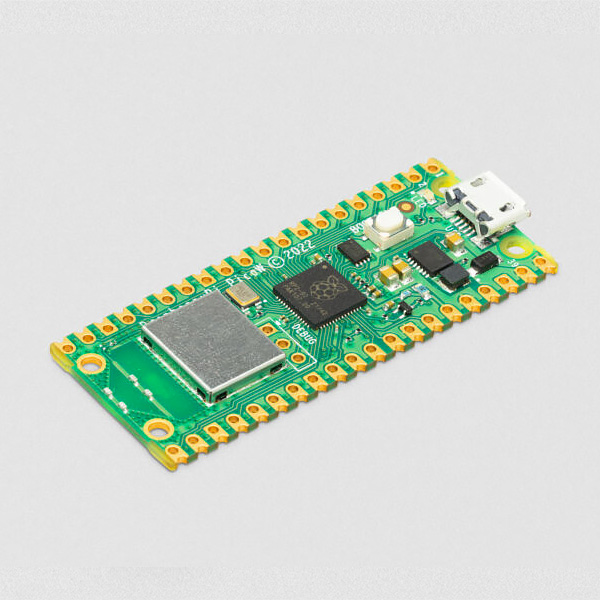
- Beta: Zephyr, Raspberry Pi Pico 2 W, Linux and ESP8266
For the beta ports, the site gives approximate footprints of ~8.6 KB on Zephyr, ~9 KB on Pico 2 W and ~7 KB on ESP8266. CNX lists the same ESP32-family chips, along with ESP8266, the Pico 2 W, Zephyr boards and Linux single-board computers.
The pinscope-dev GitHub organization shows how the work is split:
- pinscope-esp: written in C. Remote access, logs, metrics, decoded crash reports and OTA for ESP32, with ESP-IDF, Arduino and PlatformIO support. The description repeats the 9.4 KB RAM figure.
- pinscope-zephyr: a Zephyr module that uses MCUboot for updates.
- pinscope-pico: Pico 2 W support, with HardFault reports and A/B OTA.
- pinscope-esp8266: built against ESP8266_RTOS_SDK 3.4.
- deploy-action: a GitHub Action, MIT-licensed.
The repositories were last updated between 8 and 10 November 2026. The organization page does not show licenses for the four firmware repositories; only deploy-action is marked MIT. The maker's FAQ describes the device code as source-available rather than open source, with a licence that allows use in any product, including commercial ones, for connecting to Pinscope. Anyone planning to ship it should still read each repository's license file.
OTA that stops at the first failure
Remote access is the hook, but fleet updates are probably the more useful feature for anyone with more than a few boards deployed. According to CNX and the maker's site, updates can go to one device or a tagged group, and the rollout stops at the first device that fails. Each device verifies and boots the image, and the bootloader rolls back a board that fails, so one bad image should not reach the whole fleet. The update path on each platform uses that platform's existing mechanism: MCUboot on Zephyr, esp_ota's two slots on the ESP32 and an A/B scheme on the Pico 2 W, according to the repository descriptions and the maker's FAQ. Crash reporting also differs by platform. The ESP component decodes crash reports, and the Pico port captures HardFaults.
The CRA and SBOM tier
The second half of the product is aimed at manufacturers more than hobbyists. The EU Cyber Resilience Act requires makers of connected products to track vulnerabilities in the software they ship. CNX describes a Pinscope tier that does this. It takes a software bill of materials generated by idf.py, west spdx, Yocto or syft, and checks it daily against the NVD and CISA's list of known exploited vulnerabilities. Each finding gets a VEX-style decision recording whether the product is actually affected. CNX notes that the AI can suggest a decision, but an engineer has to confirm it.
The maker's site lists a CRA plan at EUR 149 per month per product line, with services from EUR 1,500, as stated on the site on 25 November 2026.
Caveats
Only the device firmware is published. CNX and the maker both say the server is closed source, so the tunnel endpoint, dashboard and SBOM checking all run on Pinscope's infrastructure. Every remotely reachable device therefore depends on that service staying online and trustworthy. The Noise design removes inbound exposure on the device side, but your device's web UI is now reachable from the internet through someone else's relay. Treat that UI as public and protect it with authentication.
CNX also points out a name clash: an unrelated project also called Pinscope does schematic review. It has nothing to do with this service.
CNX reports paid device tiers beyond the free three, but we could not confirm those prices on the maker's page, so this article gives only the pricing pinscope.dev itself shows. Check the maker's site for current device-plan prices before budgeting a fleet.
What It Means for Makers
Pinscope is aimed at people who already have an HTTP interface on an ESP32 and want to reach it remotely without asking a client or family member to change router settings. That covers a greenhouse controller, a sensor node at a holiday cabin, or a small batch of devices sold to customers. It replaces a port forward, a VPN or a hand-built MQTT bridge. It also adds staged OTA with rollback and crash decoding, which small teams often go without. The 9.4 KB RAM footprint the maker measured on an ESP32-S2 is small enough to leave room for an application on chips where a full TLS connection, which the maker puts at about 35 KB, would be hard to fit.
Status and pricing, as stated on pinscope.dev on 25 November 2026:
- The service is available now.
- ESP32 support (ESP-IDF, Arduino and PlatformIO) is not marked beta. Zephyr, Pico 2 W, ESP8266 and Linux support is beta.
- Up to three devices are free, with no card required.
- The CRA plan costs EUR 149/month per product line, and services start at EUR 1,500.
- Device firmware is on GitHub. The server is closed source.
For a hobbyist with one to three boards, trying it costs nothing. For a small hardware company preparing for CRA obligations, the SBOM tier gives a price to compare against building that tracking in-house.
