
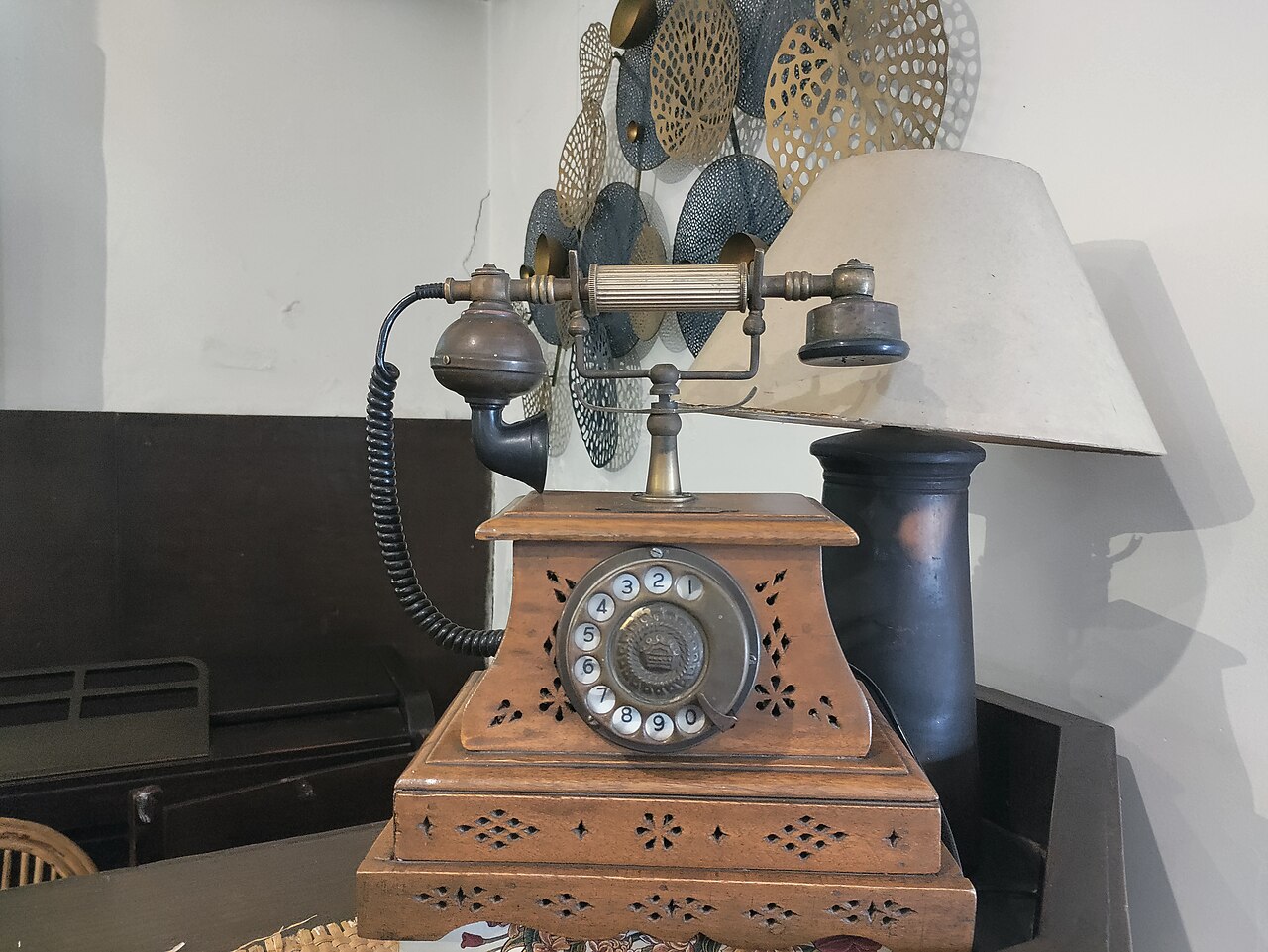
Plenty of people own an old telephone they can't use: a rotary desk set, a 1970s wall phone, a beige touch-tone handset. Indigo Telephony, a startup in Sydney, Australia, is crowdfunding a device meant to put that hardware back on calls. The device is called RetroLine. You plug the phone's cord into its RJ-11 jack, and it relays calls over Bluetooth to a smartphone or computer. According to CNX Software, the box matches the dial, busy and ringback tones to the country you pick, and the bells inside older 1970s phones can also ring.
The campaign is live on Kickstarter, and Kicktraq lists its dates as November 18 to December 10, 2026. Nothing here comes from a tested unit. Everything below is a claim from the maker or from early coverage, and we could not load the Kickstarter page itself, so we have not relied on it.
What the box actually does
CNX describes RetroLine as a small USB-C-powered adapter that lets a rotary (pulse) or touch-tone (DTMF) phone make and receive calls over Bluetooth through a smartphone. The official site says it pairs "any touch-tone or rotary telephone" with your smartphone over Bluetooth. Indigo Telephony says the unit behaves like a real line.
The hardware details below come from CNX Software's write-up:
- Power: 5V/1A via USB-C
- Telephone interface: one RJ-11 jack
- Wireless: Bluetooth to the phone or computer; Wi-Fi for a web dashboard
- Storage: microSD slot for call recording, hold music (WAV or MP3), sound-board clips and system logs
- Audio: a line echo canceller built for carbon-era handsets
- Signalling: dial, busy and ringback tones, ring cadence and Caller ID format matched to the selected country; the bells in 1970s phones can ring
- Processor: not disclosed. The maker says only "fast microcontroller," and CNX suspects it may be an ESP32. That is CNX's speculation, not a confirmed part.
- Dimensions: TBD
The official site's footnote sets a limit that owners of old phones should note: a maximum of 1 Ring Equivalent Number (REN). REN is a measure of the ringing load a line has to drive, so the limit presumably means the unit is meant for a single ordinary phone rather than a house full of extensions. The site doesn't spell out what happens above that.
Features beyond making calls
Indigo Telephony advertises much more than a simple adapter. The official site lists HD Voice wideband calling with a "high-fidelity codec." It doesn't name the codec. The site also lists call recording to SD card, hold music, a soundboard, parental controls, programmable actions, PBX functions, dialling rules, voice effects, an intercom, and a dashboard served at retroline.local. There is an Android/iOS companion app, and a short key sequence summons the smartphone's voice assistant (Siri or Google Assistant) through the handset. The unit can also pair with a computer and act as a handset for Zoom, Teams or Discord. CNX notes that on a computer it shows up as a Bluetooth headset.
CNX also reports a PBX function for setting up an IVR (interactive voice response), which it suggests could help filter automated spam calls, and a walkie-talkie mode that links two units. On the roadmap, marked "TBC," are dial-up modem and fax emulation. The official site labels VoIP as BETA and says only that the company is "looking into" it.
A promotional post on the Asterisk Community forum came from a user who says he is helping his son with marketing for the campaign. It describes the unit as a "compact USB-powered mini-PBX adapter." It mentions using Wi-Fi, or the unit's own hotspot, for voice-assistant and "AI voice agent" integration, along with API access and planned VoIP. These are vendor claims. The post doesn't document the API, and none of the sources shows it working.
The campaign numbers, snapshot by snapshot
CNX and Kicktraq report the funding figures in different currencies, so here is what each source reported:
- Goal: AU$36,000, which CNX puts at about US$24,000.
- Kicktraq snapshot (read November 24, 2026): AU$4,530 of AU$36,000 from 27 backers, an average pledge of AU$168, average daily pledges of AU$755, status Active, about 16 days left, with the project listed under Gadgets.
Both the pledge figure and the backer count will have changed since. On those numbers the campaign had raised about 12.6 percent of its target, a little over an eighth, with roughly three-quarters of its 22-day run still ahead. At Kicktraq's average daily rate of AU$755, 16 more days would add about AU$12,080, for a total near AU$16,600, well short of the goal unless pledges pick up. Kicktraq's own trend estimate is around AU$17,365. That is simple arithmetic and a third-party estimate, not a forecast. We could not confirm from a source we read whether the campaign is all-or-nothing, so check the Kickstarter terms before pledging.
What It Means for Makers
Who it's for. Two groups stand to gain most. One is collectors with a working vintage phone and no landline. The other is anyone who wants a physical handset for desk calls and video meetings. Hobbyists who build telephone exchanges may find the PBX, IVR and two-unit walkie-talkie features interesting, as may anyone already using Asterisk-style setups. A finished USB-powered unit that handles tone generation, ring cadence, Caller ID and echo cancellation would save a lot of work compared with building a ring generator and line interface from scratch.
What's still unknown. For a technical audience, the missing details are significant. The microcontroller is undisclosed, so the ESP32 is only CNX's guess. There's no codec name behind the "HD Voice" claim, no dimensions, and no published API. The 1 REN limit suggests heavy old bell sets or multiple extensions may not ring properly. Check what your phone needs before assuming it will work. The testimonials on the official site are marketing copy, and we have no independent test of the audio quality or echo cancellation.
Price and availability. RetroLine is being offered through a Kickstarter campaign, and the official site says backing lets you lock in early-bird pricing. Sources quote different pledge prices:
- CNX Software reports a $107 pledge for one unit in one of six colors, with shipping charged later. It doesn't state the currency. Rewards are scheduled for April 2027.
- The Asterisk Community post says pledges start from AU$160, with estimated shipping in April 2027.
The sources don't explain the gap. It may be a currency conversion or a different reward tier, so check the price on the Kickstarter page before pledging. The campaign closes December 10, 2026. Like any crowdfunded hardware, the April 2027 date is an estimate, and crowdfunded hardware often ships late.
Sources
- RetroLine (Indigo Telephony) official site
- CNX Software: RetroLine pairs a rotary or touch-tone landline phone to your smartphone (Nov 24, 2026)
- RetroLine Kickstarter campaign page
- RetroLine Kickstarter campaign statistics (via Kicktraq mirror)
- Asterisk Community: RetroLine promotional post (Nov 22, 2026)
