
Samsung, SK hynix and Micron are fierce memory rivals. According to a Korean newspaper, they have found one thing worth agreeing on: how the robots inside their fabs plug in to charge.
On November 8, 2026, the Seoul Economic Daily reported that Samsung Electronics, SK hynix and Micron are pursuing a standardization project for charging the mobile robots used in semiconductor plants. Working-level staff from the three firms have reportedly formed an early-stage consultative body, and SEMI and other industry associations are taking part. Tom's Hardware picked up the story on November 17. A Spanish-language rewrite from DiarioBitcoin describes the effort the same way: early-stage, and aimed at reducing incompatibilities and maintenance costs.
One caveat matters before the details. Everything here comes from press reports. The English version of the Seoul Economic Daily article is an AI translation of the Korean original, and the later coverage builds on that report. We found no statement from Samsung, SK hynix, Micron or SEMI confirming the effort, naming the body, or publishing a draft specification. Treat this as a reported initiative, not an announced standard.
What is reportedly on the table
The reports list four areas under consideration. None of them includes numbers.
- Battery specifications for the various mobile robots used in fabs.
- Charging-station equipment and communications. Tom's Hardware describes this as equipment plus communication protocols.
- Charger connection parts, meaning the physical connectors.
- Battery management systems (BMS).
No source names a voltage, current, connector type, chemistry or protocol. We won't guess any of them. The reports do describe a sequence. According to Tom's Hardware, the first goal is charging compatibility across robot models, so machines from different vendors can share the same charging equipment, which saves money and floor space. A later step would feed charging data into the fab's manufacturing execution system (MES), using information such as battery charge level, robot availability and production schedules.
That second step is the more interesting one. The MES is the software that coordinates and monitors manufacturing operations. With charging data in hand, Tom's Hardware says the system could coordinate when individual robots work and when they return to charge, for example recharging during lower-demand periods or while other robots handle critical material transfers. Charging would stop being something each robot handles on its own and become something the fab schedules.
Why the memory makers care now
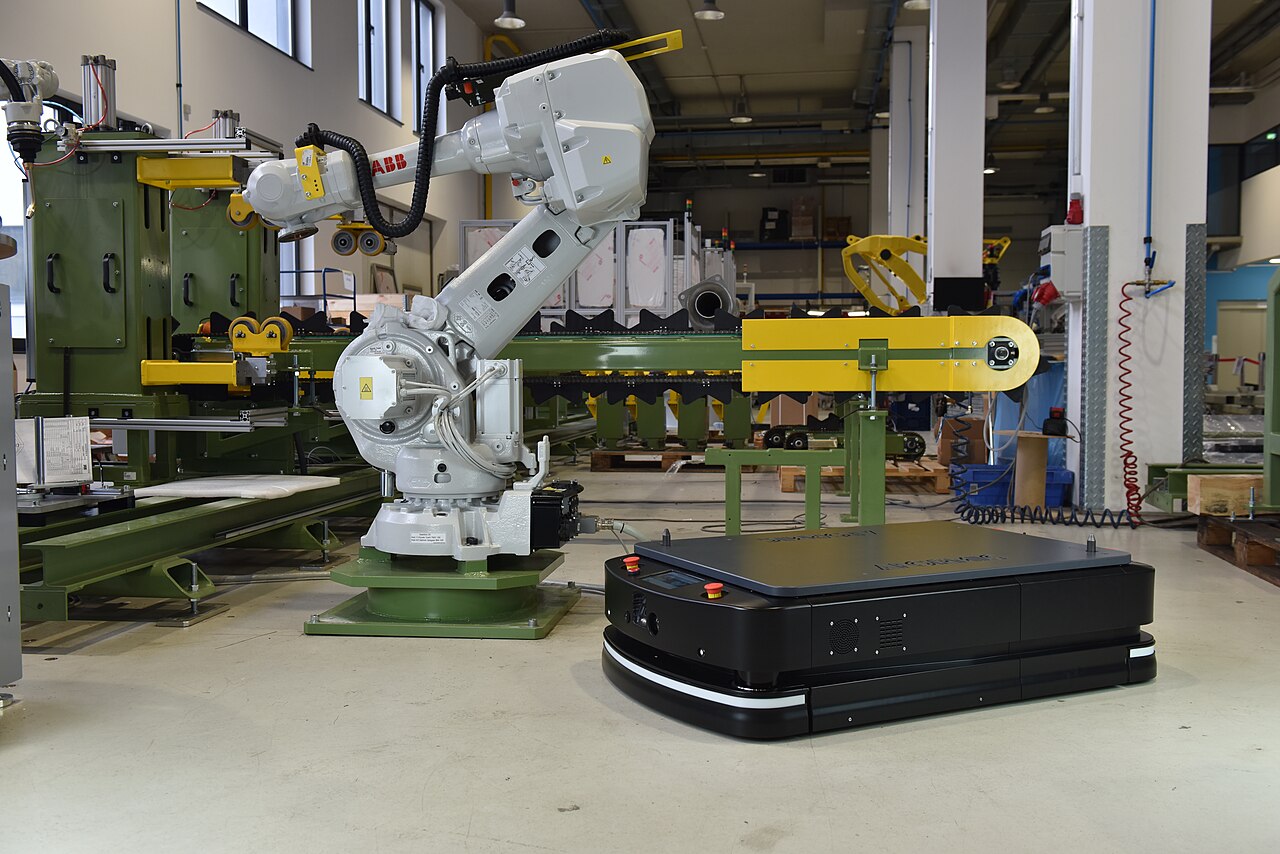
The robots in question are a mix. The Seoul Economic Daily says chipmakers are reviewing humanoids, autonomous mobile robots (AMRs) and mobile manipulators, meaning AMRs with an arm, to automate their older plants. That qualifier is important. Tom's Hardware says older fabs generally have fewer automated material-handling systems and still rely on workers moving wafer containers on manual carts, and it ties the push to AI-related memory demand that gives manufacturers a reason to automate existing facilities.
Bringing floor robots into a brownfield fab exposes a familiar problem. Tom's Hardware says these robots come in different builds, often with their own batteries and charging infrastructure. Run AMRs from one supplier and mobile manipulators from another, and you end up with separate charging stations for each model, which raises equipment and maintenance costs and uses floor space.
Jang Young-jae of KAIST, quoted by the Seoul Economic Daily, described the effort as groundwork for using a wide range of robots as production equipment and for lowering dependence on any single vendor. DiarioBitcoin makes the same point, saying the aim is to make it easier to run robots from different manufacturers in older plants and to reduce vendor lock-in.
Why three rivals, and why SEMI
Tom's Hardware calls it an "unlikely alliance," and the label fits, given their intense rivalry. Tom's Hardware's explanation is shared commercial interest: incompatible robot charging infrastructure is an industry-wide problem, and all three stand to benefit from a common solution.
SEMI's reported involvement fits that reading. DiarioBitcoin describes SEMI as the global association for semiconductor equipment and materials, and says its presence could support a broader standardization process than one defined by a single manufacturer. No official standard has been announced, and the reports do not describe a formal SEMI standards process, a document number or a timeline. Tom's Hardware adds that the three companies are not expected to dictate specifications to suppliers, and that robot makers and equipment suppliers would likely contribute.
What It Means for Makers
Who it is for: This is aimed at robot vendors and fab operators, not hobbyists. Nothing here is a product. There is no board, module, connector or dev kit to buy, so there is no price and no availability date. By the sources' own account, the status is an early-stage consultative body that has not been officially confirmed.
What it would replace: If it goes ahead, it would replace a different proprietary dock, connector, battery pack and BMS interface for each vendor with a shared set of specifications. Per the reports, robots from different makers could then share charging equipment.
What it could enable: Two things are worth watching if you build or teach robotics:
- Charging as a scheduled resource. The reported plan to push battery level, availability and charge schedules into the MES is a fleet-management idea that scales down. Anyone running more than a couple of mobile robots runs into the same scheduling problem. An industrial reference design for it, if one is published, would be useful reading.
- Vendor-neutral docking. Hobby and education robot platforms commonly ship with their own chargers. An industry-backed open interface for mobile-robot charging, if it is published and not kept inside the consortium, could eventually influence lower-cost hardware. That is speculation about a specification that does not yet exist publicly.
The supply-chain angle: Tom's Hardware ties the effort to fabs automating under AI-driven memory demand. These three companies are major memory makers, so how fast they automate older lines is part of the wider supply picture. None of the sources makes any claim about memory pricing or allocation as a result of this initiative, and neither do we.
A note on safety: the reports concern industrial robot battery systems with BMS-managed charging. Nothing here is a wiring guide, and nothing in it should be read as a reason to modify robot packs or chargers yourself.
What to watch for
The first confirmation would be a statement from any of the three companies or from SEMI. After that, look for a named working group or a draft document listing actual connector, electrical and protocol parameters. Until then, the reported scope (batteries, stations and communications, connectors, BMS, and later MES integration) is the whole story. We will update this piece if any of the parties confirms the effort or publishes specifications.
Sources
- Samsung, SK hynix, Micron Move to Set Robot Charging Standard (Seoul Economic Daily, Nov 8, 2026)
- Samsung, SK hynix, and Micron form unlikely alliance to standardize robot charging (Tom's Hardware, Nov 17, 2026)
- Samsung, SK hynix y Micron buscan un cargador comun para sus robots de fabrica (DiarioBitcoin)
