
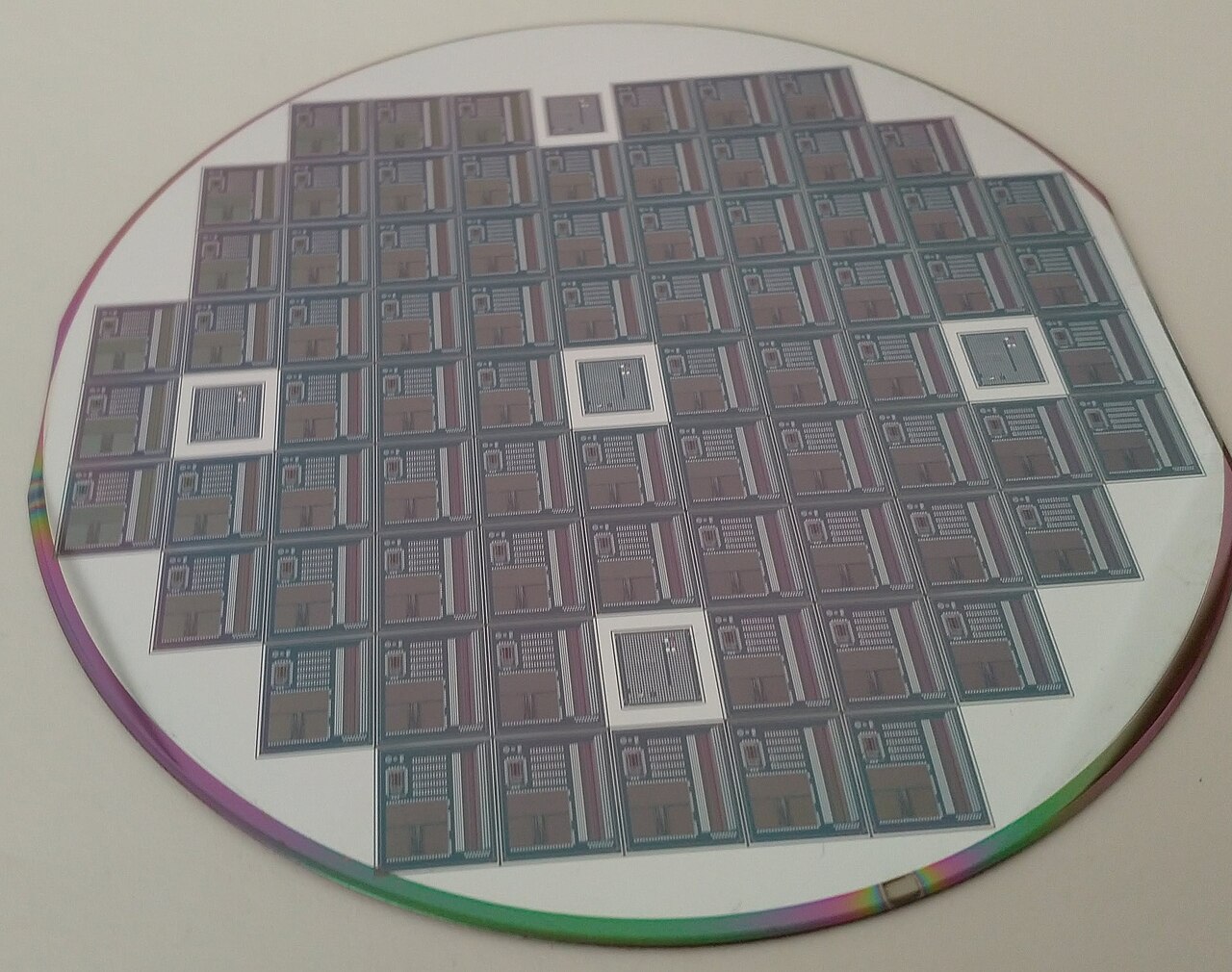
The semiconductor industry talks about open source a lot, but how much chip-design code do chip companies actually publish? Zero ASIC, a chip startup with about 10 people, tried to put a number on it. In a post on its company blog titled "Counting Stars: Open Source Hardware at Chip Companies," written by Andreas Olofsson and dated October 14, 2026, the company counted GitHub stars on public chip-design repositories belonging to itself and six much larger firms. Then it divided each total by headcount.
On raw totals, Zero ASIC comes first among the companies in the table. Per employee, nobody else is close. Before reading the table, though, two caveats need to sit right next to it. First, the post comes from Zero ASIC itself, so the company measuring the field is also the company that wins. Second, the post itself says the exercise was "by no means a rigorous academic study." PinoutFeed did not find any independent coverage it could read and check, so everything below is the company's own data, credited to the company.
How the count was made
The post says the data was collected on October 11, 2026 through the GitHub API. Only public repositories counted, and forks were excluded, so a company could not boost its total by mirroring someone else's popular project.
The key filter was what counts as "chip design." Zero ASIC counted RTL, high-level synthesis (HLS) code, EDA tools, process design kits (PDKs) and hardware testbenches. It left out software that runs on chips, such as SDKs, drivers, runtimes and firmware, as well as board and PCB design files and documentation. That is a sensible line for a hardware count, and it matters a lot for the results, because none of that software was counted here. Of 7,495 starred repositories examined, the post says 121 met the bar. That is roughly 1.6 percent.
Stars are a measure of attention, not of use. A star means a GitHub user clicked a button. It does not mean anyone taped out a chip with the code, merged a patch, or kept it running in production. Grouping repositories by company also depends on which GitHub organisations count as belonging to which firm. The post gives examples, such as NVIDIA, NVlabs and NVDLA for NVIDIA, and AMD, Xilinx and ROCm for AMD, but it does not list every organisation behind every total. Read the numbers as a rough measure of public visibility.
The table
These are the figures as Zero ASIC published them: total stars on qualifying repositories, approximate employee count, and stars per employee. The post says headcounts come from the most recent annual reports where available and from public estimates otherwise.
| Company | Stars | Approx. employees | Stars per employee |
|---|---|---|---|
| Zero ASIC | 3,949 | 10 | 395 |
| SiFive | 1,949 | 500 | 3.9 |
| Tenstorrent | 196 | 1,000 | 0.20 |
| Analog Devices | 2,144 | 24,000 | 0.09 |
| NVIDIA | 3,376 | 42,000 | 0.08 |
| AMD | 2,294 | 31,000 | 0.07 |
| Intel | 1,723 | 85,100 | 0.02 |
From these figures, Zero ASIC says it has about 100 times as many stars per employee as the next company (SiFive) and about 4,900 times as many as NVIDIA. Both ratios follow from the table: 395 divided by 3.9 is just over 100, and 395 divided by 0.08 is about 4,900.
The raw totals are the more interesting comparison, because per-employee ratios will always favour a tiny company. Zero ASIC's 3,949 stars put it ahead of NVIDIA's 3,376 even before dividing by headcount. AMD (2,294), Analog Devices (2,144), SiFive (1,949) and Intel (1,723) are fairly close to one another. Tenstorrent collected only 196 stars on qualifying repositories. Under the post's rules, that may say more about which of its projects count as chip design, and which GitHub organisations they live under, than about how open the company is overall.
Where Zero ASIC's own stars come from
The post lists Zero ASIC's three biggest contributors: OH!, a Verilog library for ASIC and FPGA designers, with 1,442 stars; SiliconCompiler, a modular hardware build system, with 1,230; and Switchboard, a communication framework for RTL simulation and emulation, with 324. Those three add up to 2,996 stars, about three-quarters of the company's total. OH! and SiliconCompiler alone account for 2,672, roughly two-thirds. That is common in open source, where attention tends to pile up on a few repositories, but it means the ranking would move if either project lost momentum. The post also says the count includes the team's work going back to Adapteva and Parallella.
The startups, and who was left out
Zero ASIC also checked its numbers against the Awesome Semiconductor Startups list, which the post describes as covering 320 companies. The post says it found GitHub organisations for 200 of them and applied the same chip-design rules. When PinoutFeed looked at the list's GitHub repository, it had 781 stars and 290 commits, and its data was stored in startups.csv, alumni.csv and technologies.csv. The list sits under the aolofsson GitHub account, which the post also counts toward Zero ASIC's own total (through aolofsson/oh), so it is not a neutral third-party index.
Among the listed startups, the post names Bluespec as the clear outlier at 2,195 stars, with 1,144 of them on its BSC compiler. The post says that total would put Bluespec fourth in the main chart, just behind AMD, and the table agrees: it falls just behind AMD's 2,294 and just ahead of Analog Devices' 2,144. After Bluespec the numbers drop off quickly: getinstachip 165, Semify 59, Ingonyama 52, ChipFlow 51 and Riverlane 37. The post adds that most of the startup list has no chip-design repositories at all, including several well-funded AI chip companies whose public repositories are SDKs, model zoos and inference examples.
The post is open about two notable organisations missing from the main comparison, because they do not sell chips. Precision Innovations, which the post says leads development of the OpenROAD open-source RTL-to-GDS flow, has about 4,000 stars across the repositories it leads. Antmicro, an engineering services company, has about 800 stars on chip-design repositories in its own organisation. The post does not include either one in the ranked table. If the roughly 4,000 figure is taken at face value, Precision Innovations would sit above Zero ASIC on raw totals, so anyone tempted to cite the table as "Zero ASIC has the most open chip-design stars" should keep that in mind.
The OpenROAD numbers are also worth a closer look. When PinoutFeed checked the main OpenROAD repository, it had 3.2k stars and 45,516 commits under a BSD-3-Clause licence, and it describes itself as "OpenROAD's unified application implementing an RTL-to-GDS Flow." The post says its roughly 4,000 figure is across the repositories Precision Innovations leads, which would account for the gap with the 3.2k on the main repository, but the post does not show that breakdown, so PinoutFeed has not confirmed it.
Reading it critically
Three problems stand out, and the post admits some of them itself.
- Self-interest. The author works at the company that comes out on top, and chose the metric, the filter and the comparison group. That does not make the data wrong, but the choices deserve the same scrutiny you would give a vendor's own benchmark.
- Normalisation. Dividing by headcount compares a 10-person company whose main products are open-source tools with firms of tens of thousands whose engineers mostly work on proprietary silicon. The per-employee ratio rewards being small and focused. It does not really measure how generous a company is with open source.
- Stars versus substance. A count based on popularity can miss quieter projects that see heavy use but attract few stars. The post itself notes that startups publishing under personal accounts or unrelated organisation names would be missed. It also misses contributions companies make to other people's repositories, since only each company's own non-fork repos were counted.
Even so, the method is described clearly enough to repeat. Anyone with a GitHub API token and a list of organisations could re-run the count, change the filter or add Precision Innovations and Antmicro to the table. The post also says corrections for missed organisations will be added if readers report them.
What It Means for Makers
For hobbyists and small teams working on open silicon, the post works best as a map. It points to the RTL libraries, build systems, compilers and EDA flows that open chip projects can draw on, and several of them come from small companies like Zero ASIC, Bluespec, Precision Innovations and Antmicro rather than the biggest chipmakers. If you are putting together an RTL-to-GDS toolchain, the repositories in this count, including OpenROAD and Zero ASIC's SiliconCompiler, are a reasonable place to start looking.
The count does not replace anything and does not enable anything new on its own. It is a measurement, not a product launch. There is nothing to buy, no price and no availability date. The repositories it covers are public on GitHub. OpenROAD's main repository is BSD-3-Clause licensed. PinoutFeed did not check licence terms for the other projects, so check each repository's licence before building on it. Before you choose a toolchain based on stars, look at commit activity, open issues and whether anyone has actually taped out a chip with the flow. A star tells you a project got noticed, not that it is ready for your design.
