
Adafruit has put Espressif's ESP32-P4 on its Arduino Uno-format Metro board. The Metro ESP32-P4 Hydra (product ID 6536) is listed at $34.95. When we read the product page it showed 49 units in stock, with a limit of two per customer. Adafruit says it is currently shipping v1 chips on this board.
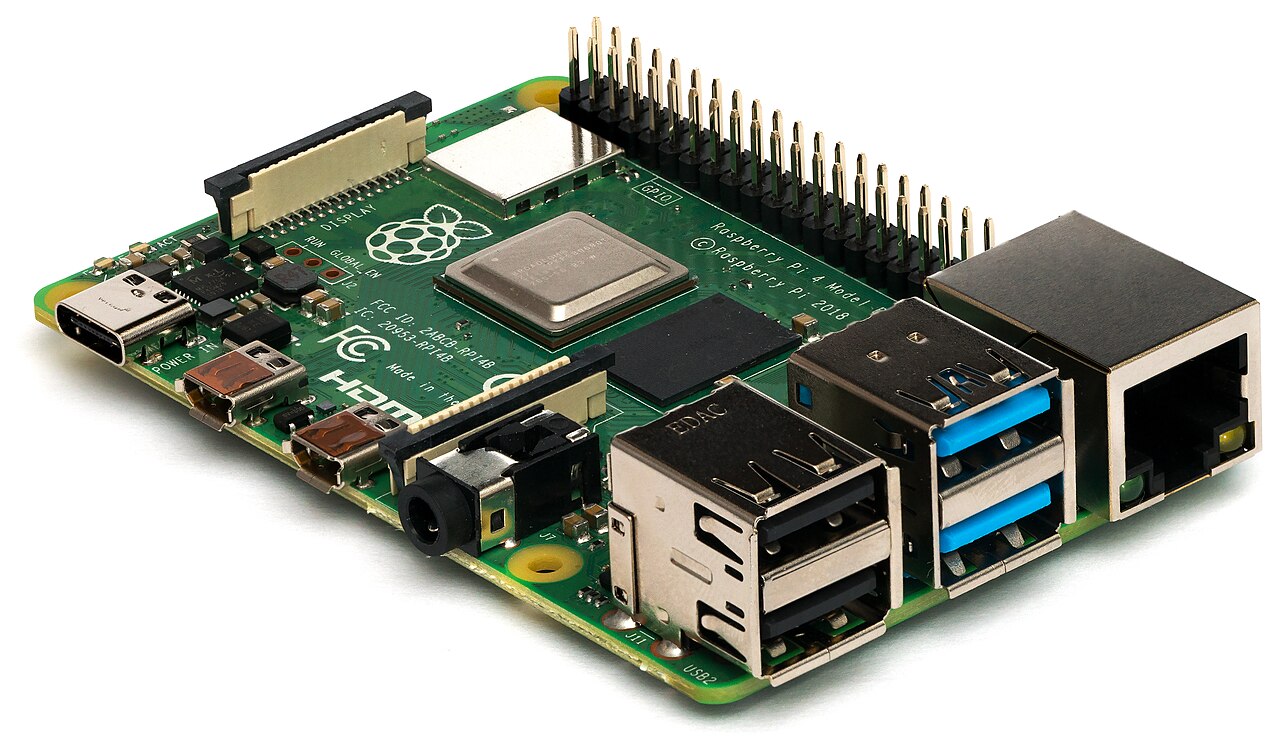
Plenty of boards already use the P4. What sets the Hydra apart is the connectors Adafruit chose. It has 22-pin, 0.5 mm, two-lane MIPI DSI and CSI connectors in the Raspberry Pi format, so a maker can plug in an off-the-shelf Raspberry Pi touch display and a Pi-style camera module. It also adds an ESP32-C6 coprocessor for wireless and a high-speed USB-A host port. All of that sits on a footprint that fits existing Uno shields and enclosures.
The silicon: read the fine print on the chip revision
Adafruit's product page gives the main SoC as an ESP32-P4 with a dual-core 32-bit RISC-V processor running at up to 360 MHz, plus a 40 MHz low-power (LP) core. Adafruit lists 768 KB of L2 SRAM and 32 KB of LP SRAM. The board adds 16 MB of QSPI NOR flash and 16 MB of PSRAM.
The full product name is "Metro ESP32-P4 Hydra - with 16 MB PSRAM [v1 Chipset]", and Adafruit states plainly that the board is not built on the ESP32-P4X: "we are currently shipping with 'v1' chips, if you need the 'v3' P4X do not purchase this item!" The revision matters. The CircuitPython repository has separate function-evaluation board definitions for each (espressif_esp32p4_function_ev and espressif_esp32p4x_function_ev). Anyone porting firmware or comparing benchmarks should check which variant a given guide or binary was built for.
Espressif's own ESP32-P4 product page describes the chip family as a high-performance SoC with a dual-core RISC-V CPU and an LP core, MIPI DSI and CSI interfaces, H.264 encoding and USB OTG 2.0 HS. Espressif's page cites a CPU speed of up to 400 MHz for the chip family, while Adafruit's listing for this board gives up to 360 MHz; the clock and memory figures above are Adafruit's.
Why "Hydra": a second chip for the radio
Espressif says an ESP32-C or ESP32-S series chip can serve as a wireless companion for the ESP32-P4, and the P4 has no radio of its own. Adafruit fills that gap with an ESP32-C6 coprocessor connected over SDIO, which the product page credits with Wi-Fi, Bluetooth LE 5.3, Thread and Zigbee. Adafruit adds a caveat: firmware may be needed to expose those radios to the host. Wireless therefore depends on firmware for the C6 coprocessor; the radio is not a feature of the P4 itself.
Display and camera: Raspberry Pi accessories, with limits
The display and camera connectors are the board's main selling point, and Adafruit's compatibility list is short and specific:
- Displays (2-lane DSI): Raspberry Pi Touch Display 2 in the 7-inch and 5-inch sizes, both listed at 720x1280.
- Cameras (2-lane CSI): Zero Spy Camera modules in 70, 120 and 160 degree field-of-view versions, all based on the OV5647 sensor.
- Not supported: the IMX708-based v3 camera.
The Pi-format connector does not mean every Pi display or camera will work. Adafruit only calls out two-lane parts and names the IMX708 v3 module as unsupported, so anyone planning a camera project should stick to the OV5647 modules listed. Adafruit's page does not list any other DSI panels or CSI sensors as compatible. Treat anything outside that list as unverified.
I/O, storage and power
The rest of the board follows the Metro layout. According to Adafruit:
- Headers: Metro/Uno-style headers with D0 through D13, six analog inputs, I2C/I3C, and a separate six-pin SPI header. All GPIO uses 3.3 V logic, which matters for anyone reusing 5 V Uno shields.
- USB: USB-C for power and programming, with the TinyUF2 bootloader. A separate USB-A port provides 480 Mbps high-speed host operation, and its power is software-controlled.
- Storage: microSD slot wired for 4-bit SDIO.
- Expansion: STEMMA QT connector.
- Power inputs: 7-12 V DC barrel jack, USB-C, or a single-cell LiPo battery connector.
- On-board extras: NeoPixel, D13 LED, Reset and Boot buttons.
- Dimensions: 72.3 x 53.3 x 14.7 mm.
Adafruit describes the USB-A port as a 480 Mbps USB 2.0 high-speed host port. What actually works will depend on the host-class drivers in whichever firmware is running.
Software: CircuitPython support is in progress
The CircuitPython Espressif boards directory already contains an adafruit_metro_esp32p4 definition. It sits alongside other P4 targets, including Adafruit's adafruit_p4gpio and the solderparty_esp32p4_stamp_xl. GitHub's commit history for that board path shows commits on October 3 and October 5, 2026, including one titled "boards: acquire Metro P4 VO4 rail only once," co-authored by Limor Fried. The commit message describes retaining an existing LDO handle across simulated deep-sleep wakes, which is board-level power handling. It is not yet clear how complete the display, camera and coprocessor-radio support is in released CircuitPython builds. Buyers should check the current release notes before assuming MIPI or Wi-Fi works out of the box.
TinyUF2 on the USB-C port means drag-and-drop firmware updates should work like they do on other Adafruit boards.
What It Means for Makers
The Hydra is aimed at makers who want a camera-and-touchscreen project, such as a control panel, a small vision experiment or an HMI for a bench instrument, without moving to a Linux single-board computer. Using the Raspberry Pi Touch Display 2 and the OV5647 Zero Spy Camera modules means you can build with displays and cameras that are easy to buy instead of hunting for bare panels with proprietary flex cables. The Uno footprint lets it slot into existing Metro and Arduino enclosures. Shield users need to keep the 3.3 V logic level in mind.
Main caveats: this is v1 ESP32-P4 silicon, not the P4X. Camera support is limited to OV5647 modules, and the IMX708 v3 is explicitly excluded. Wireless depends on firmware running on the ESP32-C6 coprocessor. Software maturity, particularly in CircuitPython, looks like it is still developing, judging by the recent commits.
Price and availability as stated by Adafruit: $34.95 (USD, as listed on Adafruit's page in October 2026), listed as in stock, with 49 units shown when we checked and a limit of two per customer.
