
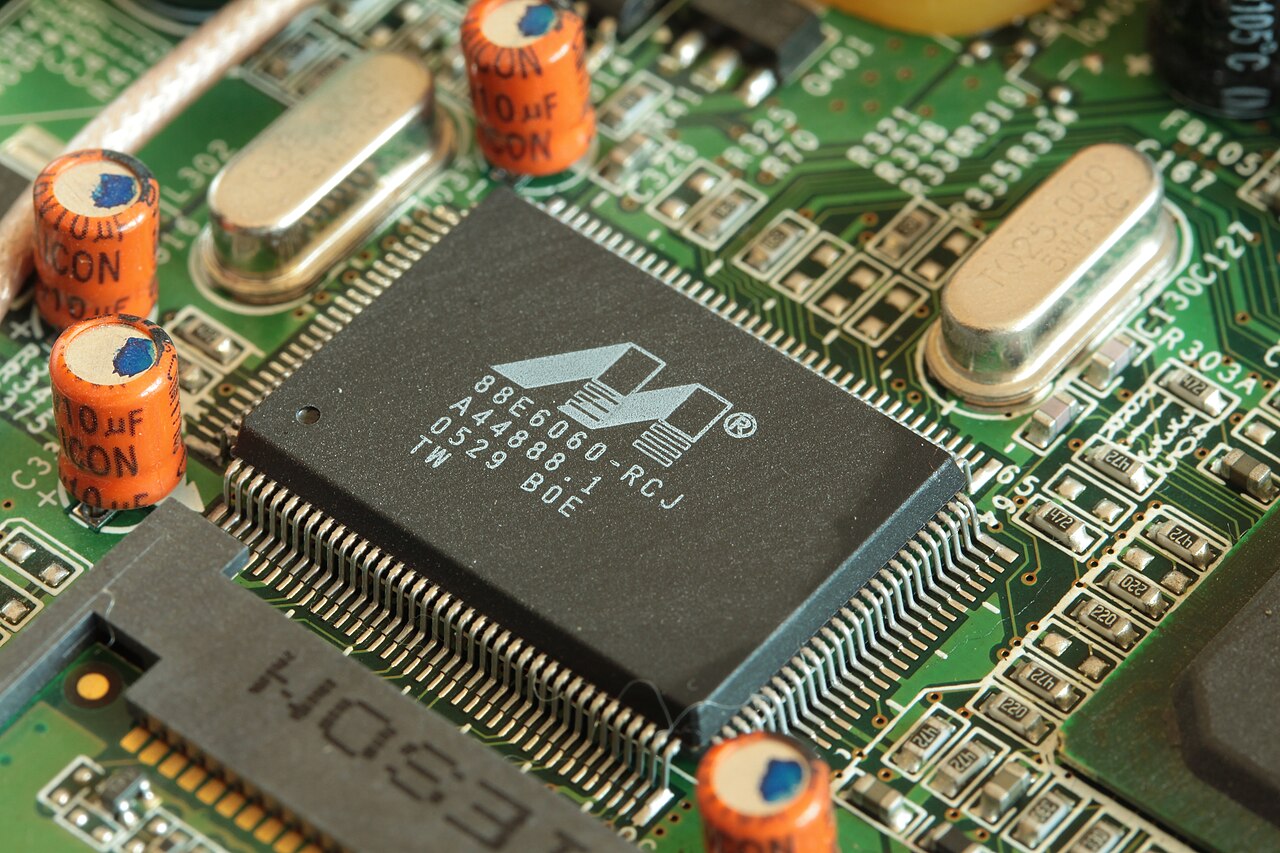
Banana Pi has documented a new router board, the BPI-RT2. It is an AX3000 dual-band Wi-Fi 6 design built around Realtek's RTL8198D, a dual-core MIPS interAptiv SoC. CNX Software covered it on October 30, 2026 under a headline that gives the price as $26. Banana Pi's own documentation page gives no price. The software story matters as much as the hardware: Banana Pi lists an OpenWrt 22.03 board support package, with source, in an official GitHub repository.
The BPI-RT2 uses Realtek MIPS silicon, and on paper it is priced about as low as the cheapest consumer Wi-Fi 6 routers. The documentation does have a few loose ends, though, and readers who care about exact specs should know where they are.
The hardware, as Banana Pi lists it
The maker's documentation describes the BPI-RT2 as a Wi-Fi 6 router for "small and micro businesses, homes and other networking environments." It lists these key features:
- SoC: Realtek RTL8198D, dual-core MIPS interAptiv CPU
- Memory: 256MB DDR3, which Banana Pi says is "embedded with the RTL8198D"
- Storage: 128MB SPI-NAND flash
- Ethernet: 1 x 1G RJ45 WAN and 3 x 1G RJ45 LAN (the spec table says four 10/100/1000Mbps ports)
- USB: 1 x USB 3.0 Type-A
- Debug: 1 x UART
- Wireless: dual-band, 2.4 GHz 2T2R and 5 GHz 2T2R running at the same time, with MU-MIMO and four omnidirectional high-gain antennas
- Controls: reset button, WPS key, boot switch
- LEDs: a power status LED and an RJ45 LED
- Power: 12V/2A DC
- Dimensions and weight: 97mm x 65mm, 250g
Neither source gives a CPU clock speed, so we don't either. CNX Software's excerpt matches the core hardware: 256MB of DDR3, 128MB of SPI-NAND, one WAN and three LAN gigabit ports, a USB 3.0 port, and a 97 x 65mm board with dual-band Wi-Fi 6 using 2x2 MIMO on both bands. The maker's page also describes the RTL8198D as having two HSGMII interfaces for use with an external PHY, and lists application directions such as VPN routers, smart Wi-Fi access points and VoIP-capable embedded systems.
Wi-Fi chips: the maker's page has a typo and a thin spec
The spec table on Banana Pi's documentation page lists the Wi-Fi 6 hardware only as "RTL8832 and RTL8192 Wifi6 support." It does not say which chip serves which band. A heading on the same page reads "Realtek RTL8189D," which looks like a typo for the RTL8198D SoC named everywhere else on the page. We did not find a more detailed radio part list in the material we could read, so if you need a specific Wi-Fi driver, for a custom firmware build or for regulatory paperwork, confirm the chips from the BSP source tree or a board photo before you commit.
Software: OpenWrt 22.03, vendor-style
Banana Pi's doc page lists an "OpenWRT 22.03 BSP on Github" as the board's source code. The repository, BPI-SINOVOIP/BPI-RT2, is titled "BPI-RT2 OpenWrt Build Guide." It holds a full OpenWrt tree with the usual config, feeds, package, target, toolchain and tools directories, plus two Realtek-specific ones, rtk_openwrt and rtk_voip. The README starts with a board-specific preconfiguration step, make preconfig_BPI-RT2. When we read it, the repository had three commits, so it is a very new code drop.
The directory layout tells you what kind of release this is. It is a vendor BSP: a complete OpenWrt tree with Realtek's own additions, built as a whole, not a set of patches against current OpenWrt. That is normal for a new Realtek or MediaTek board and works for building the shipped firmware. Neither source says anything about upstream OpenWrt support for the RTL8198D, so we make no claims about it.
The documentation page also links a prebuilt system image, labeled "20260519-RT2-openwrt22.03-upgrade," as well as schematic and DXF mechanical drawing downloads. The links point to Baidu Cloud and Google Drive, and we did not download or inspect any of them.
What It Means for Makers
The BPI-RT2 suits three groups: makers who want a cheap Wi-Fi 6 router to experiment with, embedded developers who need a networking target with a UART console and published firmware source, and educators building networking labs where students can rebuild the firmware. The board has four gigabit ports, a USB 3.0 port, and a debug UART. The maker's own application list points to gateways, VPN routers and access points. That makes it a plausible base for a custom gateway or a small-office access point.
Its closest comparison is other low-cost MIPS router hardware. CNX Software opens by pointing to the GL.iNet Mango 2 (GL-MG1300), a mini travel router built around a MediaTek MT7621A dual-core MIPS SoC, which it covered the week before. Before choosing between them, look at the software. The BPI-RT2 currently ships a vendor OpenWrt 22.03 tree from a repository with only three commits. Before buying several, it is worth waiting to see whether that tree gets updates.
On price and availability: CNX Software's headline gives $26, dated October 30, 2026. Banana Pi's documentation page lists no price, but it does include an "Easy to buy" section linking the official Banana Pi shop and several AliExpress, Joom and Taobao listings, so the board appears to be offered for sale. We did not open those store pages, so we cannot confirm the price, stock or shipping dates there. Treat $26 as a reported price and check the current listing before ordering. The power input is rated 12V/2A DC according to the maker, and the documentation does not say whether a supply is included, so check the listing for that. Likewise, the page says the board uses four omnidirectional antennas but does not say whether they are bundled.
