
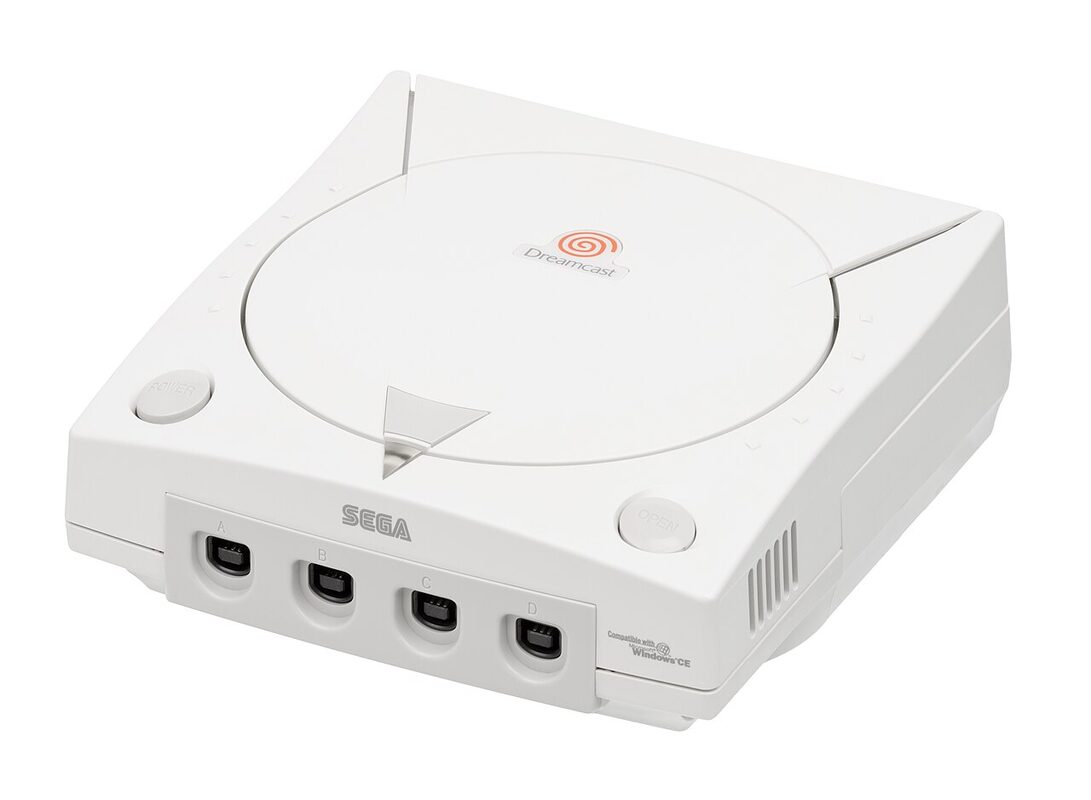
The Sega Dreamcast was never meant to read cartridges. It has no cartridge slot. Hobbyist developer Throaty Mumbo used those ports to build Dreamcart. The repository describes it as "a game cartridge peripheral for Dreamcast": a set of cartridge readers that let the console play physical Nintendo 64, Super Nintendo and Sega Genesis/Mega Drive cartridges, including their save data.
Hackaday covered the project on 18 November 2026. The design files, firmware and the Dreamcast-side software are public in the ThroatyMumbo/Dreamcart repository on GitHub.
How the cartridge reaches the console
According to Hackaday, the build takes a cartridge port from an N64 and wires it to an adapter. The adapter lets the Dreamcast read the cartridge through the controller port. The finished peripheral uses a custom PCB in a custom case. Hackaday also notes that the builder covered DVD capability in a previous build that used a similar controller-based peripheral approach.
The controller port speaks the Dreamcast's Maple bus. The dreamcast.wiki entry on the Maple bus describes it as the bus the console uses for controllers and peripherals, and calls it a symmetrical serial protocol. The wiki documents the signal lines, the packet start and end sequences, bit sequences, how each frame word is addressed, and the command and payload structures. Examples include command 0x05 for device info, 0x06 for extended device info and 0x08 for data transfer. A peripheral that wants the console to talk to it has to implement that protocol. A cartridge reader is just an unusual peripheral that answers with ROM and save data instead of button states.
Hackaday puts the Maple bus at around 2 megabits per second, which it calls not too shabby for a late-90s controller. The dreamcast.wiki page agrees on the figure for the host, at roughly 2 Mbit/s raw, and puts peripherals, which transmit a little slower, at about 0.5 to 1.3 Mbit/s raw. That is quick for a gamepad but slow compared with a cartridge connected directly to a console's address and data buses.
Why the N64 path uses a recompiler instead of an emulator
The obvious approach would be to run a Nintendo 64 emulator on the Dreamcast and stream the ROM from the cartridge. Hackaday reports that an N64 emulator on the Dreamcast is not fast enough. Dreamcart uses a dynamic recompiler for N64 titles instead. Hackaday describes the result as games recompiled for the Dreamcast, with the game assets and save data read from the physical cartridge.
The repository confirms the split. Cartridges are played "via an emulator or dynamic recompiler", and the recompiler is N64-only. The repository's FAQ says SNES and Genesis support depends on what the emulators support, and that these systems need modified versions of the Super Famicast and Genesis Plus DC emulators. The author says he does not plan to add a native recompiler for them and that N64 is the main focus.
According to the repository, the N64 reader is built around Raspberry Pi's RP2350B. The README says the N64 reader can be any RP2350B-based MCU hooked up directly to a cartridge slot with the proper wiring, which it calls not ideal but working, so builders are not strictly tied to the project's own PCB. The repository does not say which microcontroller the SNES and Genesis readers use. PinoutFeed is not inferring one.
What is in the repository
The GitHub project had 13 commits and is licensed GPL-3.0 when we checked. It is organised by target system:
- Firmware: three directories,
n64,snesandgenesis. They buildn64link.elf,sneslink.elfandmdlink.elfrespectively. - Hardware: PCB designs in the
hardware/directory. - Dreamcast-side software:
dcandrecompdirectories for the code that runs on the console. - Demo: the README links a video demonstration.
The toolchain list shows the project is aimed at people already comfortable with Dreamcast homebrew and RP2350 firmware. The repository lists:
- Pico SDK 2.x for the reader firmware
- A CMSIS-DAP debug probe, for example the Raspberry Pi Debug Probe
- OpenOCD with RP2350 support
- KallistiOS, the open-source Dreamcast development library
- dcload-ip burned to a disc, and dc-tool-ip for loading software onto the Dreamcast (the author typically uses Ethernet via the BBA)
The author says you could probably burn the software to a disc and run it directly, but he has not tested that. The documented workflow is loading over the network with dcload-ip, so a builder needs a network-equipped console.
A note on the cartridges themselves
The README's disclaimer tells builders to test with a throwaway cartridge first and back up their save files if possible. The author says he has not lost any save data in his testing, but the risk remains. That is good advice for any homemade cartridge interface. The reader connects directly to the cartridge's bus, and a wiring mistake or a firmware bug during a save write could corrupt battery-backed save memory that cannot be recovered. For collectors, the safe order is to dump the save first and experiment second.
What It Means for Makers
Dreamcart is for retro-console tinkerers, Dreamcast homebrew developers and RP2350 users who want a hard example of bit-level protocol work. It does not replace an N64, SNES or Genesis, or the commercial flash carts and dumpers sold for those systems. What it offers is a new use for existing hardware: a Dreamcast running original cartridges, with their saves, through a port Sega designed for controllers and memory cards.
The project is also a useful reference for two kinds of work:
- Maple bus peripherals: Dreamcart is working, open-source firmware that presents a microcontroller to the Dreamcast as a Maple peripheral. Anyone designing a custom Dreamcast controller, adapter or storage device can study it alongside the dreamcast.wiki protocol documentation.
- Parallel cartridge interfacing on the RP2350B: the N64 firmware shows an RP2350B handling a parallel cartridge bus on one side and a serial console protocol on the other.
Price and availability: Dreamcart is an open-source hobby project, not a product. Neither Hackaday nor the README mentions a kit, a pre-assembled unit, a price, a crowdfunding campaign or a pre-order. Builders get PCB files, firmware and Dreamcast software from GitHub. They supply their own boards, an RP2350B-based microcontroller for the N64 reader, a cartridge slot, a debug probe and a Dreamcast set up for loading code. The repository is listed under GPL-3.0, so read the licence terms before reusing the design.
Expect rough edges. The repository has 13 commits, the toolchain is a developer's toolchain, and the author's own warnings about throwaway cartridges and save backups suggest this is still experimental. Getting N64 games to run on a Dreamcast at all, through a roughly 2 Mbit/s controller link and with a recompiler doing the work an emulator could not, is a solid result for one builder.
