
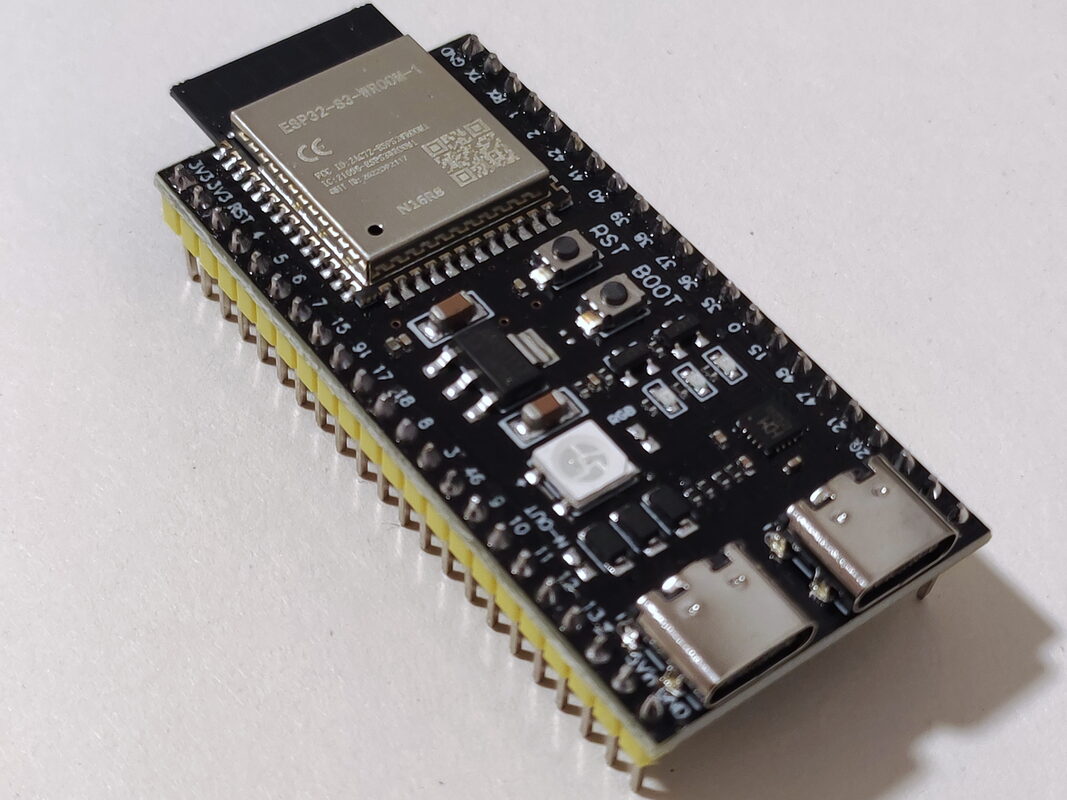
Los Angeles-based Hat & Hammer's OpenMote campaign on Crowd Supply had raised $202,165 from 1,502 backers as of October 20, 2026, against a listed goal of $1, and is marked as funded. OpenMote is a programmable universal remote built around an ESP32-S3 module and shaped to fit a Wii Remote shell. It comes in two versions at campaign prices: a fully assembled remote for $99, which includes the Gen 3.3 board with battery and firmware, and a PCB-only version for $59, which includes the board with battery and firmware but needs a Wiimote shell that is not included. Both come with a USB-C cable, tools and stickers. Shipping is free in the US and $12 worldwide. The campaign is still crowdfunding. It closes on October 29, 2026 at 5:00 PM PDT (00:00 UTC on October 30), nine days from now. Orders placed now have an estimated ship date of February 28, 2027.
What OpenMote is
When the campaign launched on September 15, 2026, creators Samson T and Ezra Bird wrote in the launch update: "OpenMote is a programmable universal remote in a Wiimote shell." It controls smart-home devices, games and TVs over Bluetooth, Wi-Fi and infrared. Any button can be mapped to any action, and its built-in motion sensing supports gestures. At launch the two versions were called "Ready To Go," a finished remote that needs no assembly, and "Mod Your Own," a drop-in board for a Wiimote shell the buyer already owns.
OpenMote is part of Elecrow's Project Aviary, a manufacturing partnership with Crowd Supply in which Elecrow handles PCB fabrication, assembly and packaging.
Hardware
Hat & Hammer's campaign page lists the following hardware:
- Module: ESP32-S3-WROOM-1, dual-core at 240 MHz, pre-certified
- Memory: 16 MB flash, 8 MB PSRAM
- Wireless: Wi-Fi 802.11 b/g/n; Bluetooth 5 LE with HID gamepad support; ESP-NOW peer-to-peer
- Infrared: 940 nm emitter and 38 kHz receiver; learns and sends codes
- Buttons: 12 total, 11 programmable, the 12th for power
- IMU: 6-axis, with two interrupt lines for wake on motion
- Microphone: PDM MEMS
- Audio and feedback: MAX98357A 3.2 W class-D amplifier with mono speaker; haptic rumble motor; 4 indicator LEDs plus a charge light
- Expansion: Qwiic/STEMMA QT I²C connector, with silkscreened GPIO
- Power: 1200 mAh lithium battery on a JST connector; USB-C for charging and flashing, charging from standard USB or USB PD at 5 V
These parts map onto the three kinds of control the creators describe. The IR emitter and receiver handle TVs. Wi-Fi connects to Home Assistant, which OpenMote works with locally and without the cloud, using ESPHome firmware that comes preflashed. Bluetooth LE HID lets the remote act as a gamepad, and the 6-axis IMU provides the motion sensing behind gestures. For custom firmware, the page lists the Arduino IDE with an Arduino library that has examples for each peripheral, plus PlatformIO and ESP-IDF.
Campaign progress
In update 4, posted October 12, 2026, Ezra Bird and Samson T reported 1,325 backers from 36 countries four weeks into the campaign. They also said:
- A step-by-step assembly guide with a photo for each step is live at openmote.io/assembly. Moving the board into a shell takes 5 to 15 minutes, with "no soldering, just a screwdriver and a pick." Fully assembled orders arrive ready to use.
- Every shell tested so far has fit, including Wii MotionPlus Inside remotes. Testing continues as the board is finalized, and results are posted to a fit reports channel on the project's Discord.
- Jon Bringus's review of OpenMote has passed 770,000 views.
- Work on the project repository and an app switcher is making steady progress, but the update gives no specifics.
The update also says the campaign price ends on October 29, when OpenMote "moves to its regular price." The creators have not said what that regular price will be.
The PCB-only version ships with its lithium battery attached. Anyone handling the bare board should follow Hat & Hammer's own documentation for anything involving the battery.
What It Means for Makers
- Who it's for: Home Assistant users who want one physical remote for smart-home devices and IR-controlled TVs, and ESP32-S3 developers who want a handheld board that already has buttons, motion sensing, a microphone, audio and haptics.
- Which version to pick: The PCB-only board is meant for someone who already has a Wii Remote shell. Fit has been confirmed only for the shells tested so far, so check the fit reports before relying on an unusual variant. Without a shell, the fully assembled version is the one to buy.
- Software: ESPHome comes preflashed for Home Assistant. Custom firmware can be written with the Arduino IDE, PlatformIO or ESP-IDF. The repository and app switcher are still in progress.
- When and where: Pledges are open on Crowd Supply until the campaign closes on October 29. Delivery dates are Crowd Supply's estimates, not guarantees.
