
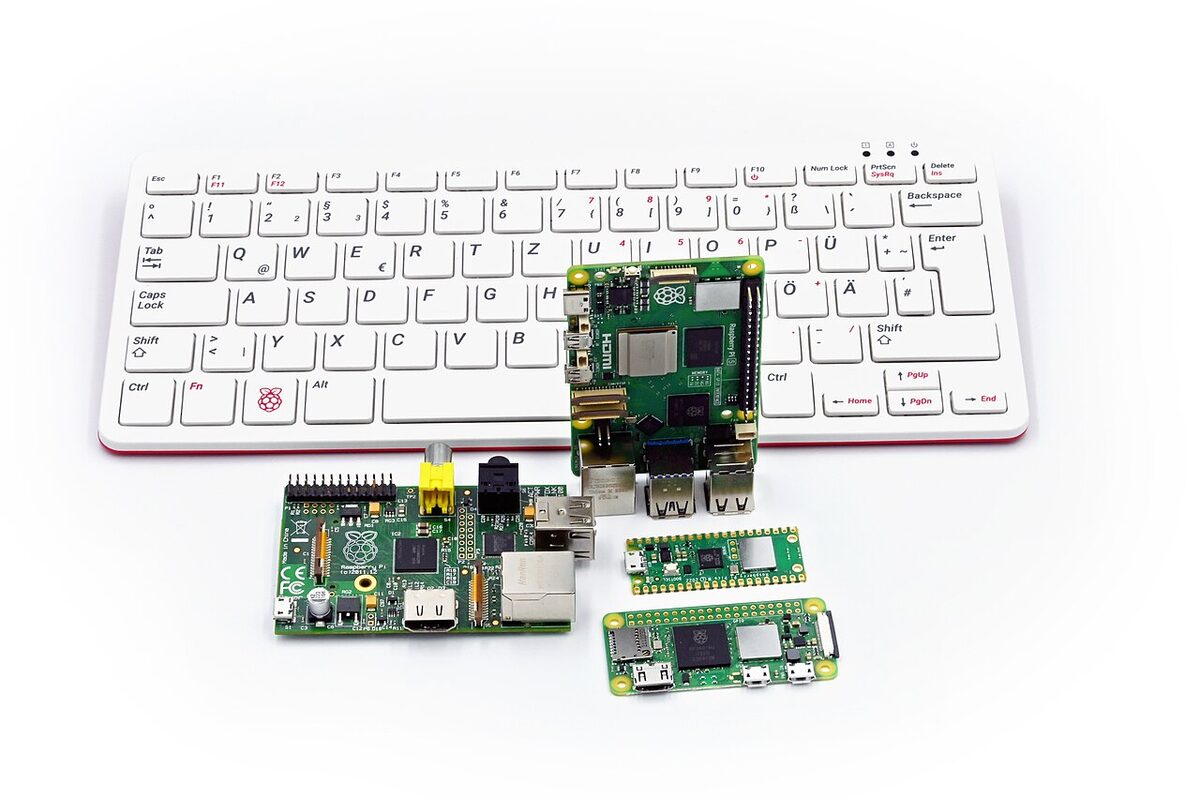
Raspberry Pi has not announced a Pi Zero 3 W or a Pi 4 Model A. Its own Linux kernel tree now names both boards anyway. On 25 October 2026 at 17:42 UTC, pull request #7711 in the raspberrypi/linux repository, titled "Add device tree for Pi Zero 3 W and Pi 4A", was merged into the rpi-6.18.y branch. The author is Marta Momotko, who commits with a raspberrypi.com address, and the change adds two new device tree source files. One describes a board with the model string "Raspberry Pi Zero 3 W". The other describes a "Raspberry Pi 4 Model A". Both declare the Broadcom BCM2711 as their SoC.
This is kernel evidence and nothing more. Raspberry Pi Ltd has published no product page, price, memory configuration, form factor or release date for either board. This article relies only on the kernel sources and Raspberry Pi's existing BCM2711 documentation. Everything below is what the device trees say. Where we interpret them, we say so.
What was merged
According to the GitHub API listing for PR #7711, the change touches six file entries:
Makefileinbroadcom/(modified), once underarch/arm/boot/dtsand once underarch/arm64/boot/dtsbcm2711-rpi-4-a.dts(added), once for 32-bitarmand once forarm64bcm2711-rpi-zero-3-w.dts(added), once forarmand once forarm64
The Zero board arrives in commit a1e4f54, "ARM: dts: Add Raspberry Pi Zero 3 W". Its whole commit message reads: "Add a device tree for the Raspberry Pi Zero 3 W. Signed-off-by: Marta Momotko <[email protected]>". The commit was authored on 23 October 2026 at 15:13 UTC, two days before the pull request was merged. The address is a raspberrypi.com one, so this is a first-party change and not a community guess.
What the device trees actually say
A device tree is a hardware description, not a datasheet. It tells the kernel which SoC is present, which GPIOs drive the LEDs and buttons, which buses are enabled, and which peripherals to probe. It does not list RAM capacity, connector types, board dimensions or price. With that in mind, this is what the two files on rpi-6.18.y contain.
Raspberry Pi Zero 3 W (bcm2711-rpi-zero-3-w.dts)
- Model string: "Raspberry Pi Zero 3 W"
- Compatible:
"raspberrypi,model-zero-3-w", "brcm,bcm2711" - Wireless: includes
bcm283x-rpi-wifi-bt.dtsi, the shared include for Broadcom wireless and Bluetooth on Raspberry Pi boards - LEDs: activity (ACT) LED on GPIO47
- Power button: GPIO46, mapped to
KEY_POWER - DDC: DDC0 enabled, DDC1 permanently disabled
- Serial console: on the 8250 auxiliary UART
Raspberry Pi 4 Model A (bcm2711-rpi-4-a.dts)
- Model string: "Raspberry Pi 4 Model A"
- Compatible:
"raspberrypi,4-model-a", "brcm,bcm2711" - Wireless: also includes
bcm283x-rpi-wifi-bt.dtsi - LEDs: power (PWR) LED on GPIO47, activity (ACT) LED on GPIO42
- Power button: same GPIO power-button definition as the Zero 3 W
- DDC: DDC0 enabled, DDC1 permanently disabled
- Serial console: on the 8250 auxiliary UART
Both files include the shared wireless and Bluetooth description, so both boards appear to carry Broadcom wireless and Bluetooth. That is our reading of the include, not a stated specification.
Reading between the lines, carefully
The firmest conclusion is the silicon. Both boards declare brcm,bcm2711, the same SoC family as the Raspberry Pi 4 Model B. In its Raspberry Pi 4 Model B product brief, Raspberry Pi describes that chip as a "Broadcom BCM2711, quad-core Cortex-A72 (Arm v8) 64-bit SoC" running at 1.8GHz on the Model B. That is the Model B's specification. Nobody has published a clock speed for either new board, and a compatible string does not fix one.
The DDC lines invite a guess. DDC is the channel a display host uses to read a monitor's EDID. The Pi 4 Model B has two micro-HDMI outputs, and on both new boards the second DDC bus (and the second HDMI output, hdmi1) is permanently disabled in the device tree. One plausible reading is that each board exposes a single display output. That is our inference, not something the sources state, and it says nothing about connector size.
Two more details stand out. Both boards get a GPIO power button wired as KEY_POWER, so the hardware may include a physical or header-level power control. Both boards send their serial console to the auxiliary UART. Neither detail tells us how the board is physically built.
Several things are missing from the sources entirely: RAM size, storage, USB type or count, Ethernet, camera or display connectors, GPIO header population, power input, dimensions, price and availability. Any spec sheet for these boards that you see right now is speculation.
What It Means for Makers
Status: unannounced. Neither board has a product page, a pre-order or a price, and Raspberry Pi has not confirmed that either will ship. The device trees show the company has working descriptions of two BCM2711 boards in its downstream kernel. That is a strong sign of hardware in development, but product names and plans can change before launch.
Who would care: If the boards follow their names, a Zero 3 W would put BCM2711-class compute into the Zero line from the Zero line. A Pi 4 Model A would pair a "Model A" with the existing "Model B" by name. The sources confirm none of this positioning. It is extrapolation from naming conventions.
Price and availability: none stated. For reference, Raspberry Pi's product brief lists the existing Pi 4 Model B at US$35 (1GB), US$67.50 (2GB), US$83.75 (3GB), US$100 (4GB) and US$165 (8GB). Those are Model B prices from the brief and should not be read as a guide to either new board.
What you can do today: nothing that needs hardware. Developers who maintain their own kernels or overlays can read the two .dts files on rpi-6.18.y to see the declared LED and power-button GPIOs before any board exists. Projects that hard-code board names or compatible strings, such as distro image builders and model-detection scripts, now have two new strings to plan for: raspberrypi,model-zero-3-w and raspberrypi,4-model-a.
PinoutFeed will report specifications, pricing and dates once Raspberry Pi publishes them.
