
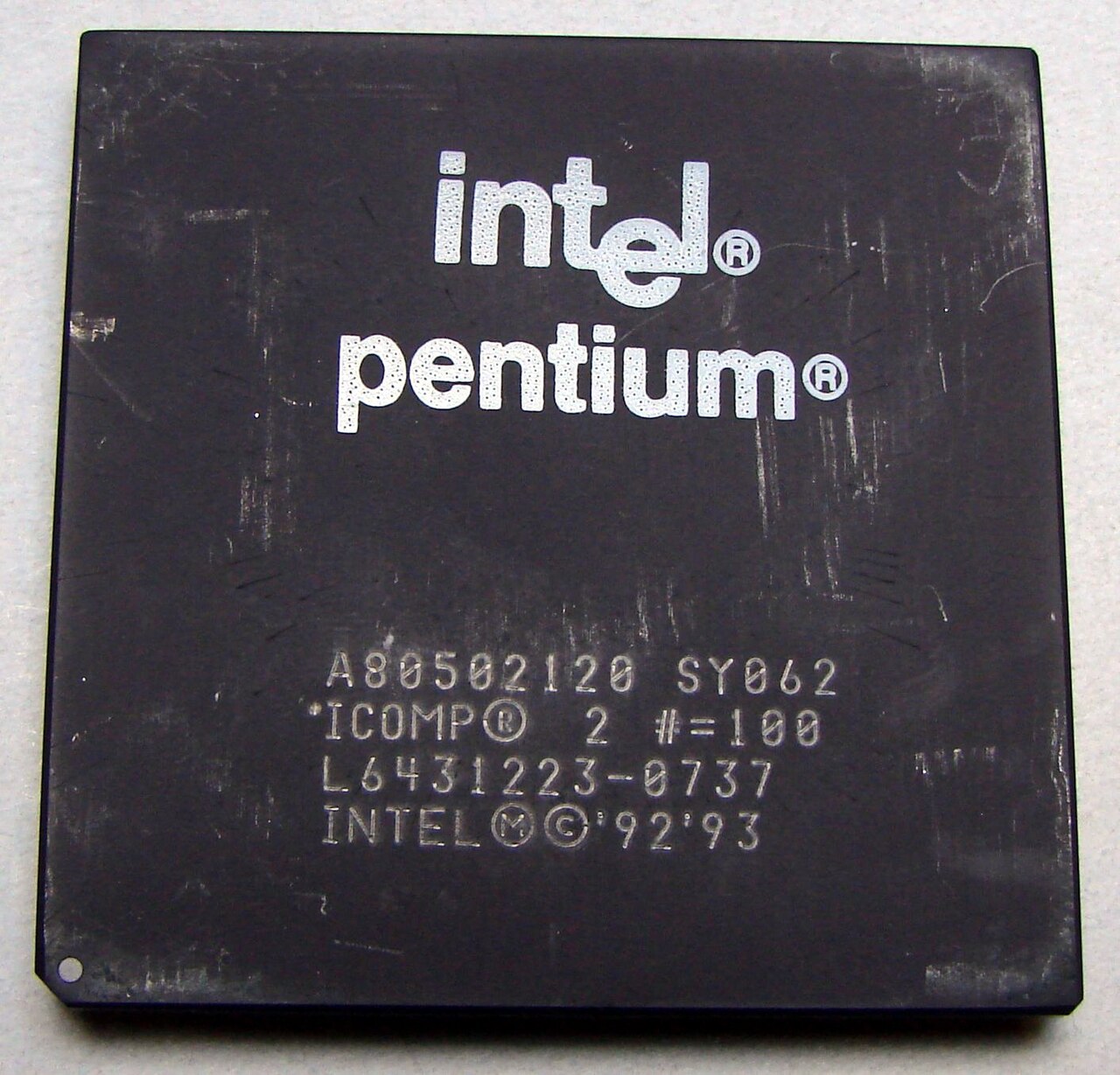
Most of the talk about running language models "at the edge" means a phone NPU or a single-board computer with gigabytes of RAM. Tiny 2.1, a project published on GitHub by WollyMonjac, goes much further down. It is a question-answering transformer written in Turbo C 2.0 that, according to its README, runs under plain DOS on a 486DX or a Pentium. The network and its program fit on a floppy disk, and a training kit lets you rebuild the model with your own facts.
Hackaday covered the project on November 18, a day after the repository was last pushed. It calls the project the "Tiny2.1 DOS PC Chatbot" and describes it as a second-generation transformer for the 486DX or Pentium.
The numbers, from the README
All figures below come from the project's own README unless noted otherwise:
- Model size: 367,000 parameters
- Architecture: 4 layers, 96 wide; reads and writes letter by letter (character level, not a subword tokenizer)
- Weights: 8-bit, one scale per row, 380 KB in all
- Memory requirement: about 540 KB of free conventional memory
- Target hardware: Pentium or 486DX under plain DOS
- Toolchain: Turbo C 2.0; rebuild with
TCC -ml TINY.C - Runtime files:
TINY.EXEandTINY.BIN, which must sit in the same folder - Training data: about 3,500 facts, each asked in many different wordings
- Licence: MIT for the code; three data files derived from public datasets keep their ODbL and CC BY-SA licences
Two of these numbers matter most. One scale factor per weight row is a simple, well-understood way to quantize a model to 8 bits: each row of a weight matrix keeps a single multiplier, so the integer weights can be mapped back to real values without much extra storage. That is how 367,000 parameters come out at roughly 380 KB rather than the roughly 1.4 MB that 32-bit floats would need (367,000 parameters at 4 bytes each is about 1.47 MB). The 540 KB requirement is also important. Real-mode DOS gives programs at most 640 KB of conventional memory, and drivers and TSRs take part of that. A machine with a heavy CONFIG.SYS may need trimming before Tiny 2.1 will load.
What it does, and what it does not
Tiny 2.1 is a closed-book question-answering model, not a general chatbot. The README is direct about its limits: the model was trained on about 3,500 facts, each asked in many wordings so it can handle varied questions. Outside those facts, it makes things up confidently.
Hackaday's commenters pointed to an example quickly. One reader's comment implies the model answered 17 × 23 as 96 (the correct answer is 391), and the article's author replied that language models are notoriously bad at maths. That fits a character-level model of this size trained mainly on a fixed set of facts: for questions outside its training material, expect a confident guess. Hackaday sums it up as 3,500 facts held in 367K parameters, which is the best way to read the project.
The interface gets a lot of the attention. The README describes a neon full-screen UI with a live "neural monitor" and a robot voice played through the PC speaker. Hackaday says the network is 380 KB of 8-bit weights, while the rest of the floppy would hold the interface.
Who wrote it
The README credits two AI models. It says Tiny 2.1 was "Written by Fable 5.2 and trained by Opus 5.5." Hackaday repeats the attribution. A third outlet, pasqualepillitteri.it (Wayback Machine snapshot), adds detail. It reports that, according to a Reddit post on r/ClaudeAI shared on X on November 15, Fable 5.2 wrote the code and Opus 5.5 generated the 3,500 training facts. PinoutFeed has not checked the Reddit post independently. We report the attribution as the README and that outlet state it.
The pasqualepillitteri.it report differs from the primary source in two places, and readers should know where. It gives a size of about 435 KB for program and weights together, while the README gives 380 KB for the weights alone. The two figures may be measuring different things, but we use the README's number. The outlet also says the Reddit post linked no code, weights or download. That has since changed: the GitHub repository contains the training kit, the DOS files and the build instructions, with the code under the MIT licence.
The training kit
For most readers, the training pipeline will be more useful than the demo. The repository includes two Python scripts, gen2.py and train2.py, which need Python 3, NumPy and PyTorch. The README says a normal CPU is enough, so you do not need a GPU. To teach the model new material, you add facts to the training/facts/ folder, run the scripts again, and export a new TINY.BIN that TINY.EXE reads.
Hackaday also highlights this: scripts for training on your own facts are on GitHub under an MIT licence. Keep the licence split in mind. The code is MIT, but the README says three data files derived from public datasets keep their own licences, ODbL and CC BY-SA. If you ship a derived model or a dataset that includes those files, check what those terms require of you.
What It Means for Makers
Tiny 2.1 is not a useful assistant, and the README does not claim it is. It is a working example of a small transformer, quantized to 8 bits and decoding one character at a time, running in C on 486-class hardware with a few hundred kilobytes of weights. That makes it relevant to three groups.
Retrocomputing hobbyists get new software for real 486DX and Pentium machines, with a full-screen UI and PC-speaker voice that suit the hardware. Before a demo, check the 540 KB free-memory requirement against your boot configuration.
Embedded engineers get a reference point for how little memory a character-level transformer needs: 380 KB of 8-bit weights with per-row scales. The README makes no claims about ports to other platforms, and we are not reporting any. But C code for a DOS target with tight memory may be a reasonable starting point for anyone experimenting.
Educators get a transformer small enough to retrain on a laptop CPU according to the README, with a fact list students can edit and a failure mode that shows clearly what memorisation looks like. The reported 17 × 23 answer is a useful classroom example.
On cost and availability: the project is a free, open-source software release, not a hardware product. The code is MIT-licensed and available now on GitHub (repository pushed November 17, 2026), with the derived data files under ODbL and CC BY-SA. There is no price, pre-order or crowdfunding campaign. You need a DOS machine (or an emulator of your choice) to run it, and a PC with Python 3, NumPy and PyTorch to retrain it.
