
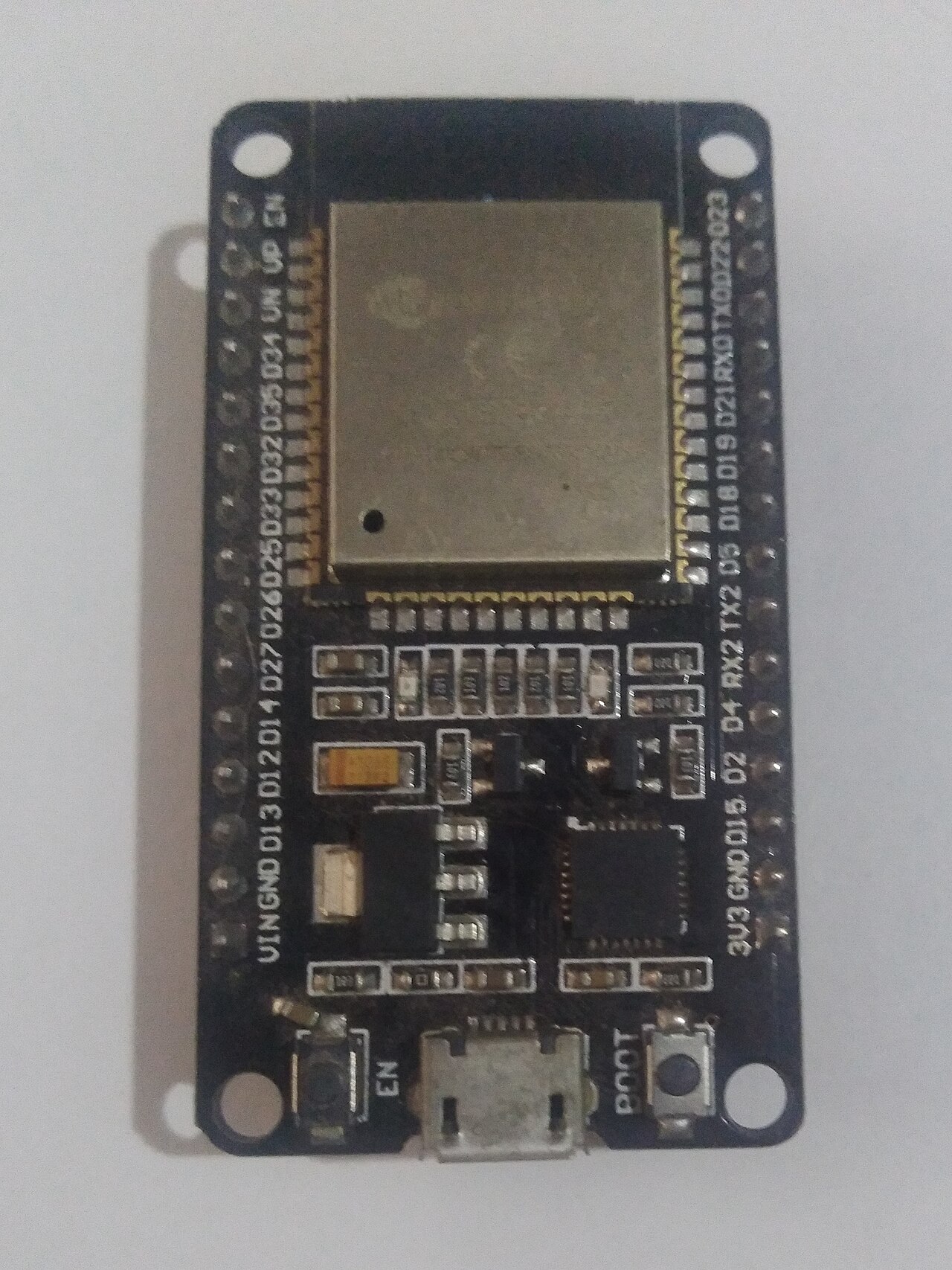
"Linux on an ESP32" has been a party trick for years: emulators running on a microcontroller, or stripped kernels that limp along without memory protection. The ESP32-S31 is different, because the chip has the hardware a normal Linux kernel expects. Hackster.io's November 9 report put the headline in plain terms: Espressif now publishes an official Linux 6.18 development branch for the part. A community project, GrieferPig/esp32-s31-linux, has also gone further and ships precompiled images you can flash today.
Neither one is a finished product, though. Espressif labels its kernel and its board support package as developer previews, and the community port calls itself experimental. Below is what each piece is, what has been shown to work, and how far it is from something you would put in a product.
Why the ESP32-S31 can run "real" Linux
Hackster describes the ESP32-S31 as a dual-core RISC-V chip running at up to 320 MHz, with Wi-Fi 6, Bluetooth and Zigbee radios. The feature that matters for Linux is its memory management unit, which Hackster describes as having a two-level page table and multiple privilege levels. GrieferPig's README calls the result "MMU RV32 Linux running natively on an ESP32-S31" and lists the Sv32 MMU among the features it supports.
This is the key difference from earlier ESP32 Linux experiments. With an MMU, processes get their own protected address spaces, and the kernel can be a conventional MMU build instead of a no-MMU (uClinux-style) configuration. Userland can then look like ordinary embedded Linux: GrieferPig's images ship BusyBox, according to Hackster.
Memory is the obvious limit. CNX Software reports that the ESP32-S31 development boards come with 16MB of PSRAM. Hackster notes that the chip has far less memory than a normal Linux computer and no GPU. Expect a headless serial console and small daemons, not a desktop.
Espressif's official pieces: a kernel fork and a Buildroot BSP
Espressif's support comes in two repositories.
The kernel. espressif/linux is the company's downstream fork of Linux with ESP32-S31 support. The relevant branch is integration/v6.18-esp32s31, which the repository says is "currently in developer preview and not yet recommended for production use." It is a vendor fork, not mainline Linux. At the time we fetched it, the repository had 73 stars and 9 forks, which says more about how new it is than about how good it is.
The BSP. espressif/esp-linux-bsp, on branch integration/v1.0-esp32s31, holds the image layout and packaging tools for Espressif's Buildroot integration on the S31. It also carries the developer-preview, not-for-production label. Its packager combines five components into one flash image, s31_full_flash.bin:
- U-Boot SPL
- a U-Boot FIT image
- the Linux device tree
- an XIP (execute-in-place) kernel
- a cramfs root filesystem
The XIP kernel and cramfs root are typical choices for a memory-constrained system. Running the kernel straight from flash saves PSRAM, and cramfs is a compressed read-only filesystem built for that kind of setup. The repository says it covers the ESP32-S31 only and is updated irregularly.
According to CNX Software, the BSP is built on Buildroot 2025.02 through an external tree branch, buildroot/v2025.02-esp32s31 of esp-buildroot-external, and flashing needs esptool 5.3.0 or newer.
Timing matters here. The BSP is not new this week: CNX covered the developer preview on August 22, 2026. Its timeline has the ESP32-S31 unveiled in March, two development boards in May, and mass production announced a few weeks before that article. The new development is Hackster's November 9 piece and the arrival of a community port with prebuilt images.
GrieferPig's port: what is Stable, Experimental and WIP
GrieferPig's esp32-s31-linux is described as Linux 6.18 for the ESP32-S31. Its value for anyone trying it out is that it ships flashable images, so you do not have to build them first. It has been tested on one module, the ESP32-S31-WROOM-3 E1H16R16V, on Espressif's ESP32-S31 Coreboard/Korvo hardware. The README marks the whole project as experimental and not for production. It also states openly that the code is heavily agent-assisted, meaning much of it was written with AI tools. That is worth knowing before you trust a driver with anything that matters.
The README's support matrix is the most useful part of the project. Here are the main entries that matter to most makers (the README also lists LP firmware and mailbox, GPSPI target, analog and sensor blocks, and watchdog, NVMEM, RNG and crypto, all Experimental):
Stable
- Linux with Sv32 MMU and flash XIP
- Dual-core SMP
- Persistent root filesystem
- Wi-Fi station mode
- Bluetooth (via BTstack)
- GPIO and UART
Experimental
- I2C0 and I2C1
- GPSPI2 and GPSPI3 host
- I2S/TDM
- SD/MMC
- Ethernet
- USB gadget
- AHB/AXI GDMA
- Timers, PWM and pulse counter
Work in progress
- TWAI/CAN
- USB host
- Power management
Unsupported
- RMT
The list is more useful than it first looks. Wi-Fi station mode, Bluetooth, GPIO and a UART console are enough for a networked Linux node that can toggle pins and talk serial. Almost everything a typical maker project connects to, however, is still Experimental: I2C sensors, SPI displays, SD cards, I2S audio and PWM. USB host is unfinished, so plugging in a USB peripheral is not yet an option. Power management is also still in progress, which makes battery-powered designs a poor fit for now. RMT, which ESP32 projects commonly use to drive addressable LED strips and IR, is not supported at all.
"Stable" here is the author's own label on a hobby project tested on one module. It does not mean Espressif has validated anything. Note also that Wi-Fi is listed as station mode only, and the matrix says nothing about access-point mode.
Official branch vs community port
The two efforts answer different questions. Espressif's kernel branch and BSP show what the vendor plans to support. They are the base that drivers and fixes will come from, and the BSP describes an image format (SPL, FIT, device tree, XIP kernel, cramfs) that may well become the reference layout. GrieferPig's port answers "can I boot it this afternoon?" Its matrix is the most detailed public account we found of which peripherals actually work. None of our sources says how much the community port takes from Espressif's branch, so we make no claim either way. Hackster also notes that you still have to compile Espressif's kernel yourself, which is where the prebuilt images help.
Both carry the same warning in slightly different wording: preview or experimental, not for production.
What It Means for Makers
Who it is for. Right now this is for kernel tinkerers, embedded Linux developers who want a cheap RISC-V MMU target, and educators who want a microcontroller-class board that runs an MMU Linux kernel with real process isolation. If you want to fix drivers, the Experimental column is where you can help.
What it enables. The pitch is a Wi-Fi 6 and Bluetooth chip that can run a conventional Linux userland on a microcontroller-class part. Some small networked jobs that would otherwise need a separate Linux-capable SoC could, in principle, run on an ESP32. For anything timing-critical or low-power, the matrix argues for caution for now: power management is unfinished, RMT is unsupported, and most buses are Experimental.
Hardware. The community port has been tested only on the ESP32-S31-WROOM-3 E1H16R16V module, on ESP32-S31 Coreboard/Korvo boards. If you are buying hardware to try this, that is the configuration with a known track record. CNX reports that the S31 development boards come with 16MB of PSRAM.
Price and availability. None of the sources we used gives a price for the chip, the module or the development boards, so we are not quoting one. On status: CNX reported in August that mass production of the ESP32-S31 had been announced, and that two development boards followed the March unveiling in May. The software is free on GitHub. Espressif's kernel branch (integration/v6.18-esp32s31) and BSP (integration/v1.0-esp32s31) are developer previews. GrieferPig's prebuilt images are experimental community releases. Nobody involved is calling any of it production-ready.
What to watch. The signs of real progress will be items moving from Experimental to Stable in GrieferPig's matrix, especially I2C, SPI and SD/MMC; USB host and TWAI leaving WIP; and Espressif's branch dropping its developer-preview label. Until then, the ESP32-S31 can run real MMU Linux, but only for experimenting.
Sources
- espressif/linux: Linux kernel with Espressif patches (branch integration/v6.18-esp32s31)
- espressif/esp-linux-bsp: ESP32-S31 Linux BSP
- GrieferPig/esp32-s31-linux: Linux 6.18 for ESP32-S31 (community port)
- Full Linux on an ESP32? It's Official (Hackster.io, 2026-11-09)
- Espressif Systems releases a Linux BSP developer preview for ESP32-S31 RISC-V microprocessor (CNX Software, 2026-08-22)
