
Nintendo of America has used the DMCA to take down open-source Nintendo Switch modchip firmware on GitHub. A notice dated 6 November 2026, which GitHub published in its public github/dmca repository on the Tuesday after (TorrentFreak), names a single repository, Ansem-SoD/Picofly. GitHub did not act on that repository alone. It disabled the project's entire fork network, 144 repositories including the parent.
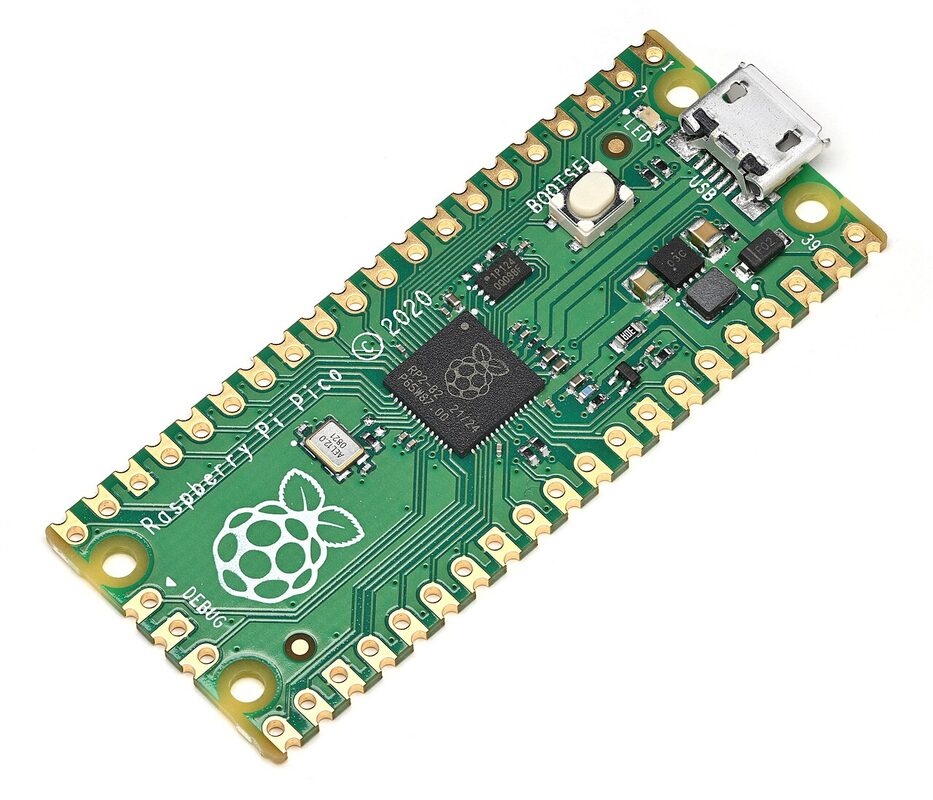
This one is worth covering on a maker-electronics site because of the hardware involved. TorrentFreak describes Picofly as information and firmware for a Switch modchip based on the RP2040-Zero board, a small off-the-shelf microcontroller board. The legal question is about what the firmware is used for, not the board it runs on. Still, the takedown shows how a general-purpose dev board becomes part of a copyright dispute once someone publishes firmware for a particular use.
This article covers the legal and procedural facts only. It contains no installation or flashing instructions.
What the notice says
The primary document is the notice itself, filed as 2026/11/2026-11-06-nintendo-2.md in GitHub's DMCA repository. Nintendo says the targeted repositories "offer, link to, or otherwise provide access to mod chip firmware including but not limited to SX Core, SX Lite, Picofly, or HWFLY." It argues that this firmware circumvents technological protection measures by bypassing the console's boot sequence.
The legal basis is the anti-circumvention part of US copyright law, not ordinary copyright infringement. The notice cites 17 U.S.C. 1201(a)(1) and (2). Section 1201(a)(1) covers the act of circumventing an access control. Section 1201(a)(2) covers trafficking in tools that do so. Nintendo also points to a US criminal case. TorrentFreak identifies it as the prosecution of alleged members of Team-Xecuter, and reports that one of the three defendants pleaded guilty. Tom's Hardware says the Department of Justice case concerned the group's SX Pro, SX Core and SX Lite products.
That reference is a change from Nintendo's recent notices. TorrentFreak notes that earlier Nintendo takedowns on GitHub mostly targeted emulators, key-dumping tools and sigpatches. This notice goes after firmware for physical hardware, and it cites a criminal case about commercial modchips as its basis.
Why 144 repositories went down instead of one
The number comes from GitHub's own procedure, not from Nintendo naming 144 projects. GitHub explains in its note on the notice that the reported network had more than 100 repositories, and that the submitter alleged all or most of the forks infringe in the same way as the parent. Under those conditions GitHub processed the notice against the whole network, 144 repositories including the parent, rather than requiring each fork to be listed.
For anyone who forked Picofly to keep a copy, fix a bug or archive it, the fork went down with the parent. On Wednesday, per TorrentFreak, the Picofly repository showed GitHub's standard takedown message.
Part of a four-notice batch
The Picofly notice was one of four Nintendo filings dated 6 November. According to TorrentFreak, the other three were an emulator notice against Citron Neo, where GitHub disabled a network of 71 repositories, and two notices against single copies of yuzu. Notebookcheck, citing TorrentFreak, reports that the four notices covered the Switch emulators Yuzu and Citron Neo as well as modchip software. It says 144 modchip-related repositories were disabled and another 71 Citron Neo repositories were affected.
What is still online
The takedown did not remove the firmware from the internet, or even from GitHub. TorrentFreak reports that several other Picofly and HWFLY firmware repositories were still online and are not named in the notice. Notebookcheck says copies were still accessible on Wednesday, and that Reddit users doubt the takedown will have a lasting effect. Its headline sums up the community's reaction as "too late."
TorrentFreak says GitHub's archive showed no sign of a counter-notice when it reported. Under the DMCA process, a repository owner can file a counter-notice if they believe the takedown was a mistake. None of the sources report that anyone has done so.
The technical context, as the sources describe it
Tom's Hardware gives the background in general terms. Switch modchips need firmware to perform voltage glitching during the boot process. Early original Switch units shipped with an unpatchable recovery-mode exploit, which later units such as the Switch Lite and the OLED model do not have. Tom's Hardware says running custom software on those patched units requires soldering a chip such as a Picofly, HWFLY or SX Core to the motherboard. Tom's Hardware also reports that the approach does not work on Switch 2.
Tom's Hardware says the takedown does not affect chips that are already installed. What it blocks is getting firmware updates or reflashing from the disabled repositories. In practice, the main effect is on maintenance and distribution, not on hardware already in use.
What It Means for Makers
Who it affects. The people directly affected are those who maintained, forked or pulled firmware from the Picofly network on GitHub. Owners of already-modified consoles are not affected unless they want updates from those repositories. The notice does not name anyone using RP2040 boards for other purposes. The notice targets the firmware and the repositories that distribute it. It says nothing about the RP2040-Zero board itself.
What changes. GitHub's network-wide processing is the procedural detail to keep in mind. When a fork network grows past 100 repositories and the complainant says the forks infringe equally, GitHub can disable every fork without listing each one. Forking a repository on GitHub does not reliably preserve it if the parent is targeted this way.
The legal framing. Nintendo's claim relies on Section 1201's anti-circumvention and anti-trafficking provisions and on the Team-Xecuter prosecution. It does not rely on copying of Nintendo's code. Nintendo's notice describes the firmware as primarily designed to circumvent the console's boot-sequence protections.
Price and availability. None of the sources give a price for Picofly-based hardware or for the RP2040-Zero board, and none report any change to the board's availability. Status as of 12 November 2026: the Ansem-SoD/Picofly network of 144 repositories is disabled on GitHub. Other Picofly and HWFLY firmware repositories that the notice does not name were still reachable as of Wednesday, per TorrentFreak and Notebookcheck. No counter-notice had been reported.
Sources
- GitHub DMCA notice: Nintendo, 2026-11-06 (github/dmca, nintendo-2)
- Nintendo Targets Picofly Switch Modchip Firmware in GitHub DMCA Takedown (TorrentFreak)
- Nintendo unleashes DMCA takedown wave against open-source Switch modchip firmware, 144 tools disabled (Tom's Hardware)
- 'Too late': Community scoffs at Nintendo's GitHub crackdown on emulators and modchips (Notebookcheck)
