
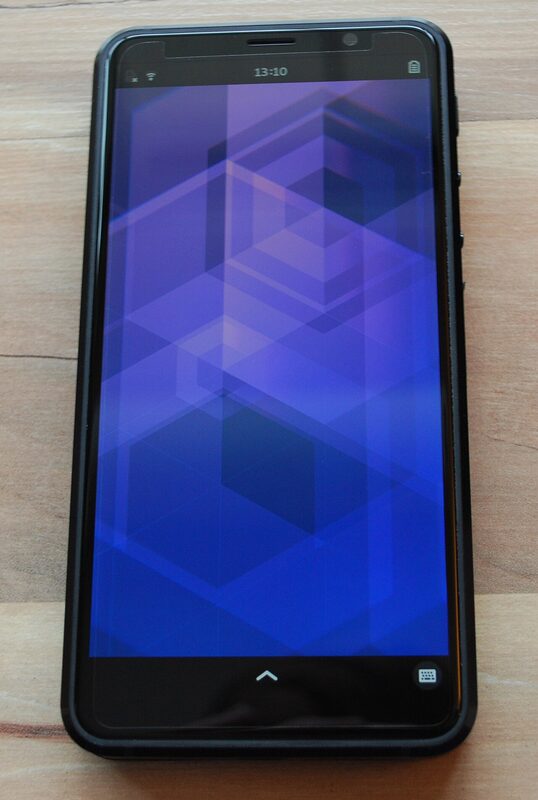
Purism has opened a crowdfunding campaign for the Librem 5 v2, a second-generation Linux phone. The headline change is the processor. The original Librem 5 used a quad-core ARM64 chip from NXP. The v2 uses an eight-core RISC-V SpacemiT K1, according to Purism's campaign page. Liliputing reported the campaign on 14 November 2026 and LinuxGizmos covered it on 15 November. Purism's own incentive table gives the public launch date as 17 November, and the first 100 backers get a Founders Edition.
The campaign is open but early. When we fetched the page it showed 53 of 2,500 orders (2%) with 91 days remaining, and the deadline is 15 February 2027. The phone is a crowdfunding reward, not a product on sale. Purism's campaign page says rewards are not guaranteed to be delivered, and that there are no refunds.
The hardware, as Purism lists it
All figures below come from Purism's campaign page unless we say otherwise:
- SoC: eight-core RISC-V SpacemiT K1 (the original Librem 5 uses a quad-core ARM64 NXP part)
- Display: 5.7-inch, 720 x 1440
- Memory: 8 GB (up from 3 GB on the original)
- Storage: 128 GB, plus an SD card slot rated at 80 MB/s (SDR104)
- Cameras: 8 MP front, 13 MP rear
- Hardware kill switches: three, for cellular, Wi-Fi/Bluetooth, and microphone/cameras
- SIM: dual SIM
- I/O: 3.5 mm headphone jack; USB-C for charging and second-screen output; smart card slot
- Battery: removable, 4,500 mAh
LinuxGizmos adds some detail. Purism is keeping the original chassis, which simplifies repairs and lets existing owners upgrade certain hardware components. Cellular and Wi-Fi/Bluetooth stay on separate, removable cards, which is what makes the radio kill switches meaningful. The SD card slot can boot an operating system on its own. Dual SIM is planned, but the second SIM's configuration is still being evaluated. An improved 4G modem comes first, with a 5G module to follow later. The software is PureOS, with Waydroid among the Android compatibility options.
Purism lists no CPU clock speed, GPU model or benchmark figures for the v2, and we have not added any.
Pricing and tiers
Campaign pricing in US dollars, as listed at launch:
- Phone only: $1,599
- Phone + AweSIM cellular: $1,599 now, plus $99/month once the phone ships
- Payment plan: $129 now, then $99/month for 15 months
- Librem 5 v2 DevKit: $1,599
- Librem 5 (first version): $799
The DevKit costs the same as the phone. That suggests who Purism expects to back the early stages: people who will run unfinished software on unfinished hardware and report what breaks. Purism also warns that cost overruns are likely, so the final market price may be higher than the current reward price.
The schedule
Purism's timeline runs from December 2026 to May 2028 and starts with DevKit alphas. A Librem 5 v2 Beta ships in Q4 2027, followed by production-test rounds labelled PT1 and PT2. In total, Purism describes seven hardware iterations before mass production. The campaign promises "rapid delivery 15 months after campaign close". With a 15 February 2027 close, that lands around May 2028, which matches the date Liliputing and LinuxGizmos report for production deliveries.
Purism's own history timeline shows the original Librem 5 was announced in 2017, with its first delivery in 2019. Seven hardware iterations in that window is an ambitious plan for a small hardware company, and Purism itself says each milestone has unknowns that make durations impossible to estimate accurately. Backers should weigh that.
What Purism says is not done yet
The campaign is unusually frank about the software gap. In its section on RISC-V risks, Purism says the graphics stack still needs complete 3D support, and that RISC-V is "not yet drop-in" for PureOS. Its software timeline allots six months of work to graphics acceleration and nine months to power optimization.
LinuxGizmos lists more open items:
- mainline Linux drivers for peripherals
- power management
- browser performance
- compatibility for Arm64 apps
The plan is to port drivers from the vendor's Linux 6.6 kernel, because most peripherals are not supported in mainline Linux. That is a familiar pattern on newer RISC-V parts: the vendor kernel boots the board, and upstreaming drivers is the slow part. In a phone, sleep states and battery life depend on exactly that kind of driver and power-management work.
Liliputing put it bluntly. At $1,599, with an estimated May 2028 ship date and hardware the software does not yet fully support, this is a campaign for open-hardware and open-software enthusiasts, not folks looking to replace their iPhones tomorrow. Liliputing also points to the upside. Compared with the original, the v2 has more RAM, a better camera, a faster SD reader, dual SIM and a faster chip. And moving to RISC-V could eventually mean fewer proprietary binary blobs, or none.
Why the SoC choice matters
Purism's stated goal is fully auditable products, with every layer from silicon to apps published and verifiable. Its page also notes that, like the Librem 5 v1, current RISC-V CPUs still have some proprietary blobs, and that the path is toward freedom rather than a finished result. An open instruction set fits that pitch better than a licensed Arm core, but an open ISA does not make the SoC open. The GPU and power management around the CPU cores decide how much blob-free software is possible, and graphics and power are exactly the areas Purism lists as unfinished.
Purism says its graphics work builds on the Mesa project, which already supports some Imagination B-series GPUs, and that the work it does for the K1's GPU will also benefit other K1 boards and similar GPUs. A phone pushes harder than a board on things like suspend/resume and power use, so if that work lands upstream, other K1 hardware stands to benefit too.
What It Means for Makers
Who it is for: Linux-phone developers, people already contributing to PureOS or mainline RISC-V kernel work, and privacy-focused users who want hardware kill switches and are willing to wait. It is not for anyone who needs a dependable daily phone before mid-2028.
What it replaces or enables: it replaces the NXP ARM64 platform of the original Librem 5. LinuxGizmos reports that it keeps the original chassis so existing owners can upgrade certain hardware components. For RISC-V developers, the $1,599 DevKit is a way to work directly on graphics, power-management and peripheral driver work for the K1, which Purism says could also help other K1-based hardware.
Price and availability, per the sources: crowdfunding only. Pricing at launch is $1,599 (USD) for the phone or the DevKit. There is also a $129-down payment plan, and an AweSIM bundle with $99/month cellular service starting at shipment. The campaign goal is 2,500 orders by 15 February 2027. Beta units are due in Q4 2027, and production deliveries are targeted for about May 2028. Purism states that rewards are not guaranteed and that there are no refunds. Back it the way you would fund development work, not the way you would pre-order a phone.
