
Most Home Assistant hardware is a general-purpose box. You add relays, sensor hubs and dimmers to it one at a time. DomeCtrl B.V., a small company based in Eindhoven, the Netherlands, has gone the other way. Its ControlBox is a single enclosure built around one job: running a house's hydronic radiant floor heating, with lighting and temperature sensing added on. The project opened its Crowd Supply campaign a few days before CNX Software's 10 November 2026 report. According to CNX Software, the funding goal is $36,000 and one fully assembled unit costs $1,550 at launch.
The project is at the crowdfunding stage. It is not shipping and it is not a conventional pre-order. Hackster.io reports that hardware is expected to ship at the end of July 2027 and notes that fulfilment is not guaranteed. CNX Software said the campaign had no takers so far when it wrote its article.
What is inside
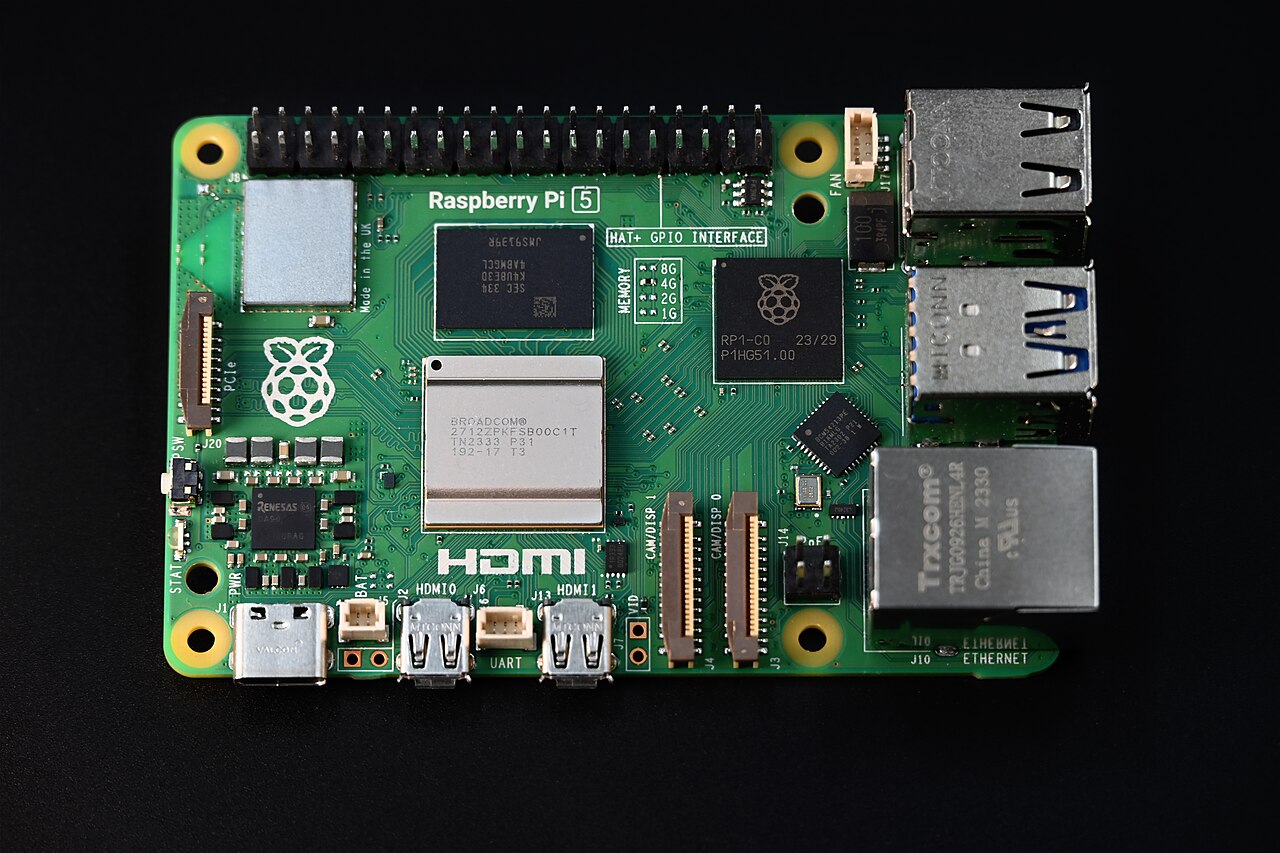
The compute side is ordinary Raspberry Pi hardware. The pre-launch Crowd Supply campaign page (via mirror) lists a Raspberry Pi 5 with 4 GB of RAM and an NVMe SSD. CNX Software adds that the SSD is 128 GB and comes preloaded with Home Assistant. Networking is Gigabit Ethernet, Wi-Fi 5 and Bluetooth 5, which matches the Pi 5's own interfaces. CNX gives the enclosure an IP30 rating and lists the mains input as 100–240 VAC.
The I/O board is where ControlBox differs from a Pi in a case. The campaign page snapshot lists:
- 16× 24 V AC / 500 mA outputs, for floor heater valves and other 24 V AC peripherals
- 4× 1.5 A mains outputs
- 2 optoisolated PWM outputs (up to 24 V DC), alongside the hydraulic PWM pump support the campaign describes
- 3× optoisolated GPIO outputs
- 3× optoisolated inputs
- 32 LED-strip PWM channels, quoted at up to 2 kW
- 1-Wire temperature sensor input, rated for cable runs of more than 6 m; CNX Software gives a maximum of 30 sensors
- RS485, half-duplex
- 433 MHz radio modules
CNX Software also reports a W32-ESP01 header for control through ESPHome. Neither source explains how that header is meant to be used alongside the Pi, so details should wait for the documentation DomeCtrl has promised.
On the software side, CNX Software lists DomeCtrl's Home Assistant integrations in two repositories, ha-pca9685 and ha-pi4ioe5v9xxxx, covering the LED outputs and the 24 V AC and mains outputs. The names suggest the board's PWM and GPIO-expander chips are exposed to Home Assistant through custom integrations instead of a separate microcontroller firmware. That is an inference from the repository names. DomeCtrl has not published a block diagram that confirms it.
The ESP32 version is gone, for now
Followers of the project may remember a cheaper ESP32 option. The pre-launch campaign page lists an alternative W32-ETH01 ESP32 configuration. Hackster.io reports that DomeCtrl announced an ESP32 variant in November 2024 and that it now appears to have been shelved. Hackster's report describes only the Raspberry Pi 5 build as being funded. None of the sources says whether the ESP32 variant will return as a stretch goal or a later product.
How open is the hardware?
The open-hardware status is still mostly a promise. DomeCtrl's ControlBoxHardware repository on GitHub describes itself as "Hardware specifications and design files for ControlBox." When PinoutFeed looked, it contained a ControlBox.pdf and a README and had one star. Full schematics are promised after launch. Hackster.io says they will be released under an open-hardware license that has not yet been named. Anyone backing the project partly for repairability or the ability to modify it should treat the license and schematic release as open questions until the files appear.
What It Means for Makers
ControlBox is for a narrow group: homeowners and integrators with zoned hydronic floor heating who already run Home Assistant, or want to, and who would like the manifold actuators, circulation pump, room sensors and lighting on one controller. Without it, that setup usually means a commercial floor-heating zone controller, a separate pump controller, a handful of relay modules and LED dimmers, and some DIY ESPHome nodes. Sixteen valve outputs, two PWM outputs, 32 LED channels and a 1-Wire bus in one box replaces a lot of loose hardware and wiring.
The price reflects that consolidation, and it is not hobbyist money. At launch on Crowd Supply, one assembled ControlBox costs $1,550 (USD), which includes the Raspberry Pi 5 and 128 GB NVMe SSD. CNX Software reports free shipping in the US and $18 shipping elsewhere. A maker with time and soldering skills could build similar I/O from off-the-shelf boards for less. What the $1,550 buys is a single enclosure designed for the purpose, with an IP30 rating, plus Home Assistant integrations its maker maintains. Whether that is worth it depends on how much you value your time and a tidy utility closet.
The status details matter too. This is a crowdfunding campaign with a $36,000 goal, and CNX Software saw no takers when it reported. Its expected ship date, end of July 2027, is more than eight months away, and Hackster.io notes that fulfilment is not guaranteed. The ESP32 option that might have brought the price down appears to be shelved. The schematics are not out yet, and the open-hardware license has not been named.
The board switches mains-voltage loads and is meant to connect to a building's heating plant. Installing it is therefore work for someone qualified under local electrical and plumbing rules, not a weekend breadboard project. PinoutFeed covers the product as news and does not offer installation or wiring guidance.
For readers in the target group, the published specification is detailed for a first crowdfunding run, and the price is clear. Before backing, check the campaign's progress toward its goal and whether the promised schematics appear on GitHub.
Sources
- Crowd Supply: DomeCtrl ControlBox campaign page (pre-launch "Coming Soon" version, via mirror)
- GitHub: domectrl/ControlBoxHardware
- CNX Software: ControlBox Home Assistant solution is designed for floor heating systems, house lighting, 1-Wire sensors
- Hackster.io: DomeCtrl opens crowdfunding for its Raspberry Pi 5-powered ControlBox under-floor heating controller
