
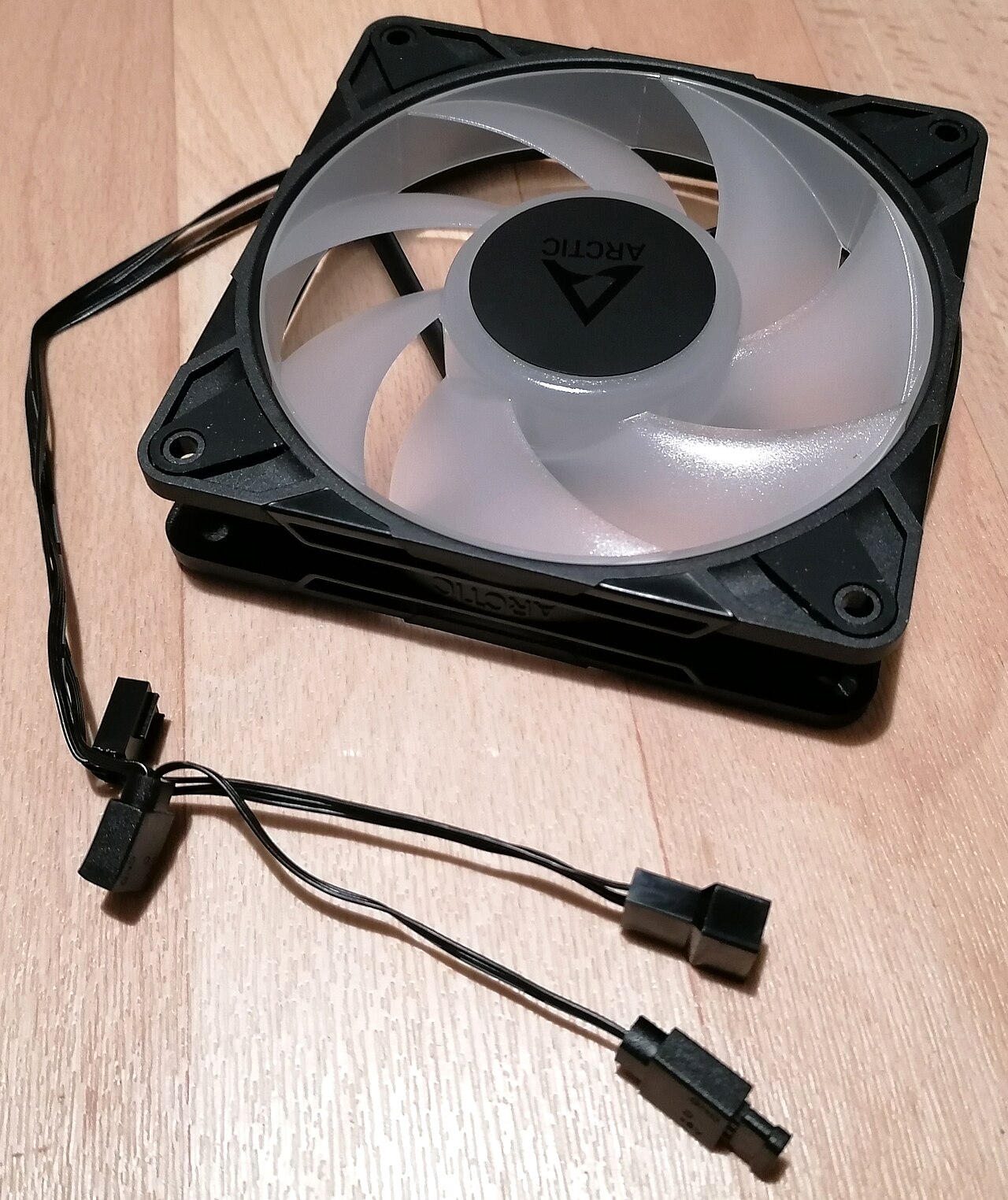
Getting a homelab rack or a NAS enclosure under Home Assistant control has usually meant a breadboarded ESP32, a MOSFET module or two and a YAML file nobody else can reproduce. A small open-source board from CoolMaker Lab packages that work into one product. The ESP32 4-Channel PWM Fan Controller drives four independent 4-pin PWM fans, reads each fan's tachometer, and puts a dedicated load switch in each fan's power path, so a fan can actually stop instead of idling at its lowest duty cycle. It runs ESPHome, and its v2.0 revision adds local temperature control from DS18B20 probes.
CNX Software covered the board on November 13, 2026 and describes it as aimed at server racks and NAS systems. It is listed for sale on Tindie at $28.00, and the design files are in the creator's GitHub repository under the MIT license.
The hardware, line by line
All the specifications below come from CNX Software's spec list and the Tindie listing. We have copied them as published.
- Module: ESP32-WROOM-32-N4, with 4MB flash, 2.4GHz Wi-Fi and Bluetooth LE
- Fan outputs: 4x 4-pin PWM connectors, adjustable from 1-100%
- Fan feedback: 4x tachometer inputs for RPM readout
- Fan power switching: TPS22810DBVR-based load switches, one per fan
- Temperature: a 3-pin connector for up to 4x DS18B20 1-wire sensors (v2.0 board)
- USB: USB-C with a CH340C USB-to-serial bridge for programming and debugging
- Expansion: a 4-pin header carrying 5V, GND, GPIO4 and GPIO5
- Presence sensing (optional): LD2402G 24GHz mmWave radar over UART
- Power input: 12V DC barrel jack. CNX Software reports that a 12V/2A or higher supply is recommended
- Regulation: a TPS5430DDAR buck converter from 12V to 5V, followed by an AMS1117-3.3. Tindie describes "robust on-board DC-DC buck power regulation"
- Dimensions: listed as TBD
The parts list is conventional, but the power stage deserves a closer look. The 12V input feeds the TPS5430 buck converter, which makes 5V, and the AMS1117 linear regulator takes that 5V down to 3.3V for the ESP32 module. The fan headers are not just a PWM signal with an unswitched 12V rail beside it. Each fan has its own TPS22810DBVR load switch, which CNX Software says disconnects power to the fan completely when it is turned off, and that is how the board delivers what the Tindie listing calls "power switching (zero-RPM mode support)". Setting PWM duty to its lowest value is not the same as turning a fan off. Cutting the supply is. The creator's README lists full power-off stop as a feature of every firmware build.
The 4-pin expansion header brings out GPIO4 and GPIO5 next to 5V and ground. Nothing in the sources says what those pins are for, so builders can treat them as general-purpose spares for whatever ESPHome component they want to add.
Firmware: five builds and one way to brick it
The creator's GitHub repository (YUAXI/HomeAssistant-PWM-Fan-Controlx4, bilingual Chinese/English README) describes the board as an ESPHome-based 4-channel PWM fan controller. It exposes three control surfaces: native Home Assistant integration, a web panel, and an HTTP REST API. Each fan can be switched on and off, set to a speed and read for RPM on its own.
The repository lists five firmware builds:
- v1.0 dual-core
- v1.0 single-core
- v2.0 Basic
- v2.0 DS18B20
- v2.0 DS18B20 + radar (LD2402G 24GHz mmWave)
The README says every version supports 1-100% PWM per fan, full power-off stop, RPM readout, diagnostics and a Bluetooth LE proxy. The BLE proxy is meant to extend Home Assistant's Bluetooth coverage as well as control fans.
Read the README's warning before flashing anything. According to the creator, shipped devices are generally single-core and can run only the v1.0 single-core build or any v2.0 build. The README states that flashing the v1.0 dual-core firmware onto a single-core device leaves it unable to boot. If you buy the board and want to experiment with releases, rule out the v1.0 dual-core image first.
GitHub Actions builds the firmware. Each release includes three binaries: .firmware.bin, .firmware.factory.bin and .firmware.ota.bin. The ESPHome configurations target the ESP32 DevKit board definition with the ESP-IDF framework, and they enable name_add_mac_suffix. That setting appends the last three bytes of the MAC address to the device name, so several identical controllers on one network will not collide when they are adopted into Home Assistant. That matters for anyone putting one in each rack shelf.
At the time of writing, the repository showed 48 commits, 45 stars and 7 forks.
Local fan curves
The v2.0 DS18B20 firmware adds automatic control that does not depend on Home Assistant. CNX Software reports that the default curve turns the fans off at 30°C or below and ramps them up to the user-set maximum at 50°C. The limits are adjustable and the control runs locally on the ESP32. The temperature input is the 3-pin 1-wire connector, which takes up to four DS18B20 sensors on a single bus, and CNX Software says each fan is assigned to a different sensor. The Tindie listing calls this "DS18B20 sensor binding".
The local curve is the most important part of the design for an equipment rack. A fan controller that only follows instructions from a home automation server stops working whenever that server is rebooting, updating or down, and the server may well be sitting in the same rack. Running the thermal curve on the ESP32 means the fans respond to heat even when Home Assistant does not. The 30°C-off default also fits the zero-RPM hardware: when a cabinet is cool, the load switches can cut fan power completely instead of leaving the fans running at minimum speed.
The optional LD2402G 24GHz mmWave radar connects over UART and is supported only by the top v2.0 build. CNX Software describes it as enabling presence-based automation. One plausible use, which is our inference and not the creator's claim, is that automations could lower fan noise when someone is nearby.
What It Means for Makers
This board is for homelab owners, NAS builders and anyone with a closet rack who already uses Home Assistant or ESPHome and wants fan speed tied to real temperature readings instead of a fixed resistor or a motherboard header. It replaces the usual DIY combination of an ESP32 dev board, external switching, a separate buck converter and hand-written YAML. In their place you get one board with four tach-monitored channels, per-fan power cutoff and ESPHome configurations from the creator.
Because the design is MIT-licensed, the Tindie unit is optional. The Tindie listing describes the project as "100% Open Source", with schematics, PCB layouts and firmware configs on GitHub. CNX Software reports that the repository holds PCB design files, Gerbers, BOM, enclosure STEP files and ESPHome configs, so you can order your own PCBs, fit the board into a custom enclosure using the STEP model, or fork the firmware. Documentation is available in Chinese and English.
Pricing and availability: the board is listed and for sale on Tindie at $28.00 as of November 13, 2026. Shipping is extra, and CNX Software reports that it ships from China with shipping starting at $5. The seller is CoolMaker Lab, which the listing says designed the board in China. Board dimensions are still listed as TBD, so anyone planning a tight 1U or NAS-bay install should wait for measurements or check the STEP files before buying.
Two caveats. First, budget for a suitable 12V supply: CNX Software and the README both recommend 12V/2A or higher, and four fans' combined draw should be checked against whatever adapter you use. Second, if you reflash, match the firmware to your hardware. Per the README, production units are generally single-core, and the v1.0 dual-core image will leave them unable to boot.
